
UNESCO World Heritage · Scottish Islands
St Kilda
Also known as: Sant Kilda, Hiort, Heertçh
St Kilda — archipelago in Outer Hebrides, Scotland, United Kingdom.

Wikimedia Commons contributors — see linked file page for photographer and licence licence

Plan your visit
- Typical visit
- 2 h–4 h
Getting there & planning your visit
St Kilda is located in the Scottish Highlands and is remote with no nearest railway station or postcode available. Access may require careful planning as it is not easily reachable by public transport. Entry details are not specified.
About
St Kilda is inscribed on the UNESCO World Heritage List. Wikidata describes it as: "archipelago in Outer Hebrides, Scotland, United Kingdom". Coordinates: 57.8150°, -8.5875°.
Photo gallery
From the Wikipedia article
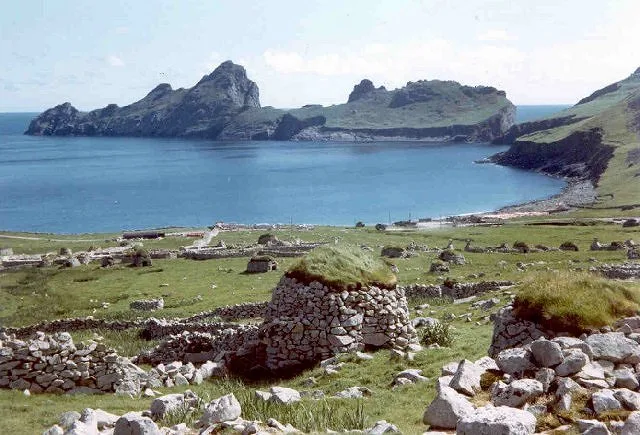
St Kilda (Scottish Gaelic: Hiort) is a remote archipelago situated 35 nautical miles (65 kilometres) west-northwest of North Uist in the North Atlantic Ocean. It contains the westernmost islands of the Outer Hebrides of Scotland. The largest island is Hirta, whose sea cliffs are the highest in the United Kingdom; three other islands (Dùn, Soay and Boreray) were also used for grazing and seabird hunting. The islands are administratively a part of the Comhairle nan Eilean Siar local authority area. The origin of the name St Kilda is a matter of conjecture. The islands' human heritage includes unique architectural features from the historic and prehistoric periods, although the earliest written records of island life date from the Late Middle Ages. The medieval village on Hirta was rebuilt in the 19th century, but illnesses brought by increased external contacts through tourism, and the upheaval of the First World War, contributed to the island's evacuation. Permanent habitation on the islands possibly extends back two millennia, the population probably never exceeding 180; its peak was in the late 17th century. The population waxed and waned, eventually dropping to 36 in 1930, when the remaining population was evacuated. Currently, the only year-round residents are military personnel; a variety of conservation workers, volunteers and scientists spend time there in the summer months. The entire archipelago is owned by the National Trust for Scotland. A cleit is a stone storage hut or bothy unique to St Kilda; there are known to be 1,260 cleitean on Hirta and a further 170 on the other group islands. Two different early sheep types have survived on these remote islands: the Soay, a Neolithic type, and the Boreray, an Iron Age type. The islands are a breeding ground for many important seabird species including northern gannets, Atlantic puffins, and northern fulmars. The St Kilda wren and St Kilda field mouse are endemic subspecies. It became one of Scotland's seven…
Excerpt from Wikipedia under CC BY-SA 4.0. See the source article linked in Sources below.
Background
Architecture
from Ruival with Stac Levenish in the background at left]] Dùn means "fort", and there is but a single ruined wall of a structure said to have been built in the far-distant past by the Fir Bolg. The only "habitation" is Sean Taigh (old house), a natural cavern sometimes used as a shelter by the St Kildans when they were tending the sheep or catching birds. Soay has a primitive hut known as Taigh Dugan (Dugan's house). This is little more than an excavated hole under a massive stone with two crude walls on the sides. The story of its creation relates to two sheep-stealing brothers from Lewis who came to St Kilda only to cause further trouble. Dugan was exiled to Soay, where he died; the…
Visiting
Norman Heathcote visited the islands in 1898 and 1899 and wrote a book about his experiences. During the 19th century, steamers had begun to visit Hirta, enabling the islanders to earn money from the sale of tweeds and birds' eggs but at the expense of their self-esteem as the tourists regarded them as curiosities. It is also clear that the St Kildans were not so naïve as they sometimes appeared. "For example, when they boarded a yacht they would pretend they thought all the polished brass was gold, and that the owner must be enormously wealthy". The boats brought other previously unknown diseases, especially tetanus infantum, which resulted in infant mortality rates as high as 80 per cent…
Sourced from Wikipedia under CC BY-SA 4.0.
- Coordinates
- 57.8150, -8.5875
Sources
- wikidata: Q166479 (CC0)
- wikipedia: St Kilda, Scotland (CC BY-SA 4.0)
- commons: Saint Kilda 20090611 Hirta - Village Bay overview.jpg (CC BY-SA 4.0)
Featured in these 2 guides
Other places nearby
Hirta
Islands · 0.4 km

Amazon's House
Archaeological sites · 0.5 km

Mullach Mòr
Mountains & hills · 0.5 km

Glen Mor
Archaeological sites · 0.6 km

Claigeann Mor
Mountains & hills · 0.8 km

Mullach Sgar
Mountains & hills · 0.8 km

Conachair
Mountains & hills · 1.0 km

Taigh an t-Sithiche
Archaeological sites · 1.0 km

Calum Mor's House
Archaeological sites · 1.0 km

Lady Grange's Cleit
Archaeological sites · 1.0 km

Mullach Bi
Mountains & hills · 1.1 km

Bradastac
Islands · 1.1 km
Nearby
Flagship📷 3Islands · Scottish Islands
Hirta
Hirta — main island of the St Kilda archipelago, Outer Hebrides, Scotland, UK.
📷 3Archaeological sites · Scottish Islands
Amazon's House
Amazon's House — an archaeological site in Scottish Islands, United Kingdom.
📷 5Mountains & hills · Scottish Islands
Mullach Mòr
Mullach Mòr — mountain in scotland highlands. Elevation: 357 m.
📷 3Archaeological sites · Scottish Islands
Glen Mor
Glen Mor — valley on Hirta, in St Kilda, Outer Hebrides, Scotland, UK.
📷 5Mountains & hills · Scottish Islands
Claigeann Mor
Claigeann Mor — a hill or mountain in scotland highlands.
📷 3Mountains & hills · Scottish Islands
Mullach Sgar
Mullach Sgar — a mountain in scotland-highlands, United Kingdom.
More UNESCO sites in this region
 ★ Iconic📷 3
UNESCO World Heritage · Scottish Islands
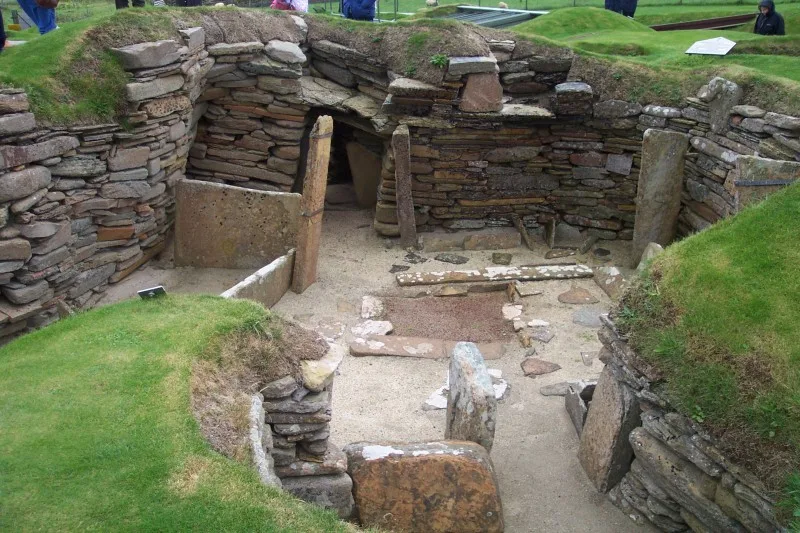
Heart of Neolithic Orkney
Heart of Neolithic Orkney — World Heritage site in Orkney Islands, Scotland, UK.
 Flagship📷 4
UNESCO World Heritage · Scottish Islands
Stac Biorach
Stac Biorach in Scotland Islands, United Kingdom.
Frequently asked questions
- Where is St Kilda?
- St Kilda is in the Scottish Islands, United Kingdom.
- What is St Kilda?
- St Kilda — archipelago in Outer Hebrides, Scotland, United Kingdom.
- How do I get to St Kilda?
- Its coordinates are 57.8150°, -8.5875°.
- Who owns St Kilda?
- St Kilda is owned by National Trust for Scotland.