
Memorials & monuments · London
Samuel Johnson
In or near Covent Garden.
Samuel Johnson — a memorial in england-london, United Kingdom.

Colin Smith — CC BY-SA 2.0 via Wikimedia Commons licence

Plan your visit
- Typical visit
- 15 min–45 min
- Nearest railway station
- Temple · 0.3 km
- Free entry
- Dog-friendly
Getting there & planning your visit
To visit the Samuel Johnson memorial, you can get there via Temple station, which is approximately 0.3 km away. Entry to the memorial is free, but please note that it is not wheelchair accessible.
About
Samuel Johnson is a memorial located in england-london, United Kingdom. Sourced from OpenStreetMap (ODbL licence); see local listings for visitor information, opening hours and admission details.
Photo gallery
See it from the streetimagery from 2023
Imagery © Mapillary contributors, CC BY-SA 4.0
Official information
Chicken Road is a crash-style casino game developed by InOut Games, where players control a chicken crossing a busy road while managing risk and rewards. The game features adjustable volatility and allows players to cash out at any time, creating a unique blend of strategy and excitement. With a high RTP of 98%, it appeals to both casual players and high rollers.
From the Wikipedia article
Samuel Johnson (18 September [O.S. 7 September] 1709 – 13 December 1784), often called Dr Johnson, was an English writer and polymath who made lasting contributions as a poet, playwright, essayist, moralist, literary critic, sermonist, biographer, editor, and lexicographer (creator of dictionaries). The work for which he is best known is his 42,733-entry Dictionary of the English Language (1755). For this and other contributions in and to the English language, the Oxford Dictionary of National Biography has called him "arguably the most distinguished man of letters in English history". Born in Lichfield, Staffordshire, he attended Pembroke College, Oxford, until lack of funds forced him to leave. After working as a teacher, he moved to London and began writing for The Gentleman's Magazine. Early works include the poem London (1738), the biography Life of Mr Richard Savage (1744), the poem The Vanity of Human Wishes (1749) and the play Irene (1749). After nine years' effort, Johnson's A Dictionary of the English Language (1755) appeared and was acclaimed as "one of the greatest single achievements of scholarship". Later works included The History of Rasselas, Prince of Abissinia (1759) and The Plays of William Shakespeare (1765). In 1763, he befriended James Boswell, with whom he travelled to Scotland; Johnson described his travels in A Journey to the Western Islands of Scotland (1775). Near the end of his life, he authored the voluminous and highly influential Lives of the Most Eminent English Poets (1779–1781), a series of biographies and critical appraisals of 52 poets of the 17th and 18th centuries. Johnson was a devout Anglican Christian and a committed Tory. Although tall and robust, he was deaf in one ear and blind in one eye. For most of his life he made regular and uncontrolled gestures and tics that disconcerted some upon meeting him. Boswell and other biographers documented Johnson's behaviour and mannerisms in such detail that they have informed a posthumous diagnosis of Tourette syndrome, a condition neither defined nor manageable in the 18th century. After several illnesses, and extended periods of mental struggle and loneliness, Johnson died on the evening of 13 December 1784, aged 75; he is buried in Westminster Abbey. Johnson became a celebrity in his later life, "the acknowledged Head of Literature in this kingdom". Following his death, he was increasingly recognised as having had a major and lasting effect on the practice of literary criticism—it was even claimed that he was the one truly great critic of English literature. A prevailing mode of literary theory in the 20th century (one focused upon the language used by literature) drew heavily upon his work, and he likewise had a lasting impact on the forms, research and writing of biography. Johnson's Dictionary had and continues to have far-reaching effects on Modern English—this was an early, major, and widely respected, dictionary of English: it was pre-eminent, at least until the arrival of the Oxford English Dictionary some 150 years later. His life was also a story worth telling: Boswell's 1791 biography, The Life of Samuel Johnson, LLD, was selected by fellow Johnson-biographer Walter Jackson Bate as "the most famous single work of biographical art in the whole of literature".
Excerpt from Wikipedia under CC BY-SA 4.0. See the source article linked in Sources below.
- Coordinates
- 51.5132, -0.1135
- District
- Westminster
- Parish
- Westminster, unparished area
- Postcode
- EC4A 2LT
- Parliamentary constituency
- Cities of London and Westminster
- Phone
- +44 20 7430 2255
- Nearest railway station
- Temple — 0.3 km
- Official site
- www.oldbankofengland.co.uk
Sources
- osm: node/470628773 (ODbL)
- wikipedia: Samuel Johnson (CC BY-SA 4.0)
Other places nearby

Essex Street
Memorials & monuments · 0.0 km
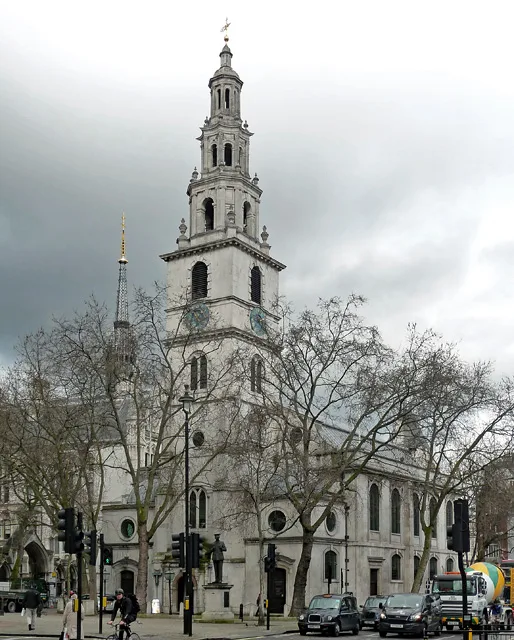
St Clement Danes
Historic churches · 0.0 km
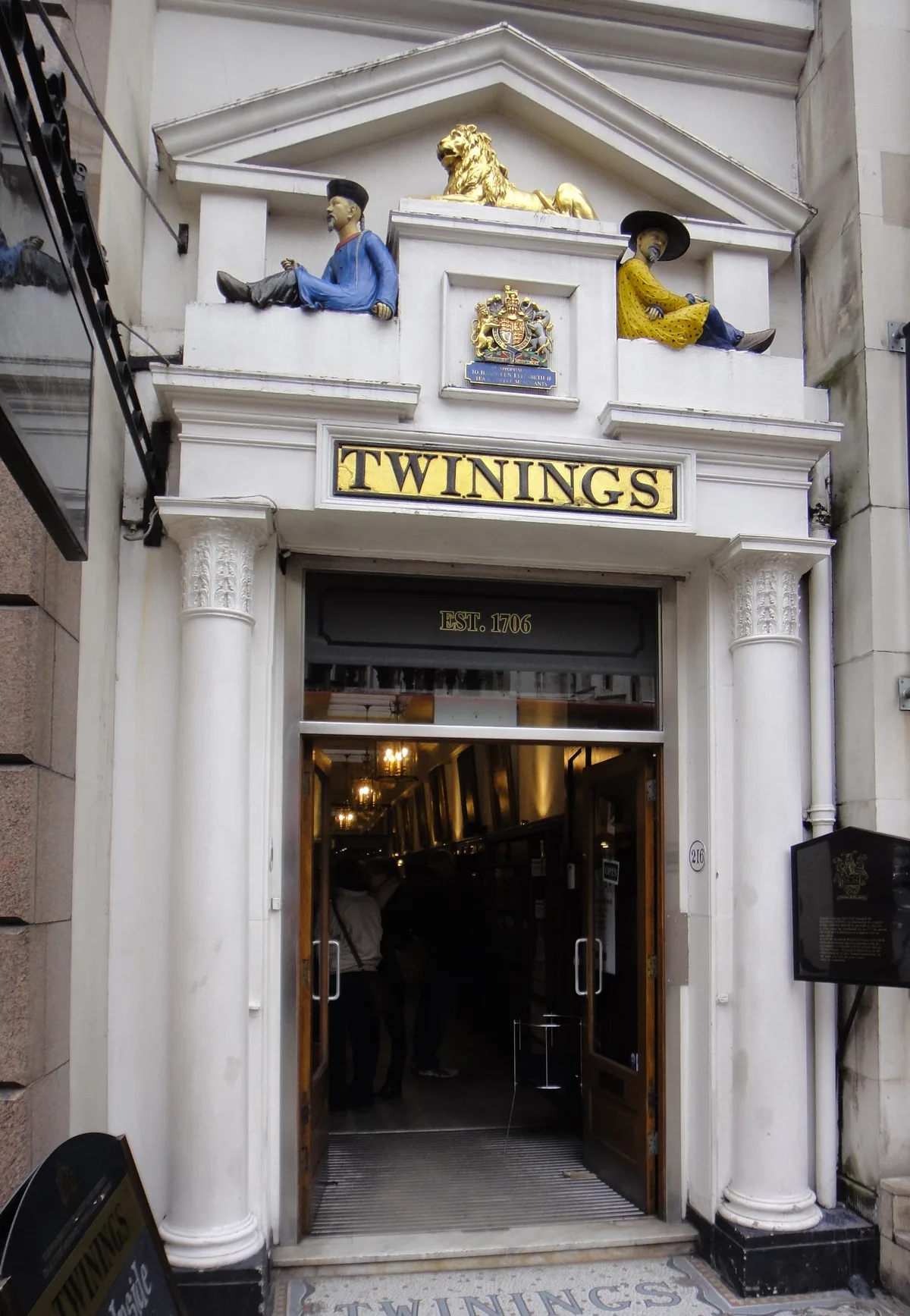
Twinings Museum
Museums · 0.0 km

Screen Walls, Gates, Railings And Lamps To The Law Courts
Holy wells · 0.1 km

Lord Dowding
Battlefields & battle sites · 0.1 km

Arthur Harris
Historic churches · 0.1 km

The Devereux
Historic pubs · 0.1 km

William Gladstone
Memorials & monuments · 0.1 km

Chambers On West Side Of New Court
Historic houses · 0.1 km

Bust of Robert Devereux, 3rd Earl of Essex
Public art & sculpture · 0.1 km
2 And 3, Essex Court Ec4
Historic houses · 0.1 km

Essex House
Historic houses · 0.1 km
Nearby
📷 5Memorials & monuments · London
Essex Street
Essex Street — a memorial in england-london, United Kingdom.
📷 5Historic churches · London
St Clement Danes
St Clement Danes — Anglican church in the City of Westminster, London, England, UK.
📷 5Museums · London
Twinings Museum
Twinings Museum — tea shop in Westminster, London, England, UK.
📷 5Holy wells · London
Screen Walls, Gates, Railings And Lamps To The Law Courts
Screen Walls, Gates, Railings And Lamps To The Law Courts — Grade I listed wall in the United Kingdom.
📷 5📷 5Where to eat & stay near Samuel Johnson
Places to stay
 📷 7
📷 7Hotels · London
Apex Temple Court Hotel
Apex Temple Court Hotel — a hotel in england london.
 📷 5
📷 5 📷 5
📷 5 📷 7
📷 7 📷 5
📷 5Hotels · London
Strand Palace Hotel
Strand Palace Hotel — a hotel in england london.
 📷 5
📷 5Places to eat & drink
📷 5 📷 7
📷 7Cafés · London
The Fleet Street Press
The Fleet Street Press — a café in england london.
 📷 7
📷 7Historic pubs · London
The Old Bank of England
The Old Bank of England — Historic pub — listed building or notable heritage status.
 📷 5
📷 5Historic pubs · London
The Seven Stars
The Seven Stars — Historic pub — listed building or notable heritage status.
 📷 5
📷 5 📷 7
📷 7More memorials in this region
.jpg?width=1200) 📷 5
📷 5Memorials & monuments · London
1st Surrey Rifles War Memorial
1st Surrey Rifles War Memorial is a memorial in the United Kingdom.
 📷 5
📷 5Memorials & monuments · London
24th East Surrey Division War Memorial
24th East Surrey Division War Memorial is a memorial in the United Kingdom.
 📷 5
📷 5Memorials & monuments · London
Abney Park Cemetery CWGC Cross
Abney Park Cemetery CWGC Cross is a memorial in the United Kingdom.
 📷 5
📷 5Memorials & monuments · London
Admiral Sir John Franklin
Admiral Sir John Franklin is a memorial in the United Kingdom.
Frequently asked questions
- Where is Samuel Johnson?
- Samuel Johnson is in London, United Kingdom (postcode EC4A 2LT), in the parish of Westminster, unparished area.
- What is Samuel Johnson?
- Samuel Johnson — a memorial in england-london, United Kingdom.
- How do I get to Samuel Johnson?
- The nearest railway station is Temple, about 0.3 km away. The nearest town is Covent Garden. Drivers can use postcode EC4A 2LT.
- Is Samuel Johnson free to visit?
- Yes, Samuel Johnson is free to enter.
- How do I get to Samuel Johnson?
- The nearest railway station is Temple, about 0.3 km away. Drivers can navigate to postcode EC4A 2LT.