
Memorials & monuments · East of England
Whale
Also known as: Míol mór
In or near Tilney All Saints.
Whale — a memorial in East of England, United Kingdom.

Mat Fascione — CC BY-SA 2.0 via Wikimedia Commons licence

Plan your visit
- Typical visit
- 15 min–45 min
- Nearest railway station
- King's Lynn · 1.0 km
- Free entry
- Dog-friendly
Getting there & planning your visit
To visit the Whale memorial in King's Lynn, Norfolk, the nearest railway station is King’s Lynn, located 1 km away. The postcode for sat-nav is PE30 5LY, and entry to the memorial is free.
About
Whale is a memorial located in East of England, United Kingdom. Sourced from OpenStreetMap (ODbL licence); see local listings for visitor information, opening hours and admission details.
Photo gallery
Protected designations
- Area of Outstanding Natural Beauty: Norfolk Coast
Designations sourced from Natural England open data under OGL v3.
From the Wikipedia article
Whales are a widely distributed and diverse group of fully aquatic placental marine mammals. As an informal and colloquial grouping, they correspond to large members of the infraorder Cetacea, i.e. all cetaceans apart from dolphins and porpoises. Dolphins and porpoises may be considered whales from a formal, cladistic perspective. Whales, dolphins and porpoises belong to the order Cetartiodactyla, which consists of even-toed ungulates. Their closest non-cetacean living relatives are the hippopotamuses, from which they and other cetaceans diverged about 54 million years ago. The two parvorders of whales, baleen whales (Mysticeti) and toothed whales (Odontoceti), are thought to have had their last common ancestor around 34 million years ago. Mysticetes include four extant (living) families: Balaenopteridae (the rorquals), Balaenidae (right whales), Cetotheriidae (the pygmy right whale), and Eschrichtiidae (the grey whale). Odontocetes include the Monodontidae (belugas and narwhals), Physeteridae (the sperm whale), Kogiidae (the dwarf and pygmy sperm whale), and Ziphiidae (the beaked whales), as well as the six families of dolphins and porpoises which are not considered whales in the informal sense. Whales are fully aquatic, open-ocean animals: they can feed, mate, give birth, suckle and raise their young at sea. Whales range in size from the 2.6 metres (8.5 ft) and 135 kilograms (298 lb) dwarf sperm whale to the 29.9 metres (98 ft) and 190 tonnes (210 short tons) blue whale, which is the largest known animal that has ever lived. The sperm whale is the largest toothed predator on Earth. Several whale species exhibit sexual dimorphism, in that the females are larger than males. Baleen whales have no teeth; instead, they have plates of baleen, fringe-like structures that enable them to expel the huge mouthfuls of water they take in while retaining the krill and plankton they feed on. Because their heads are enormous—making up as much as 40% of their total body mass—and they have throat pleats that enable them to expand their mouths, they are able to take huge quantities of water into their mouth at a time. Baleen whales also have a well-developed sense of smell. Toothed whales, in contrast, have conical teeth adapted to catching fish or squid. They also have such keen hearing—whether above or below the surface of the water—that some can survive even if they are blind. Some species, such as sperm whales, are particularly well adapted for diving to great depths to catch squid and other favoured prey. Whales evolved from land-living mammals, and must regularly surface to breathe air, although they can remain underwater for long periods of time. Some species, such as the sperm whale, can stay underwater for up to 90 minutes. They have blowholes (modified nostrils) located on top of their heads, through which air is taken in and expelled. They are warm-blooded, and have a layer of fat, or blubber, under the skin. With streamlined fusiform bodies and two limbs that are modified into flippers, whales can travel at speeds of up to 20 knots, though they are not as flexible or agile as seals. Whales produce a great variety of vocalizations, notably the extended songs of the humpback whale. Although whales are widespread, most species prefer the colder waters of the Northern and Southern Hemispheres and migrate to the equator to give birth. Species such as humpbacks and blue whales are capable of travelling thousands of miles without feeding. Males…
Excerpt from Wikipedia under CC BY-SA 4.0. See the source article linked in Sources below.
- Coordinates
- 52.7460, 0.3955
- County
- Norfolk
- District
- King's Lynn and West Norfolk
- Parish
- King's Lynn and West Norfolk, unparished area
- Postcode
- PE30 5LY
- Parliamentary constituency
- North West Norfolk
- Nearest railway station
- King's Lynn — 1 km
Sources
- osm: node/5764305432 (ODbL)
- wikipedia: Whale (CC BY-SA 4.0)
Other places nearby

The Old Blubber House
Historic houses · 0.2 km

13 Gladstone Rd
Memorials & monuments · 0.3 km

Site Of Blubber Creek
Museums · 0.3 km

The Former South Gate and Southgates Bridge
Historic bridges · 0.4 km

King's Lynn Village Sign
Public art & sculpture · 0.4 km

Greenland Fishery House
Historic houses · 0.5 km

Hanse House
Historic houses · 0.6 km
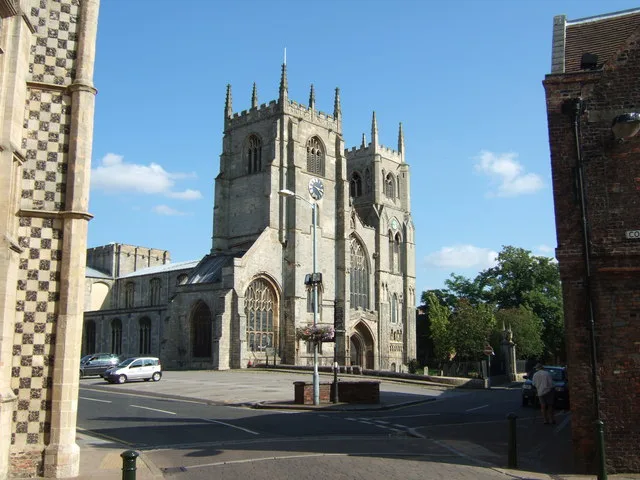
King's Lynn Minster
Historic churches · 0.6 km

Back Lane Arches Tower Gardens
Memorials & monuments · 0.6 km

Half Fathom Column
Public art & sculpture · 0.6 km

The Workshop
Theatres · 0.6 km

King's Lynn War Memorial in Tower Gardens
Memorials & monuments · 0.6 km
Nearby
📷 3Historic houses · East of England
The Old Blubber House
The Old Blubber House — a historic house in East of England, United Kingdom.
📷 3Memorials & monuments · East of England
13 Gladstone Rd
13 Gladstone Rd — a memorial in East of England, United Kingdom.
📷 5Museums · East of England
Site Of Blubber Creek
Site Of Blubber Creek — a museum in East of England, United Kingdom.
📷 3Historic bridges · East of England
The Former South Gate and Southgates Bridge
The Former South Gate and Southgates Bridge — scheduled monument-listed bridge in england-east-midlands, United Kingdom.
📷 3Public art & sculpture · East of England
King's Lynn Village Sign
King's Lynn Village Sign — a public art in East of England, United Kingdom.
📷 3Historic houses · East of England
Greenland Fishery House
Greenland Fishery House — house in King's Lynn and West Norfolk, Norfolk, England, UK.
Where to eat & stay near Whale
Places to stay
 📷 5
📷 5Caravan parks · East of England
Hardwick Bridge Park
Hardwick Bridge Park — a caravan park in england east midlands.
 📷 5
📷 5Campsites · East of England
King's Lynn Caravan and Camping Park
King's Lynn Caravan and Camping Park — a campsite in england east midlands.
📷 5Caravan parks · East of England
King's Lynn Caravan and Camping Park
King's Lynn Caravan and Camping Park — a caravan park in england east midlands.
 📷 5
📷 5Caravan parks · East of England
Innisfree Park Homes
Innisfree Park Homes — a caravan park in england east midlands.
 📷 5
📷 5Campsites · East of England
Four Oaks Camping
Four Oaks Camping — a campsite in england east midlands.
 📷 5
📷 5Caravan parks · East of England
Hadleigh Farm
Hadleigh Farm — a caravan park in england east midlands.
Places to eat & drink
 📷 5
📷 5Historic pubs · East of England
Globe Hotel
Globe Hotel in England East, United Kingdom.
 📷 5
📷 5Historic pubs · East of England
Crown And Mitre Public House
Crown And Mitre Public House in England East, United Kingdom.
 📷 5
📷 5 📷 5
📷 5 📷 5
📷 5 📷 5
📷 5More memorials in this region
 📷 5
📷 5Memorials & monuments · East of England
386th B.G.(M), 9th Air Force USAAF Memorial
386th B.G.(M), 9th Air Force USAAF Memorial is a memorial in the United Kingdom.
 📷 5
📷 5Memorials & monuments · East of England
Ailesbury Mausoleum
Ailesbury Mausoleum is a memorial in the United Kingdom.
 📷 5
📷 5Memorials & monuments · East of England
Archie F. Daniels Memorial
Archie F. Daniels Memorial is a memorial in the United Kingdom.
 📷 5
📷 5Memorials & monuments · East of England
Barnwell War Memorial
Barnwell War Memorial is a memorial in the United Kingdom.
Frequently asked questions
- Where is Whale?
- Whale is in Norfolk, East of England, United Kingdom (postcode PE30 5LY), in the parish of King's Lynn and West Norfolk, unparished area.
- What is Whale?
- Whale — a memorial in East of England, United Kingdom.
- How do I get to Whale?
- The nearest railway station is King's Lynn, about 1.0 km away. The nearest town is Tilney All Saints. Drivers can use postcode PE30 5LY.
- Is Whale a protected site?
- Yes — Whale is part of the Norfolk Coast National Landscape (AONB).
- Is Whale free to visit?
- Yes, Whale is free to enter.
- How do I get to Whale?
- The nearest railway station is King's Lynn, about 1.0 km away. Drivers can navigate to postcode PE30 5LY.