
Historic houses · North West England
Quaker Tapestry
Also known as: Taipéis na gCarad
In or near Oxenholme.
The Quaker Tapestry consists of 77 panels illustrating the history of Quakerism from the 17th century to the present day. The idea of Quaker Anne Wynn-Wilson, the tapestry found a long-term home at th

edward mcmaihin — CC BY-SA 2.0 via Wikimedia Commons licence

Plan your visit
- Typical visit
- 1 h–2 h
- Nearest railway station
- Kendal · 0.5 km
- Family-friendly
- Limited wheelchair access
Getting there & planning your visit
To visit the Quaker Tapestry, the nearest railway station is Kendal, which is 0.5 km away. The postcode for sat-nav is LA9 4TX. Entry has limited wheelchair accessibility.
About
The Quaker Tapestry consists of 77 panels illustrating the history of Quakerism from the 17th century to the present day. The idea of Quaker Anne Wynn-Wilson, the tapestry found a long-term home at the Friends Meeting House at Kendal, Cumbria, England. The design was heavily influenced by the Bayeux Tapestry, and includes similar design choices, including three horizontal divisions within panels, embroidered outlines for faces and hands, and solid infilling of clothing, which is embroidered in the Bayeux technique. The tapestry is worked in crewel embroidery using woollen yarns on a handwoven woollen background. In addition to using four historic and well-known stitches (split stitch, stem stitch, chain stitch and Peking knot), Wynn-Wilson invented a new corded stitch, known as Quaker stitch, to allow for tight curves on the lettering. Each panel measures 25 inches (64 cm) wide by 21 inches (53 cm) tall. 4,000 men, women and children from 15 countries worked on the panels between 1981 and 1989. Panels have been toured in traveling exhibitions including a North American tour in 1993/1994. An exhibition of 39 panels in Ely Cathedral in 2012 attracted 11,273 visitors during its 27-day stay. In October 2021, the museum was one of 142 sites across England to receive part of a £35-million injection into the government's Culture Recovery Fund (a response to the COVID-19 pandemic). The museum received a "Hidden Gem" award for 2020-21 from VisitEngland. The museum closed in December…
Photo gallery
See it from the streetimagery from 2020
Imagery © Mapillary contributors, CC BY-SA 4.0
Protected designations
- Site of Special Scientific Interest: River Kent and Tributaries SSSI
Designations sourced from Natural England open data under OGL v3.
From the Wikipedia article
The Quaker Tapestry consists of 77 panels illustrating the history of Quakerism from the 17th century to the present day. The idea of Quaker Anne Wynn-Wilson, the tapestry found a long-term home at the Friends Meeting House at Kendal, Cumbria, England. The design was heavily influenced by the Bayeux Tapestry, and includes similar design choices, including three horizontal divisions within panels, embroidered outlines for faces and hands, and solid infilling of clothing, which is embroidered in the Bayeux technique. The tapestry is worked in crewel embroidery using woollen yarns on a handwoven woollen background. In addition to using four historic and well-known stitches (split stitch, stem stitch, chain stitch and Peking knot), Wynn-Wilson invented a new corded stitch, known as Quaker stitch, to allow for tight curves on the lettering. Each panel measures 25 inches (64 cm) wide by 21 inches (53 cm) tall. 4,000 men, women and children from 15 countries worked on the panels between 1981 and 1989. Panels have been toured in traveling exhibitions including a North American tour in 1993/1994. An exhibition of 39 panels in Ely Cathedral in 2012 attracted 11,273 visitors during its 27-day stay. In October 2021, the museum was one of 142 sites across England to receive part of a £35-million injection into the government's Culture Recovery Fund (a response to the COVID-19 pandemic). The museum received a "Hidden Gem" award for 2020-21 from VisitEngland. The museum closed in December 2025.
Excerpt from Wikipedia under CC BY-SA 4.0. See the source article linked in Sources below.
- Coordinates
- 54.3285, -2.7430
- District
- Westmorland and Furness
- Parish
- Kendal
- Postcode
- LA9 4TX
- Parliamentary constituency
- Westmorland and Lonsdale
- Nearest railway station
- Kendal — 0.5 km
- Official site
- www.quaker-tapestry.co.uk
Sources
- wikipedia: Quaker Tapestry (CC BY-SA 4.0)
Other places nearby
Quaker Tapestry Museum
Museums · 0.0 km
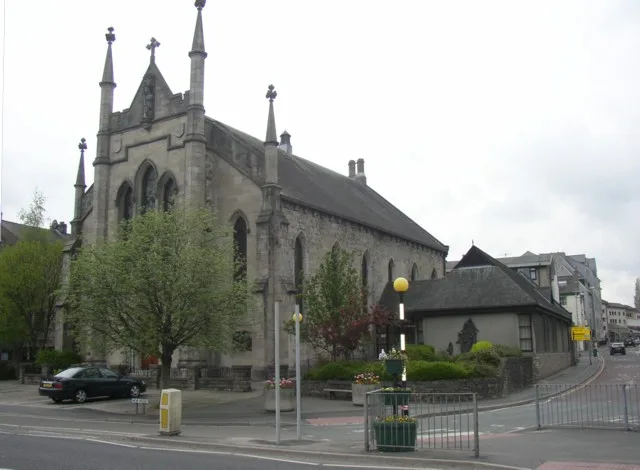
Church of Holy Trinity and St George, Kendal
Historic churches · 0.1 km

Unitarian Chapel And Schoolroom To North East Of Number 40
Chapels · 0.2 km

Pennington's Distillery
Distilleries · 0.2 km

Miller Bridge
Historic bridges · 0.2 km

Stramongate Bridge
Historic bridges · 0.2 km

Green Door
Galleries · 0.2 km
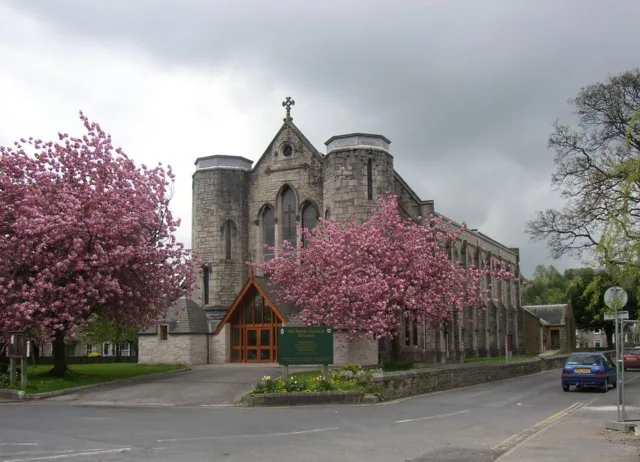
St George's Church, Kendal
Historic churches · 0.2 km

Kendal Market
Farmers’ markets · 0.2 km

Westmorland and Furness
Historic churches · 0.3 km
Kendal
Museums · 0.3 km

The Castle Dairy
Castles · 0.3 km
Nearby
📷 3Museums · North West England
Quaker Tapestry Museum
Quaker Tapestry Museum — a museum in North West England, United Kingdom.
📷 3Historic churches · North West England
Church of Holy Trinity and St George, Kendal
Church of Holy Trinity and St George, Kendal — church in South Lakeland, UK.
📷 3Chapels · North West England
Unitarian Chapel And Schoolroom To North East Of Number 40
Unitarian Chapel And Schoolroom To North East Of Number 40 — chapel in Kendal, Westmorland and Furness, Cumbria, England, UK.
📷 3Distilleries · North West England
Pennington's Distillery
Pennington's Distillery — Whisky/spirit distillery.
📷 3Historic bridges · North West England
Miller Bridge
Miller Bridge is a historic bridge in the United Kingdom.
📷 3Historic bridges · North West England
Stramongate Bridge
Stramongate Bridge is a historic bridge in the United Kingdom.
Where to eat & stay near Quaker Tapestry
Places to stay
 📷 5
📷 5 📷 5
📷 5Caravan parks · North West England
Spital Caravans
Spital Caravans — a caravan park in england north west.
 📷 5
📷 5Caravan parks · North West England
Kendal Camping and Caravanning Club
Kendal Camping and Caravanning Club — a caravan park in england north west.
 📷 5
📷 5Caravan parks · North West England
Ratherheath Lane Caravan Park
Ratherheath Lane Caravan Park — a caravan park in england north west.
 📷 5
📷 5Caravan parks · North West England
Kendal Caravan Club Site
Kendal Caravan Club Site — a caravan park in england north west.
 📷 5
📷 5Caravan parks · North West England
Pound Farm
Pound Farm — a caravan park in england north west.
Places to eat & drink
 📷 7
📷 7Historic pubs · North West England
Hole in t'Wall public house, With Attached Buildings To South
Hole in t'Wall public house, With Attached Buildings To South in England North West, United Kingdom.
 📷 7
📷 7Cafés · North West England
Joey's Cafe
Joey's Cafe — a café in england north west.
 📷 5
📷 5Cafés · North West England
Gun Dog Coffee Shop
Gun Dog Coffee Shop — a café in england north west.
 📷 5
📷 5Historic pubs · North West England
Holbeck Ghyll
Holbeck Ghyll in England North West, United Kingdom.
 📷 4
📷 4Restaurants · North West England
Holbeck Ghyll
Holbeck Ghyll is a restaurant located in Windermere, Cumbria, England. "The late 19th century building was once Lord Lonsdale's hunting lodge and only became a hotel in the 1970s. It won a Michelin st
📷 5Restaurants · North West England
Holbeck Ghyll Restaurant
Holbeck Ghyll Restaurant — a restaurant in england north west.
More historic houses in this region
 📷 3
📷 3Historic houses · North West England
116 Hospital Street, Nantwich
116 Hospital Street, Nantwich — substantial townhouse in Nantwich, Cheshire, England, UK.
 📷 3
📷 3Historic houses · North West England
140–142 Hospital Street, Nantwich
140–142 Hospital Street, Nantwich — grade II listed building in Nantwich, Cheshire East, Cheshire, England, UK.
 📷 3
📷 3Historic houses · North West England
46 High Street, Nantwich
46 High Street, Nantwich — house in Nantwich, Cheshire, England, UK.
 📷 3
📷 3Historic houses · North West England
64, St Ann's Road
64, St Ann's Road — Grade II* listed house in Middlewich, Cheshire East, England, UK.
Frequently asked questions
- Where is Quaker Tapestry?
- Quaker Tapestry is in North-West England, United Kingdom (postcode LA9 4TX), in the parish of Kendal.
- What is Quaker Tapestry?
- The Quaker Tapestry consists of 77 panels illustrating the history of Quakerism from the 17th century to the present day. The idea of Quaker Anne Wynn-Wilson, the tapestry found a long-term home at th
- How do I get to Quaker Tapestry?
- The nearest railway station is Kendal, about 0.5 km away. The nearest town is Oxenholme. Drivers can use postcode LA9 4TX.
- Is Quaker Tapestry a protected site?
- Yes — Quaker Tapestry is part of the River Kent and Tributaries SSSI Site of Special Scientific Interest.
- How do I get to Quaker Tapestry?
- The nearest railway station is Kendal, about 0.5 km away. Drivers can navigate to postcode LA9 4TX.