
Heritage railway stations · South West England
Neptune
In or near Bristol.
Neptune — Public artwork (statue).

Wikimedia Commons contributors — see linked file page for photographer and licence licence

Plan your visit
- Typical visit
- 1 h–2 h
- Nearest railway station
- Princes Wharf · 0.6 km
- Free entry
- Wheelchair accessible
Getting there & planning your visit
To visit Neptune, you can reach it via the nearest railway station, Princes Wharf, which is 0.6 km away. Entry is free, and the location is wheelchair accessible. The postcode for navigation is BS1 4DA.
About
Neptune is a place of interest in South-West England. Built or established in 1723, it dates from the Georgian period. The site is a designated Site of Special Scientific Interest. It sits within the Bristol Central parliamentary constituency. The nearest railway station is Princes Wharf, about 0.6 km away. Postcode area BS1.
Photo gallery
360° viewimagery from 2024
Imagery © Mapillary contributors, CC BY-SA 4.0
Heritage listing
Neptune in true colour, taken by Voyager 2 on August 25, 1989; at centre is the Great Dark Spot{{efn|Neptune's dark spots are not permanent features; the large dark spot observed by Voyager 2 was designated GDS-89 for "Great Dark Spot 1989".}}
Protected designations
- Site of Special Scientific Interest: Severn Estuary SSSI
Designations sourced from Natural England open data under OGL v3.
From the Wikipedia article
Neptune is the eighth and farthest known planet orbiting the Sun. It is the fourth-largest planet in the Solar System by diameter, the third-most-massive planet, and the densest giant planet. It is 17 times the mass of Earth. Compared to Uranus, its neighbouring ice giant, Neptune is slightly smaller, but more massive and dense. Being composed primarily of gases and liquids, it has no well-defined solid surface. Neptune orbits the Sun once every 164.8 years at an orbital distance of 30.1 astronomical units (4.5 billion kilometres; 2.8 billion miles). It is named after the Roman god of the sea and has the astronomical symbol , representing Neptune's trident. Neptune is not visible to the unaided eye and is the only planet in the Solar System that was not initially observed by direct empirical observation. Rather, unexpected changes in the orbit of Uranus led Alexis Bouvard to hypothesise that its orbit was subject to gravitational perturbation by an unknown planet. After Bouvard's death, the position of Neptune was mathematically predicted from his observations, independently, by John Couch Adams and Urbain Le Verrier. Neptune was subsequently directly observed with a telescope on 23 September 1846 by Johann Gottfried Galle within a degree of the position predicted by Le Verrier. Its largest moon, Triton, was discovered shortly thereafter, though none of the planet's remaining moons were located telescopically until the 20th century. The planet's distance from Earth gives it a small apparent size, and its distance from the Sun renders it very dim, making it challenging to study with Earth-based telescopes. Only the advent of the Hubble Space Telescope and of large ground-based telescopes with adaptive optics allowed for detailed observations. Voyager 2, which flew by Neptune on 25 August 1989, remains the only spacecraft to visit the planet. Like the gas giants (Jupiter and Saturn), Neptune's atmosphere is composed primarily of hydrogen and helium, along with traces of hydrocarbons and possibly nitrogen, but contains a higher proportion of ices such as water, ammonia and methane. Similar to Uranus, its interior is primarily composed of ices and rock; both planets are normally considered "ice giants" to distinguish them. Along with Rayleigh scattering, traces of methane in the outermost regions make Neptune appear faintly blue. In contrast to the strongly seasonal atmosphere of Uranus, which can be featureless for long periods of time, Neptune's atmosphere has active and consistently visible weather patterns. At the time of the Voyager 2 flyby in 1989, the planet's southern hemisphere had a Great Dark Spot comparable to the Great Red Spot on Jupiter. In 2018, a newer main dark spot and smaller dark spot were identified and studied. These weather patterns are driven by the strongest sustained winds of any planet in the Solar System, as high as 2,100 km/h (580 m/s; 1,300 mph). Because of its great distance from the Sun, Neptune's outer atmosphere is one of the coldest places in the Solar System, with temperatures at its cloud tops approaching 55 K (−218 °C; −361 °F). Temperatures at the planet's centre are approximately 5,400 K (5,100 °C; 9,300 °F). Neptune has a faint and fragmented ring system (labelled "arcs"), discovered in 1984 and confirmed by Voyager 2.
Excerpt from Wikipedia under CC BY-SA 4.0. See the source article linked in Sources below.
- Coordinates
- 51.4533, -2.5974
- District
- Bristol, City of
- Parish
- Bristol, City of, unparished area
- Postcode
- BS1 4DA
- Parliamentary constituency
- Bristol Central
- Established
- 1723
- Nearest railway station
- Princes Wharf — 0.6 km
- Opening
- We-Th 12:00-14:30; Sa-Su 11:00-16:00
- Official site
- web.archive.org
Sources
- osm: n620993183 (ODbL)
- commons: Neptune - geograph.org.uk - 769847.jpg (CC BY-SA 4.0)
- wikipedia: Neptune (CC BY-SA 4.0)
Featured in this guide
Other places nearby

Bristol Heritage Walk 1
Viewpoints · 0.0 km
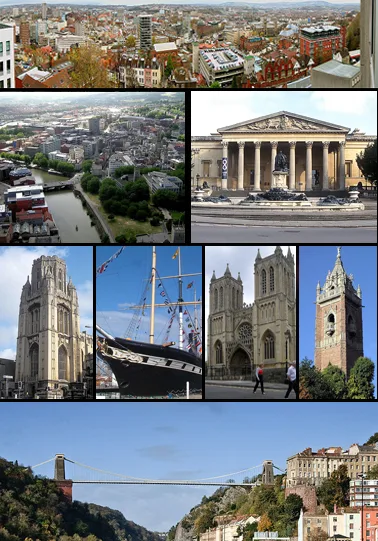
Bristol
Towns & cities · 0.0 km

Our Common Ground
Public art & sculpture · 0.0 km

Burke
Cathedrals · 0.0 km

Pieminister
Restaurants · 0.1 km

Corkers Public House
Historic pubs · 0.1 km

The Harbourside Market
Farmers’ markets · 0.1 km

Bristol Hippodrome
Open-air theatres · 0.1 km

A Surge of Power (Jen Reid) 2020
Museums · 0.1 km
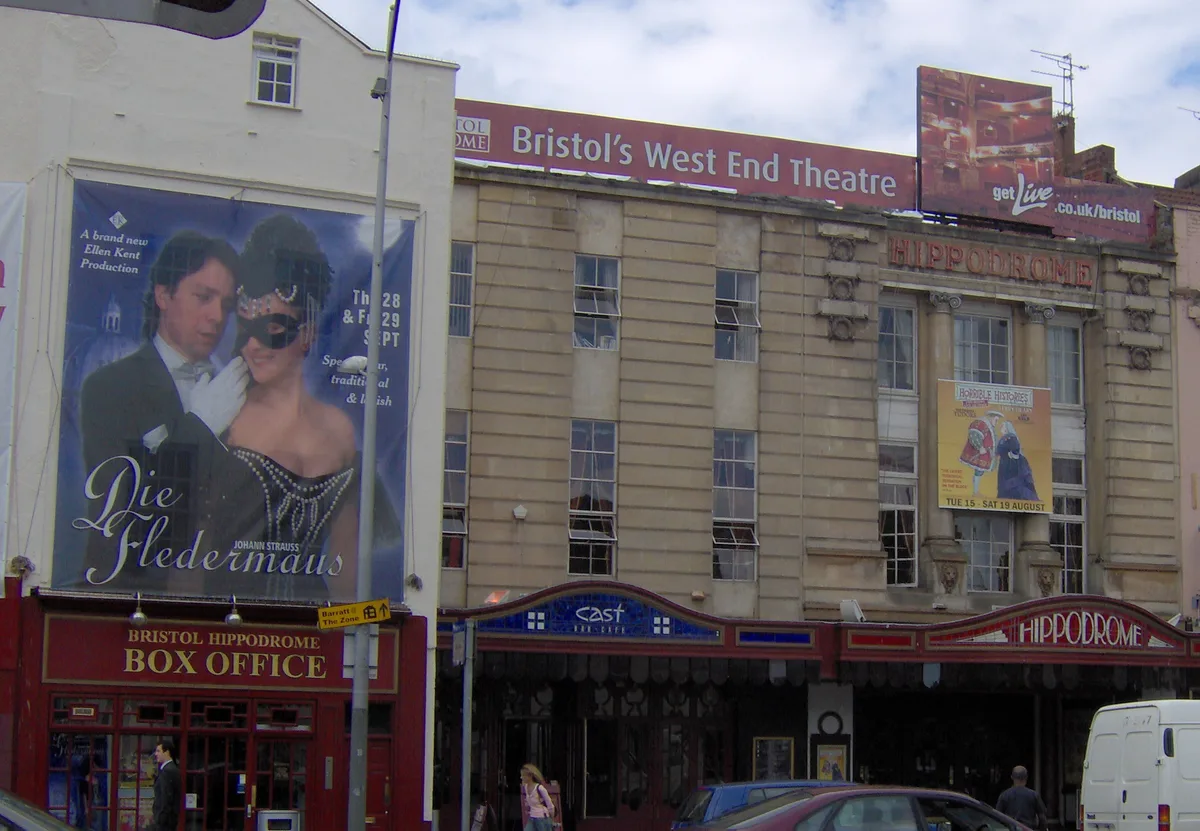
Bristol Hippodrome
Theatres · 0.1 km

Radisson Hotel Blu
Hotels · 0.1 km

Wallace & Gromit
Public art & sculpture · 0.1 km
Nearby
📷 5Viewpoints · South West England
Bristol Heritage Walk 1
Bristol Heritage Walk 1 is a viewpoint in the United Kingdom.
Flagship📷 10Towns & cities · South West England
Bristol
Bristol — city in South West England, United Kingdom.
📷 3Public art & sculpture · South West England
Our Common Ground
Our Common Ground — a public art in South West England, United Kingdom.
📷 5📷 5Restaurants · South West England
Pieminister
Pieminister — a restaurant in england south west. Cuisine: pie. Brand: Pieminister.
📷 5Historic pubs · South West England
Corkers Public House
Corkers Public House in Wales South, United Kingdom.
Where to eat & stay near Neptune
Places to stay
📷 5Hotels · South West England
Radisson Hotel Blu
Radisson Hotel Blu — a hotel in england south west.
 📷 5
📷 5Hostels · South West England
Bristol Backpackers Youth Hostel
Bristol Backpackers Youth Hostel — a hostel in england south west.
 📷 7
📷 7Hotels · South West England
Bristol Marriott Royal Hotel
Bristol Marriott Royal Hotel — a hotel in england south west.
 📷 5
📷 5B&Bs · South West England
Brooks Guest House
Brooks Guest House — a bed-and-breakfast in england south west.
 📷 7
📷 7 📷 5
📷 5Hotels · South West England
The Bristol Hotel
The Bristol Hotel — a hotel in england south west.
Places to eat & drink
📷 5Restaurants · South West England
Pieminister
Pieminister — a restaurant in england south west. Cuisine: pie. Brand: Pieminister.
📷 5Historic pubs · South West England
Corkers Public House
Corkers Public House in Wales South, United Kingdom.
 📷 5
📷 5Restaurants · South West England
Dhamaka
Dhamaka — a restaurant in england south west.
 📷 7
📷 7Restaurants · South West England
Pot pot malatang
Pot pot malatang — a restaurant in england south west.
 📷 7
📷 7Restaurants · South West England
Pata Negra
Pata Negra — a restaurant in england south west.
 📷 5
📷 5Other places from this era
 📷 4
📷 4Heritage railway stations · North East England
Neptune
Neptune — Public artwork (sculpture).
 📷 3
📷 3Heritage railway stations · Central Scotland
Alexander And Bucephalus
Alexander And Bucephalus — Public artwork (statue).
 📷 4
📷 4More places in this region
 📷 5
📷 5Heritage railway stations · South West England
Statue of Neptune
Statue of Neptune — Public artwork (statue).
 📷 5
📷 5Heritage railway stations · South West England
Wareham railway station
Wareham railway station — a Grade II-listed railway station in england-south-east, United Kingdom.
 📷 5
📷 5Heritage railway stations · South West England
Frome railway station
Frome railway station — a Grade II-listed railway station in england-south-east, United Kingdom.
 📷 5
📷 5Heritage railway stations · South West England
Bournemouth railway station
Bournemouth railway station — a Grade II-listed railway station in england-south-east, United Kingdom.
Frequently asked questions
- Where is Neptune?
- Neptune is in South-West England, United Kingdom (postcode BS1 4DA), in the parish of Bristol, City of, unparished area.
- What is Neptune?
- Neptune — Public artwork (statue).
- How do I get to Neptune?
- The nearest railway station is Princes Wharf, about 0.6 km away. The nearest town is Bristol. Drivers can use postcode BS1 4DA.
- When was Neptune built?
- Built or established in 1723.
- Is Neptune a protected site?
- Yes — Neptune is part of the Severn Estuary SSSI Site of Special Scientific Interest.
- Is Neptune free to visit?
- Yes, Neptune is free to enter.
- How do I get to Neptune?
- The nearest railway station is Princes Wharf, about 0.6 km away. Drivers can navigate to postcode BS1 4DA.