
Historic bridges · North Wales
Conwy Railway Bridge
Conwy Railway Bridge — a Grade I-listed bridge in wales-north, United Kingdom.

Richard Hoare — CC BY-SA 2.0 via Wikimedia Commons licence

Plan your visit
- Typical visit
- 15 min–30 min
- Nearest railway station
- Conwy · 0.5 km
- Free entry
- Dog-friendly
Getting there & planning your visit
To visit Conwy Railway Bridge, you can take a train to Conwy station, which is 0.5 km away. Entry to the bridge is free, and it is accessible to visitors. The postcode for navigation is LL32 8BD.
About
Conwy Railway Bridge is a Grade I-listed building in wales-north, United Kingdom. Grade I status is conferred by Historic England (or Cadw, Historic Environment Scotland or NIEA equivalents) on buildings of exceptional national interest. See the linked Wikipedia article for full historical and architectural details.
Photo gallery
See it from the streetimagery from 2022
Imagery © Mapillary contributors, CC BY-SA 4.0
Official information
Conwy Railway Bridge is a historic bridge that spans the River Conwy in North Wales. It is notable for its impressive engineering and scenic views, making it a popular spot for visitors interested in history and architecture.
From the Wikipedia article
The Conwy Railway Bridge carries the North Wales coast railway line across the River Conwy between Llandudno Junction and the town of Conwy. The wrought iron tubular bridge, which is now Grade I listed, was built in the 19th century. It is the last surviving example of this type of design by Stephenson after the original Britannia Bridge across the Menai Strait was partially destroyed in a fire in 1970 and rebuilt as a two-tier truss arch bridge design. The Conwy Railway Bridge was designed by railway engineer Robert Stephenson in collaboration with William Fairbairn and Eaton Hodgkinson. The original plan had been for suspension bridge complementing Thomas Telford's Conwy Suspension Bridge of 1826. After Stephenson's appointment as chief engineer, the design was changed because a suspension bridge was considered unsuitable for trains. Stephenson and his collaborators invented the wrought-iron box-girder structure to bridge the River Conwy in a single span. During May 1846, groundwork for the bridge commenced. The architect Francis Thompson dressed the pylons at either end as barbicans, with crenellated turrets, arrow slits and bartizans to complement the adjacent Conwy Castle. Unusually, the tubes were completed onshore before being attached to pontoons, floated along the river and jacked into position between the abutments. The bridge was officially opened in 1849. The bridge endorsed the construction of the larger Britannia Bridge. During 1899, the tubular sections were reinforced with cast iron columns to reduce the load on the span across the river. In September 1950, Conwy Tubular Bridge was recognised as being a Grade I listed building; it is also a scheduled monument (CN167).
Excerpt from Wikipedia under CC BY-SA 4.0. See the source article linked in Sources below.
Background
History
During the 1840s, the Chester and Holyhead Railway committed to building a railway line along the coastline of North Wales between Chester and Holyhead on Anglesey. The route necessitated crossing the River Conwy Robert Stephenson the chief engineer of the Chester and Holyhead Railway designed the bridge. He devised a tunnel-like rigid tube which would be suspended above the Conwy to accommodate tracks inside it. The box-section tube possessed sufficient rigidity to be self-supporting over the span of the river. entitled "Conway Bridge" showing the second wrought-iron box girder tube being floated into position, c. September 1848.]] Stephenson also deployed the tubular bridge on a larger…
Architecture
During May 1846, groundwork for the bridge commenced. On 15 June 1846, the foundation stone of the towers was laid. The towers accommodated entrance portals within twin arches, through which the railway are carried into the tubes. The tubes are made of 16mm riveted wrought iron with cellular roofs and bases, and sheeted sides; each one weighs roughly 1,320 tonnes. The tubes, which are 129.2 meters long and 4.4 meters wide, were constructed using shipbuilding techniques. Once completed onshore, they were attached to pontoons, floated along the river and jacked into position between the abutments; steam-powered hydraulic engines lifted the bridge elements into place. On 6 March 1848, the…
Sourced from Wikipedia under CC BY-SA 4.0.
- Coordinates
- 53.2802, -3.8238
- District
- Conwy
- Parish
- Conwy
- Postcode
- LL32 8BD
- Parliamentary constituency
- Bangor Aberconwy
- Established
- 1848
- Nearest railway station
- Conwy — 0.5 km
- Official site
- cadw.gov.wales
Sources
- wikidata: Q2221794 (CC0)
- wikipedia: Conwy Railway Bridge (CC BY-SA 4.0)
Other places nearby

Conwy Suspension Bridge
Historic bridges · 0.0 km
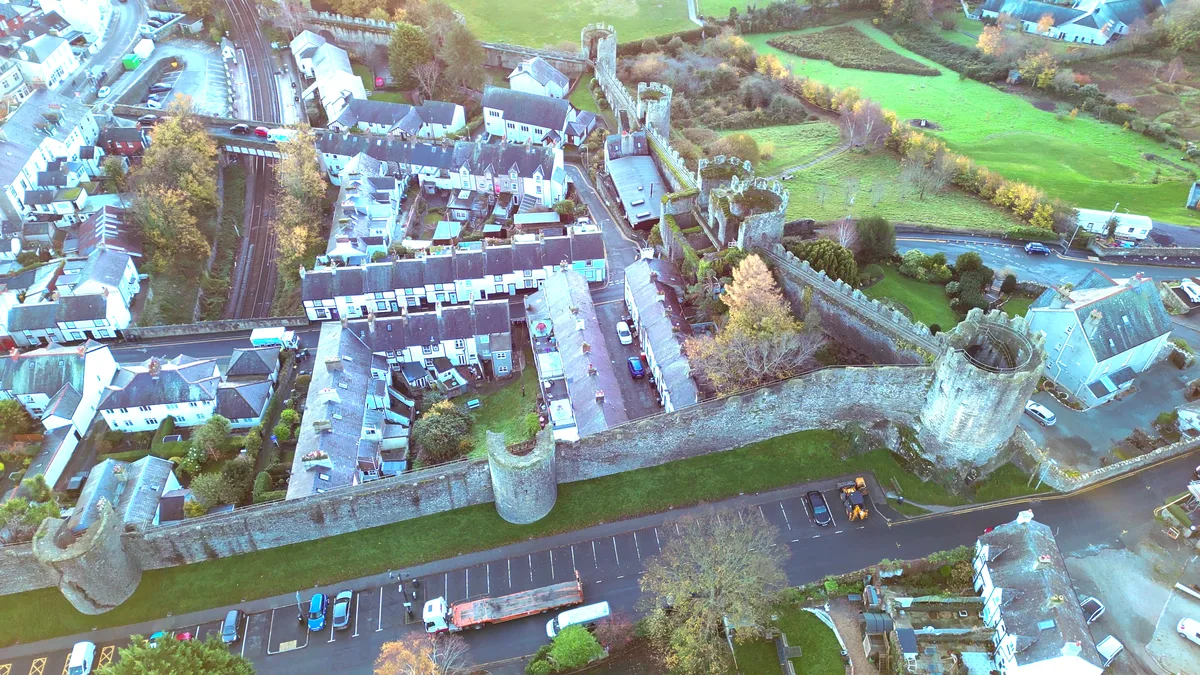
Conwy Castle and Town Walls
Museums · 0.1 km

Island Quay (Cei Ynys)
Marinas · 0.1 km
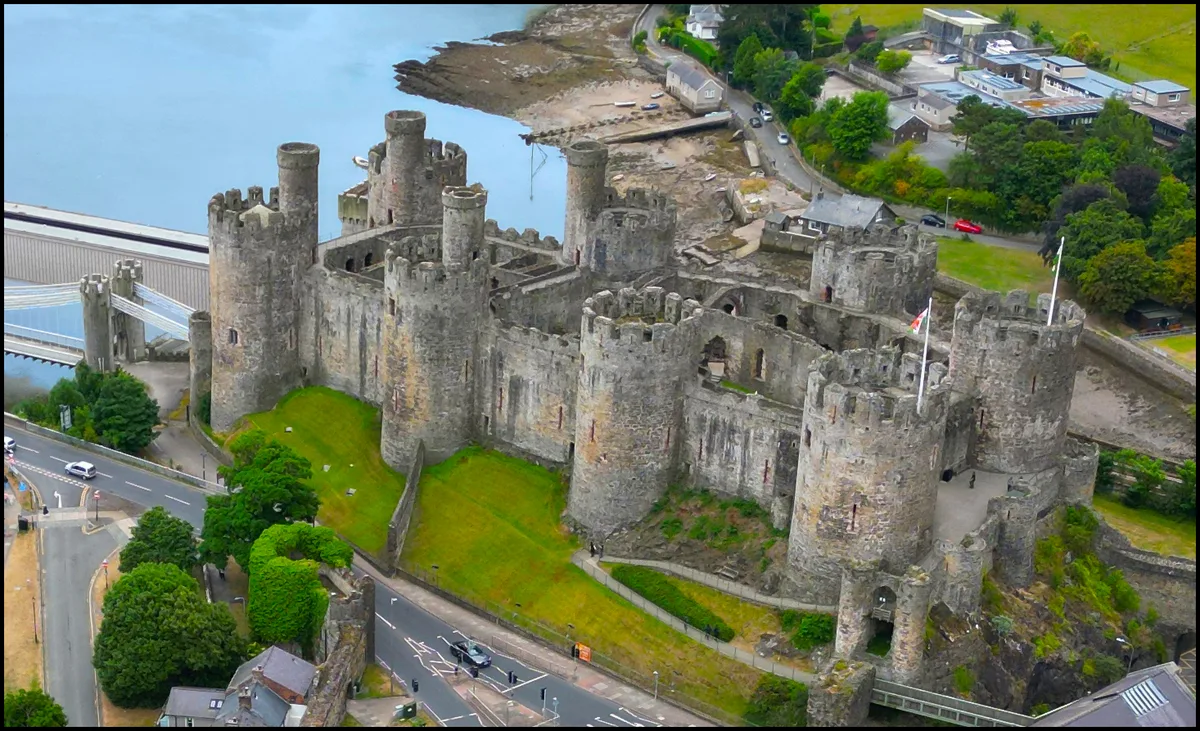
Conwy Castle
Castles · 0.1 km

Jack Williams MBE
Memorials & monuments · 0.1 km

The Quay
Marinas · 0.2 km

Mytilus Edulis
Public art & sculpture · 0.2 km

Pont Pensarn
Historic bridges · 0.2 km

OId College
Historic houses · 0.3 km

Conwy Civic Hall
Theatres · 0.3 km

St Mary and All Saints' Church, Conwy
Historic churches · 0.3 km
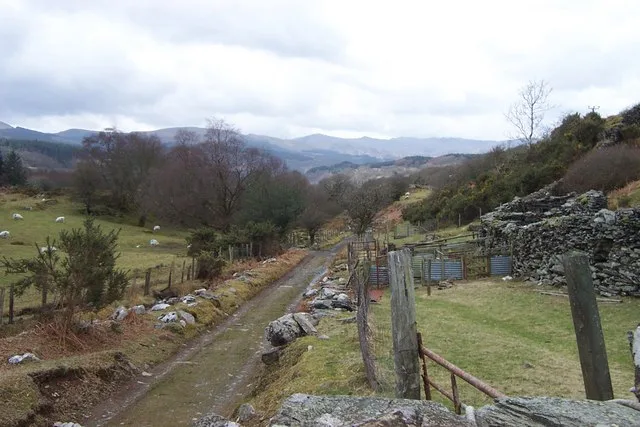
Sarn Helen
Hill forts · 0.3 km
Nearby
📷 5Historic bridges · North Wales
Conwy Suspension Bridge
Conwy Suspension Bridge is a historic bridge in the United Kingdom.
📷 3Museums · North Wales
Conwy Castle and Town Walls
Conwy Castle and Town Walls — part of a World Heritage site in Wales.
📷 5Marinas · North Wales
Island Quay (Cei Ynys)
Grade II listed building in Conwy. Immediately SE of the Tubular bridge on the R bank of Afon Conwy.
📷 5Castles · North Wales
Conwy Castle
Conwy Castle — castle in Conwy, North Wales.
📷 3Memorials & monuments · North Wales
Jack Williams MBE
Jack Williams MBE — a memorial in North Wales, United Kingdom.
📷 5Marinas · North Wales
The Quay
Grade II listed building in Conwy. Extending SE from the outer side of the town wall at Porth Bach.
Where to eat & stay near Conwy Railway Bridge
Places to stay
 📷 7
📷 7 📷 5
📷 5 📷 5
📷 5B&Bs · North Wales
Bryn Derwen Guest House
Bryn Derwen Guest House — a bed-and-breakfast in wales north.
 📷 5
📷 5 📷 5
📷 5 📷 5
📷 5Places to eat & drink
 📷 7📷 7
 📷 5
📷 5 📷 5
📷 5 📷 5
📷 5Restaurants · North Wales
Ristorante Romeo's
Ristorante Romeo's — a restaurant in wales north.
📷 5More bridges in this region
%3B_June_2023.jpg?width=1200) 📷 5
📷 5Historic bridges · North Wales
Britannia Bridge
Britannia Bridge is a historic bridge in the United Kingdom.
 📷 3
📷 3Historic bridges · North Wales
Cegin Viaduct
Cegin Viaduct is a historic bridge in the United Kingdom.
 📷 3
📷 3Historic bridges · North Wales
Chirk Aqueduct
Chirk Aqueduct is a historic bridge in the United Kingdom.
.jpg?width=1200) 📷 3
📷 3Historic bridges · North Wales
Chirk Viaduct
Chirk Viaduct is a historic bridge in the United Kingdom.
Frequently asked questions
- Where is Conwy Railway Bridge?
- Conwy Railway Bridge is in North Wales, United Kingdom (postcode LL32 8BD), in the parish of Conwy.
- What is Conwy Railway Bridge?
- Conwy Railway Bridge — a Grade I-listed bridge in wales-north, United Kingdom.
- How do I get to Conwy Railway Bridge?
- The nearest railway station is Conwy, about 0.5 km away. Drivers can use postcode LL32 8BD.
- When was Conwy Railway Bridge built?
- Built or established in 1848.
- Who owns Conwy Railway Bridge?
- Conwy Railway Bridge is owned by | maint = Network Rail.
- Is Conwy Railway Bridge a listed building?
- Conwy Railway Bridge is officially recognised as Grade I listed.
- Is Conwy Railway Bridge free to visit?
- Yes, Conwy Railway Bridge is free to enter.
- How do I get to Conwy Railway Bridge?
- The nearest railway station is Conwy, about 0.5 km away. Drivers can navigate to postcode LL32 8BD.