
Memorials & monuments · Central Scotland
Charles II of England
Also known as: Charles II, brenin Lloegr a'r Alban, Séarlas II, Rí Shasana, na hÉireann agus na hAlban, Teàrlach II, Charlys II a Bow Sows hag Alban
In or near Edinburgh.
Charles II of England — a memorial in scotland-central, United Kingdom.

kim traynor — CC BY-SA 2.0 via Wikimedia Commons licence

Plan your visit
- Typical visit
- 15 min–45 min
- Nearest railway station
- Edinburgh Waverley · 0.3 km
- Free entry
- Family-friendly
- Dog-friendly
- Wheelchair accessible
Getting there & planning your visit
To visit the Charles II of England memorial, the nearest railway station is Edinburgh Waverley, located 0.3 km away. Entry is free, and the site is wheelchair accessible. The postcode for sat-nav is EH1 1RE.
About
Charles II of England is a memorial located in scotland-central, United Kingdom. Sourced from OpenStreetMap (ODbL licence); see local listings for visitor information, opening hours and admission details.
Photo gallery
Official information
St Giles’ Cathedral, founded in 1124, is an active church and a significant historical site in Edinburgh. It serves as a place for worship, reflection, and hosts important civic ceremonies, while also showcasing its rich music, art, and history.
From the Wikipedia article
Charles II (29 May 1630 – 6 February 1685) was King of Scotland from 1649 until 1651 and King of England, Scotland, and Ireland from the 1660 Restoration of the monarchy until his death in 1685. Charles II was the eldest surviving child of Charles I of England, Scotland and Ireland and Henrietta Maria of France. After Charles I's execution at Whitehall on 30 January 1649, at the climax of the English Civil War, the Parliament of Scotland proclaimed Charles II king on 5 February 1649. However, England entered the period known as the English Interregnum or the English Commonwealth with a republican government eventually led by Oliver Cromwell. Cromwell defeated Charles II at the Battle of Worcester on 3 September 1651, and Charles fled to mainland Europe. Cromwell became Lord Protector of England, Scotland and Ireland. Charles spent the next nine years in exile in France, the Dutch Republic and the Spanish Netherlands. A political crisis after Cromwell's death in 1658 resulted in the restoration of the monarchy in 1660, and Charles was invited to return to Britain. On 29 May 1660, his 30th birthday, he was received in London to public acclaim. Charles's English Parliament enacted the Clarendon Code, to shore up the position of the re-established Church of England. Charles acquiesced to these new laws even though he favoured a policy of religious tolerance. The major foreign policy issue of his early reign was the Second Anglo-Dutch War. In 1670, he entered into the Treaty of Dover, an alliance with his cousin, King Louis XIV of France. Louis agreed to aid him in the Third Anglo-Dutch War and pay him a pension, and Charles secretly promised to convert to Catholicism at an unspecified future date. Charles attempted to introduce religious freedom for Catholics and Protestant dissenters with his 1672 Royal Declaration of Indulgence, but the English Parliament forced him to withdraw it. In 1679, Titus Oates's fabrication of a supposed Popish Plot sparked the Exclusion Crisis when it was revealed that Charles's brother and heir presumptive, James, Duke of York, had become a Catholic. The crisis saw the birth of the pro-exclusion Whig and anti-exclusion Tory parties. Charles sided with the Tories and, after the discovery of the Rye House Plot to murder Charles and James in 1683, some Whig leaders were executed or forced into exile. Charles dissolved the English Parliament in 1681 and ruled alone until his death in 1685. A patron of the arts and sciences, Charles became known for his affability and friendliness, and for allowing his subjects easy access to his person. But he also showed an almost impenetrable reserve, especially concerning his political agendas. His court gained a reputation for moral laxity. Charles's marriage to Catherine of Braganza produced no surviving children, but the king acknowledged at least 12 illegitimate children by various mistresses. He was succeeded by his brother James.
Excerpt from Wikipedia under CC BY-SA 4.0. See the source article linked in Sources below.
- Coordinates
- 55.9492, -3.1905
- District
- City of Edinburgh
- Postcode
- EH1 1RE
- Parliamentary constituency
- Edinburgh East and Musselburgh
- Nearest railway station
- Edinburgh Waverley — 0.3 km
- Opening
- Apr-Oct Mo-Fr 10:00-18:00; Apr-Oct Sa 09:00-17:00; Apr-Oct,Nov-Mar Su 13:00-17:00; Nov-Mar Mo-Sa 09:00-17:00
Sources
- osm: node/2940854453 (ODbL)
- wikipedia: Charles II of England (CC BY-SA 4.0)
Other places nearby
Equestrian statue of Charles II
Public art & sculpture · 0.0 km

Grave of John Knox
Follies · 0.0 km
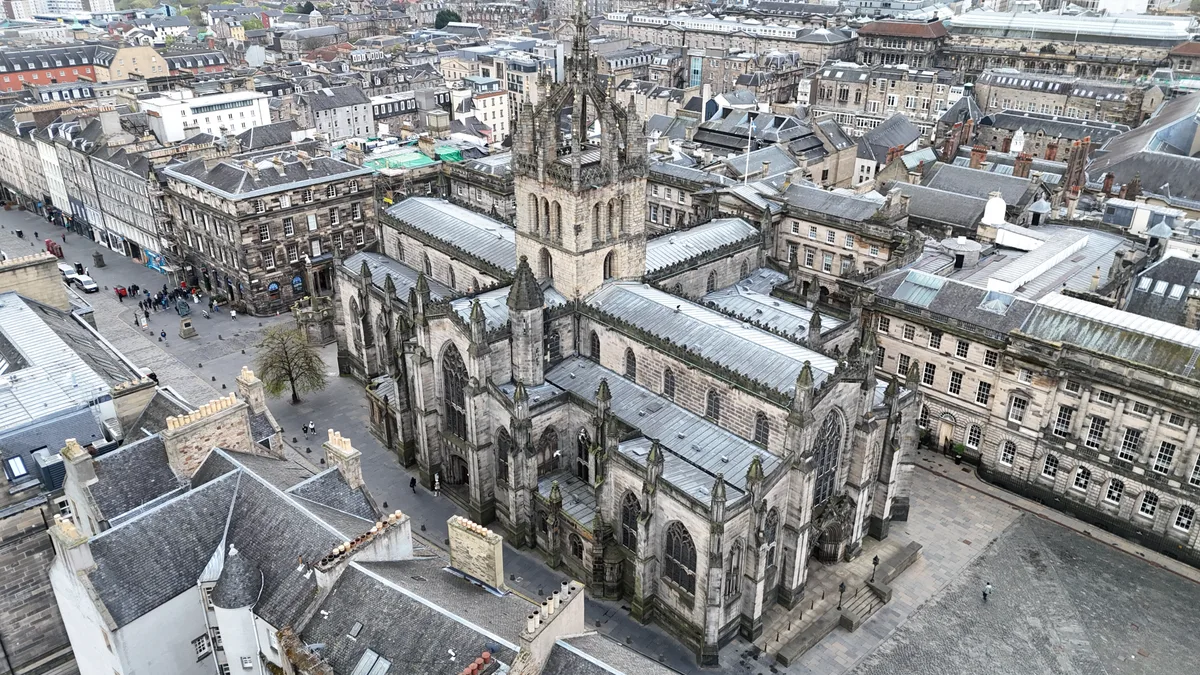
St Giles' Cathedral
Cathedrals · 0.0 km

James Braidwood Statue
Memorials & monuments · 0.0 km

CODE - THE COURT
Hostels · 0.0 km

Mercat Cross
Memorials & monuments · 0.1 km

Signet Library
Historic libraries · 0.1 km

Adam Smith Statue
Memorials & monuments · 0.1 km

Heart of Midlothian
Cathedrals · 0.1 km

Fifth Duke of Buccleuch Memorial
Memorials & monuments · 0.1 km

Society Of Solicitors' Library, 94-116 Cowgate, Edinburgh
Historic libraries · 0.1 km

The Real Mary King's Close
Natural landmarks · 0.1 km
Nearby
📷 4Public art & sculpture · Central Scotland
Equestrian statue of Charles II
Equestrian statue of Charles II in Scotland Central, United Kingdom.
📷 3Follies · Central Scotland
Grave of John Knox
Grave of John Knox is a folly in the United Kingdom.
★ Iconic📷 5Cathedrals · Central Scotland
St Giles' Cathedral
St Giles' Cathedral — Church of Scotland cathedral in Edinburgh, Scotland, UK.
📷 3Memorials & monuments · Central Scotland
James Braidwood Statue
James Braidwood Statue — a memorial in scotland-central, United Kingdom.
📷 5Hostels · Central Scotland
CODE - THE COURT
CODE - THE COURT — a hostel in scotland central.
📷 4Memorials & monuments · Central Scotland
Mercat Cross
Mercat Cross is a memorial in the United Kingdom.
Where to eat & stay near Charles II of England
Places to stay
📷 5Hostels · Central Scotland
CODE - THE COURT
CODE - THE COURT — a hostel in scotland central.
 📷 5
📷 5 📷 5📷 5
 📷 5
📷 5Hostels · Central Scotland
St Christopher's Inn
St Christopher's Inn — a hostel in scotland central. Brand: St Christopher's Inn.
 📷 5
📷 5Hotels · Central Scotland
Market Street Hotel
Market Street Hotel — a hotel in scotland central.
Places to eat & drink
 📷 5
📷 5Historic pubs · Central Scotland
156-158 High Street, Edinburgh
156-158 High Street, Edinburgh in Scotland Central, United Kingdom.
 📷 5
📷 5Cafés · Central Scotland
Hideout Cafe
Hideout Cafe — a café in scotland central.
 📷 5
📷 5Historic pubs · Central Scotland
Public House, 30, 32, 34 Candlemaker Row, Edinburgh
Public House, 30, 32, 34 Candlemaker Row, Edinburgh in Scotland Central, United Kingdom.
 📷 5
📷 5Restaurants · Central Scotland
The Witchery
The Witchery — a restaurant in scotland central.
 📷 7
📷 7Historic pubs · Central Scotland
3 Drummond Street, Edinburgh
3 Drummond Street, Edinburgh in Scotland Central, United Kingdom.
 📷 7
📷 7Historic pubs · Central Scotland
Oddfellows Hall, 12, 14, 16 Forrest Road, Edinburgh
Oddfellows Hall, 12, 14, 16 Forrest Road, Edinburgh in Scotland Central, United Kingdom.
More memorials in this region
 📷 3
📷 3Memorials & monuments · Central Scotland
Mutiny Stones
Mutiny Stones in England North East, United Kingdom.
 📷 3
📷 3Memorials & monuments · Central Scotland
Augusta, Princess Dowager of Wales Monument
Augusta, Princess Dowager of Wales Monument is a memorial in the United Kingdom.
 📷 3
📷 3Memorials & monuments · Central Scotland
Battle of Largs Monument
Battle of Largs Monument — Monument, dating to 1912.
 📷 3
📷 3Memorials & monuments · Central Scotland
Declaration of Arbroath Monument
Declaration of Arbroath Monument is a memorial in the United Kingdom.
Frequently asked questions
- Where is Charles II of England?
- Charles II of England is in central Scotland, United Kingdom (postcode EH1 1RE).
- What is Charles II of England?
- Charles II of England — a memorial in scotland-central, United Kingdom.
- How do I get to Charles II of England?
- The nearest railway station is Edinburgh Waverley, about 0.3 km away. The nearest town is Edinburgh. Drivers can use postcode EH1 1RE.
- Is Charles II of England free to visit?
- Yes, Charles II of England is free to enter.
- How do I get to Charles II of England?
- The nearest railway station is Edinburgh Waverley, about 0.3 km away. Drivers can navigate to postcode EH1 1RE.