
Public art & sculpture · East of England
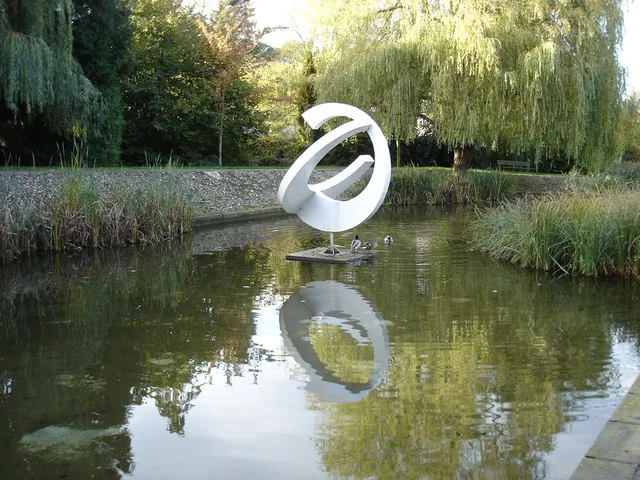
Aphrodite
Also known as: Afraidíté
In or near Gilston.
Aphrodite — a public art in East of England, United Kingdom.

Ian Paterson — CC BY-SA 2.0 via Wikimedia Commons licence

Plan your visit
- Typical visit
- 1 h–2 h
- Nearest railway station
- Harlow Town · 0.6 km
- Free entry
- Dog-friendly
Getting there & planning your visit
To visit Aphrodite, the nearest railway station is Harlow Town, located 0.6 km away. Entry is free.
About
Aphrodite is a public art located in East of England, United Kingdom. Sourced from OpenStreetMap (ODbL licence); see local listings for visitor information, opening hours and admission details.
Photo gallery
From the Wikipedia article
Aphrodite ( , AF-rə-DY-tee) is an ancient Greek goddess associated with love, lust, beauty, pleasure, passion, procreation, and as her syncretised Roman counterpart Venus, desire, sex, fertility, prosperity, and victory. Aphrodite's major symbols include seashells, myrtles, roses, doves, sparrows, and swans. The cult of Aphrodite was largely derived from that of the Phoenician goddess Astarte, a cognate of the East Semitic goddess Ishtar, whose cult was based on the Sumerian cult of Inanna. Aphrodite's main cult centers were Cythera, Cyprus, Corinth, and Athens. Her main festival was the Aphrodisia, which was celebrated annually in midsummer. In Laconia, Aphrodite was worshipped as a warrior goddess. She was also the patron goddess of prostitutes, an association which led early scholars to propose the concept of sacred prostitution in Greco-Roman culture, an idea which is now generally seen as erroneous. A major goddess in the Greek pantheon, Aphrodite featured prominently in ancient Greek literature. According to many sources, like Homer's Iliad and Sappho's Ode to Aphrodite, she is the daughter of Zeus and Dione. In Hesiod's Theogony, however, Aphrodite is born off the coast of Cythera from the foam (ἀφρός, aphrós) produced by Uranus's genitals, which his son Cronus had severed and thrown into the sea. In his Symposium, Plato asserts that these two origins actually belong to separate entities; Aphrodite Urania (a transcendent "Heavenly" Aphrodite, who "partakes not of the female but only of the male", with Plato describing her as inspiring love between men, but having nothing to do with the love of women) and Aphrodite Pandemos (Aphrodite common to "all the people" who Plato described as "wanton", to contrast her with the virginal Aphrodite Urania, who did not engage in sexual acts at all. Pandemos inspired love between men and women, unlike her older counterpart). The epithet Aphrodite Areia (the "Warlike") reveals her contrasting nature in ancient Greek religion. Aphrodite had many other epithets, each emphasizing a different aspect of the same goddess or used by a different local cult. Thus she was also known as Cytherea (Lady of Cythera) and Cypris (Lady of Cyprus), because both locations claimed to be the place of her birth. Sappho's Ode to Aphrodite is one of the earliest poems dedicated to the goddess and survives from the Archaic period nearly complete. In Greek mythology, Aphrodite was married to Hephaestus, the god of fire, blacksmiths and metalworking. Aphrodite was frequently unfaithful to him and had many lovers; in the Odyssey, she is caught in the act of adultery with Ares, the god of war. In the First Homeric Hymn to Aphrodite, she seduces the mortal shepherd Anchises after Zeus made her fall in love with him. Aphrodite was also the surrogate mother and lover of the mortal shepherd Adonis, who was killed by a wild boar. Along with Athena and Hera, Aphrodite was one of the three goddesses whose feud resulted in the beginning of the Trojan War and plays a major role throughout the Iliad. Aphrodite has been featured in Western art as a symbol of female beauty and has appeared in numerous works of Western literature. She is a major deity in modern Neopagan religions, including the Church of Aphrodite, Wicca, and Hellenism.
Excerpt from Wikipedia under CC BY-SA 4.0. See the source article linked in Sources below.
- Coordinates
- 51.7775, 0.1008
- County
- Essex
- District
- Harlow
- Parish
- Harlow, unparished area
- Postcode
- CM20 2QB
- Parliamentary constituency
- Harlow
- Nearest railway station
- Harlow Town — 0.6 km
Sources
- osm: node/9077789320 (ODbL)
- wikipedia: Aphrodite (CC BY-SA 4.0)
Other places nearby
Harlow Town Park
Country parks · 0.1 km
Pisces
Public art & sculpture · 0.1 km

The Greyhound Public House
Historic pubs · 0.1 km
Shoal
Public art & sculpture · 0.2 km
Leah Manning Mural
Public art & sculpture · 0.4 km
Ports of Call I, XII, XV
Public art & sculpture · 0.4 km

Harlow Town railway station
Heritage railway stations · 0.6 km

Organic Form
Public art & sculpture · 0.6 km

Stort Navigation
Canals · 0.6 km

Canal Boat Project
Canals · 0.6 km
Short Stort Thoughts
Public art & sculpture · 0.7 km

Donkey
Public art & sculpture · 0.7 km
Nearby
Flagship📷 10Country parks · East of England
Harlow Town Park
Harlow Town Park — park in Harlow, Essex, England, UK.
📷 5Public art & sculpture · East of England
Pisces
Pisces — a public art in East of England, United Kingdom.
📷 5Historic pubs · East of England
The Greyhound Public House
The Greyhound Public House — Historic pub — listed building or notable heritage status.
📷 5Public art & sculpture · East of England
Shoal
Shoal — a public art in East of England, United Kingdom.
📷 5Public art & sculpture · East of England
Leah Manning Mural
Leah Manning Mural — a public art in East of England, United Kingdom.
📷 5Public art & sculpture · East of England
Ports of Call I, XII, XV
Ports of Call I, XII, XV — a public art in East of England, United Kingdom.
Where to eat & stay near Aphrodite
Places to stay
 📷 5
📷 5 📷 5
📷 5Caravan parks · East of England
Fern Hill Caravan Park
Fern Hill Caravan Park — a caravan park in england london.
 📷 5
📷 5 📷 5
📷 5Campsites · East of England
Kecksy's Farm Campsite
Kecksy's Farm Campsite — a campsite in england london.
 📷 5
📷 5Caravan parks · East of England
Rye House Showmen's Caravan Park and Amusement Depot
Rye House Showmen's Caravan Park and Amusement Depot — a caravan park in england london.
 📷 5
📷 5Campsites · East of England
Lee Valley Dobbs Weir
Lee Valley Dobbs Weir — a campsite in england london.
Places to eat & drink
📷 5Historic pubs · East of England
The Greyhound Public House
The Greyhound Public House — Historic pub — listed building or notable heritage status.
 📷 5
📷 5Historic pubs · East of England
The Hare
The Hare — Historic pub — listed building or notable heritage status.
 📷 5
📷 5 📷 5
📷 5Historic pubs · East of England
The Crown Public House
The Crown Public House in England East, United Kingdom.
 📷 5
📷 5Historic pubs · East of England
The Chequers Public House
The Chequers Public House in England East, United Kingdom.
 📷 5
📷 5Historic pubs · East of England
The Queen's Head Public House
The Queen's Head Public House in England East, United Kingdom.
More places in this region
 📷 5
📷 5Public art & sculpture · East of England
Bird In Flight
Bird In Flight — Public artwork (sculpture) by Bob Dawson.
 📷 5
📷 5Public art & sculpture · East of England
bust of Jagadish Chandra Bose
bust of Jagadish Chandra Bose — Public artwork (sculpture).
 📷 5
📷 5Public art & sculpture · East of England
Calvery's Ode To Tobacco
Calvery's Ode To Tobacco — Public artwork (mural).
 📷 5
📷 5Public art & sculpture · East of England
Cambridge Gateway from India
Cambridge Gateway from India — Public artwork (installation).
Frequently asked questions
- Where is Aphrodite?
- Aphrodite is in Essex, East of England, United Kingdom (postcode CM20 2QB), in the parish of Harlow, unparished area.
- What is Aphrodite?
- Aphrodite — a public art in East of England, United Kingdom.
- How do I get to Aphrodite?
- The nearest railway station is Harlow Town, about 0.6 km away. The nearest town is Gilston. Drivers can use postcode CM20 2QB.
- Is Aphrodite free to visit?
- Yes, Aphrodite is free to enter.
- How do I get to Aphrodite?
- The nearest railway station is Harlow Town, about 0.6 km away. Drivers can navigate to postcode CM20 2QB.