
Memorials & monuments · South West England
WW2
In or near Dunkeswell.
WW2 — a memorial in South West England, United Kingdom.

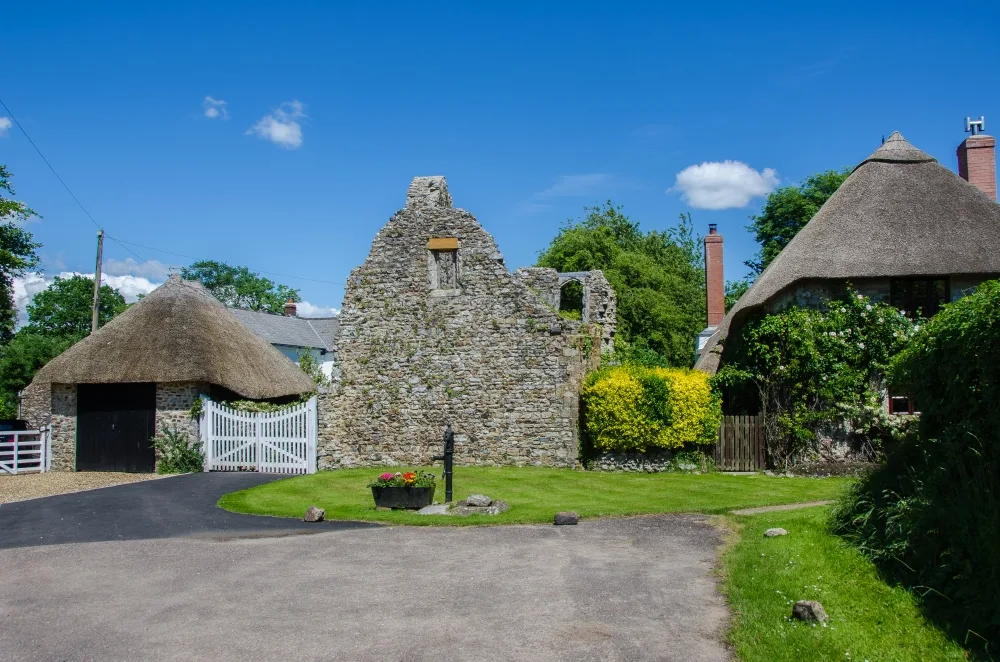
James Allan — CC BY-SA 2.0 via Wikimedia Commons licence

Plan your visit
- Typical visit
- 15 min–45 min
- Nearest railway station
- Honiton · 8.0 km
- Free entry
- Family-friendly
- Dog-friendly
Getting there & planning your visit
To visit the WW2 memorial in East Devon, use the postcode EX14 4LG for sat-nav directions. The nearest railway station is Honiton, located 8 km away. Entry to the memorial is free.
About
WW2 is a memorial located in South West England, United Kingdom. Sourced from OpenStreetMap (ODbL licence); see local listings for visitor information, opening hours and admission details.
Photo gallery
Protected designations
- Area of Outstanding Natural Beauty: Blackdown Hills
Designations sourced from Natural England open data under OGL v3.
From the Wikipedia article
World War II, or the Second World War (1 September 1939 – 2 September 1945), was a global conflict between two coalitions: the Allies and the Axis powers. Nearly all of the world's countries participated. Tanks and aircraft played major roles, the latter enabling the strategic bombing of cities and delivery of the only nuclear weapons used in war. World War II was the deadliest conflict in history, causing the death of 60 to 75 million people. Millions died as a result of massacres, starvation, disease, and genocides, including the Holocaust. After the Allied victory, Germany, Austria, Japan, and Korea were occupied, and German and Japanese leaders were tried for war crimes. The causes of World War II included unresolved tensions in the aftermath of World War I and the rise of fascism in Europe and militarism in Japan. Key events preceding the war included Japan's invasion of Manchuria in 1931, the Spanish Civil War, the outbreak of the Second Sino-Japanese War in 1937, and Germany's annexations of Austria and the Sudetenland. World War II is generally considered to have begun on 1 September 1939, when Nazi Germany, under Adolf Hitler, invaded Poland, after which the United Kingdom and France declared war on Germany. Poland was also invaded by the Soviet Union in mid-September and was partitioned between Germany and the Soviet Union under the Molotov–Ribbentrop Pact. In 1940, the Soviet Union annexed the Baltic states and parts of Finland and Romania, while Germany conquered Norway, Denmark, Belgium, Luxembourg, and the Netherlands. After the fall of France in June 1940, the war continued mainly between Germany, now assisted by Fascist Italy, and the British Empire and British Commonwealth, with fighting in the Balkans, Mediterranean and Middle East, East Africa, the aerial Battle of Britain and the Blitz, and the naval Battle of the Atlantic. By mid-1941, Yugoslavia and Greece had also been defeated by Axis countries. In June 1941, Germany invaded the Soviet Union, opening the Eastern Front. In December 1941, Japan attacked American and British territories in Asia and the Pacific, including Pearl Harbor in Hawaii, leading the United States to enter the war against the Axis. Japan conquered much of coastal China and Southeast Asia, but its advances in the Pacific were halted in June 1942 at the Battle of Midway. In early 1943, Axis forces were defeated in North Africa and at Stalingrad in the Soviet Union. An Allied invasion of Italy in July resulted in the fall of its fascist regime, and Allied offensives in the Pacific and the Soviet Union forced the Axis to retreat on all fronts. In 1944, the Western Allies invaded France at Normandy, and the Soviet Union advanced into Central Europe. Japan also suffered major setbacks including the crippling of its navy by the United States, the loss of key Western Pacific islands, and defeats in Burma. The war in Europe concluded with the liberation of German-occupied territories and the invasion of Germany by the Allies, which culminated in the fall of Berlin to Soviet troops and Germany's unconditional surrender on 8 May 1945. On 6 and 9 August, the US dropped atomic bombs on Hiroshima and Nagasaki followed by a Soviet invasion of Japanese-occupied Manchuria. Japan announced its unconditional surrender on 15 August and signed a surrender document on 2 September 1945. World War II transformed the political, economic, and social structures of the world, and established the foundation of…
Excerpt from Wikipedia under CC BY-SA 4.0. See the source article linked in Sources below.
- Coordinates
- 50.8638, -3.2271
- County
- Devon
- District
- East Devon
- Parish
- Dunkeswell
- Postcode
- EX14 4LG
- Parliamentary constituency
- Honiton and Sidmouth
- Nearest railway station
- Honiton — 8 km
Sources
- osm: node/547886363 (ODbL)
- wikipedia: WW2 (CC BY-SA 4.0)
Other places nearby
Dunkeswell Heritage Centre
Museums · 0.1 km
Dunkeswell
Towns & cities · 0.4 km

Dunkeswell Aerodrome
Museums · 0.7 km

Mansell Raceway
Theme parks · 0.7 km

Wolford Chapel
Chapels · 2.6 km

Dunkeswell Abbey
Cathedrals · 2.9 km

Church of St Mary
Historic churches · 3.3 km

Luppitt War Memorial
Memorials & monuments · 3.4 km

Luppitt
Villages · 3.4 km
Luppitt Inn
Historic pubs · 3.4 km

Forest Glade
Campsites · 3.6 km
Forest Glade
Caravan parks · 3.7 km
Nearby
📷 3Museums · South West England
Dunkeswell Heritage Centre
Dunkeswell Heritage Centre — a museum in South West England, United Kingdom.
Flagship📷 10📷 5Museums · South West England
Dunkeswell Aerodrome
Dunkeswell Aerodrome (ICAO: EGTU) is an airfield in East Devon, England. It is located next to the village of Dunkeswell near the eastern edge of the Blackdown Hills, approximately 5 miles (8.0 kilome
📷 3Theme parks · South West England
Mansell Raceway
Mansell Raceway — a theme park in South West England, United Kingdom.
📷 4Chapels · South West England
Wolford Chapel
Wolford Chapel — grade II listed chapel in Dunkeswell, United Kingdom.
★ Iconic📷 3Cathedrals · South West England
Dunkeswell Abbey
Dunkeswell Abbey is a cathedral in the United Kingdom.
Where to eat & stay near WW2
Places to stay
📷 5📷 5 📷 5
📷 5 📷 5
📷 5Campsites · South West England
Blackdown Yurts
Blackdown Yurts — a campsite in england south west.
 📷 7
📷 7B&Bs · South West England
The Honiton Inn
The Honiton Inn — a bed-and-breakfast in england south west.
 📷 5
📷 5Places to eat & drink
📷 5 📷 5
📷 5Historic pubs · South West England
The Ashill Inn
The Ashill Inn in England South West, United Kingdom.
 📷 5
📷 5Historic pubs · South West England
The Sidmouth Arms Including Front Boundary Walls
The Sidmouth Arms Including Front Boundary Walls in England South West, United Kingdom.
 📷 5
📷 5Historic pubs · South West England
Wyndham Arms
Wyndham Arms in England South West, United Kingdom.
 📷 7
📷 7Historic pubs · South West England
Three Tuns Inn
Three Tuns Inn in England South West, United Kingdom.
 📷 7
📷 7Historic pubs · South West England
White Lion Inn
White Lion Inn in England South West, United Kingdom.
More memorials in this region
 📷 5
📷 5Memorials & monuments · South West England
Bath Cenotaph
Bath Cenotaph is a memorial in the United Kingdom.
 📷 5
📷 5Memorials & monuments · South West England
Cross of Sacrifice
Cross of Sacrifice is a memorial in the United Kingdom.
 📷 5
📷 5Memorials & monuments · South West England
Grange Arch
Grange Arch is a memorial in the United Kingdom.
.jpg?width=1200) 📷 5
📷 5Memorials & monuments · South West England
King Alfred Memorial
King Alfred Memorial is a memorial in the United Kingdom.
Frequently asked questions
- Where is WW2?
- WW2 is in Devon, South-West England, United Kingdom (postcode EX14 4LG), in the parish of Dunkeswell.
- What is WW2?
- WW2 — a memorial in South West England, United Kingdom.
- How do I get to WW2?
- The nearest railway station is Honiton, about 8.0 km away. The nearest town is Dunkeswell. Drivers can use postcode EX14 4LG.
- Is WW2 a protected site?
- Yes — WW2 is part of the Blackdown Hills National Landscape (AONB).
- Is WW2 free to visit?
- Yes, WW2 is free to enter.
- How do I get to WW2?
- Drivers can navigate to postcode EX14 4LG. It sits within the Honiton and Sidmouth parliamentary constituency.