
Memorials & monuments · South East England
William Morris
In or near Oxford.
William Morris — a memorial in South East England, United Kingdom.

Steve Daniels — CC BY-SA 2.0 via Wikimedia Commons licence

Plan your visit
- Typical visit
- 15 min–45 min
- Nearest railway station
- Oxford · 2.3 km
- Free entry
- Dog-friendly
Getting there & planning your visit
To visit the William Morris memorial, the nearest railway station is Oxford, located 2.3 km away. The postcode for navigation is OX4 1LF, and entry to the memorial is free.
About
William Morris is a memorial located in South East England, United Kingdom. Sourced from OpenStreetMap (ODbL licence); see local listings for visitor information, opening hours and admission details.
Photo gallery
From the Wikipedia article
William Morris (24 March 1834 – 3 October 1896) was an English textile designer, poet, artist, writer, and socialist activist associated with the British Arts and Crafts movement. He was a major contributor to the revival of traditional British textile arts and methods of production. His literary contributions helped to establish the modern fantasy genre, while he campaigned for socialism in fin de siècle Great Britain. Morris was born in Walthamstow, Essex, to a wealthy middle-class family. He came under the strong influence of medievalism while studying classics at Oxford University, where he joined the Birmingham Set. After university, he married Jane Burden, and developed close friendships with Pre-Raphaelite artists and poets such as Dante Gabriel Rossetti, Algernon Charles Swinburne, and Edward Burne-Jones, as well as with Neo-Gothic architect Philip Webb. Webb and Morris designed Red House in Kent where Morris lived from 1859 to 1865, before moving to Bloomsbury, central London. In 1861, Morris founded the Morris, Marshall, Faulkner & Co. decorative arts firm with Burne-Jones, Rossetti, Webb, and others, which became highly fashionable and much in demand. The firm profoundly influenced interior decoration throughout the Victorian period, with Morris designing tapestries, wallpaper, fabrics, furniture, and stained glass windows. In 1875, he assumed total control of the company, which was renamed Morris & Co. From 1871, Morris rented the rural retreat of Kelmscott Manor, Oxfordshire, while also retaining a main home in London. He was greatly influenced by visits to Iceland with Eiríkur Magnússon, and he produced a series of English-language translations of Icelandic Sagas. He also achieved success with the publication of his epic poems and novels, namely The Earthly Paradise (1868–1870), A Dream of John Ball (1888), the utopian News from Nowhere (1890), and the fantasy romance The Well at the World's End (1896). In 1877, he founded the Society for the Protection of Ancient Buildings to campaign against the damage caused by architectural restoration. By the influence of medievalism and Christian socialism in the 1850s he became a sceptic of industrial capitalism. After reading works of Henry George, Alfred Russel Wallace, and Karl Marx in the 1880s Morris became a committed revolutionary socialist activist until his final acceptance of parliamentary socialism at 1896. He founded the Socialist League in 1884 after an involvement in the Social Democratic Federation (SDF), but he broke with that organisation in 1890. In 1891, he founded the Kelmscott Press to publish limited-edition, illuminated-style print books, a cause to which he devoted his final years. Morris is recognised as one of the most significant cultural figures of Victorian Britain. He was best known in his lifetime for his poetry, although he posthumously became better known for his designs. The William Morris Society founded in 1955 is devoted to his legacy, while multiple biographies and studies of his work have been published. Many of the buildings associated with his life are open to visitors, much of his work can be found in art galleries and museums, and his designs are still in production.
Excerpt from Wikipedia under CC BY-SA 4.0. See the source article linked in Sources below.
Background
Description
, 1890]] The work of Morris & Co. continued during Morris's final years, producing an array of stained glass windows designed by Burne-Jones and the six narrative tapestry panels depicting the quest for the Holy Grail for Stanmore Hall, Shropshire. Morris's influence on Britain's artistic community became increasingly apparent as the Art Workers' Guild was founded in 1884, although at the time he was too preoccupied with his socialist activism to pay it any attention. Although the proposal faced some opposition, Morris was elected to the Guild in 1888, and to the position of master in 1892. Morris similarly did not offer initial support for the Arts and Crafts Exhibition Society, but…
Sourced from Wikipedia under CC BY-SA 4.0.
- Coordinates
- 51.7464, -1.2391
- County
- Oxfordshire
- District
- Oxford
- Parish
- Oxford, unparished area
- Postcode
- OX4 1LF
- Parliamentary constituency
- Oxford East
- Phone
- 01865 110054
- Nearest railway station
- Oxford — 2.3 km
Sources
- osm: node/2454849682 (ODbL)
- wikipedia: William Morris (CC BY-SA 4.0)
Other places nearby

16, James Street
Historic houses · 0.0 km

Winged Head
Public art & sculpture · 0.0 km
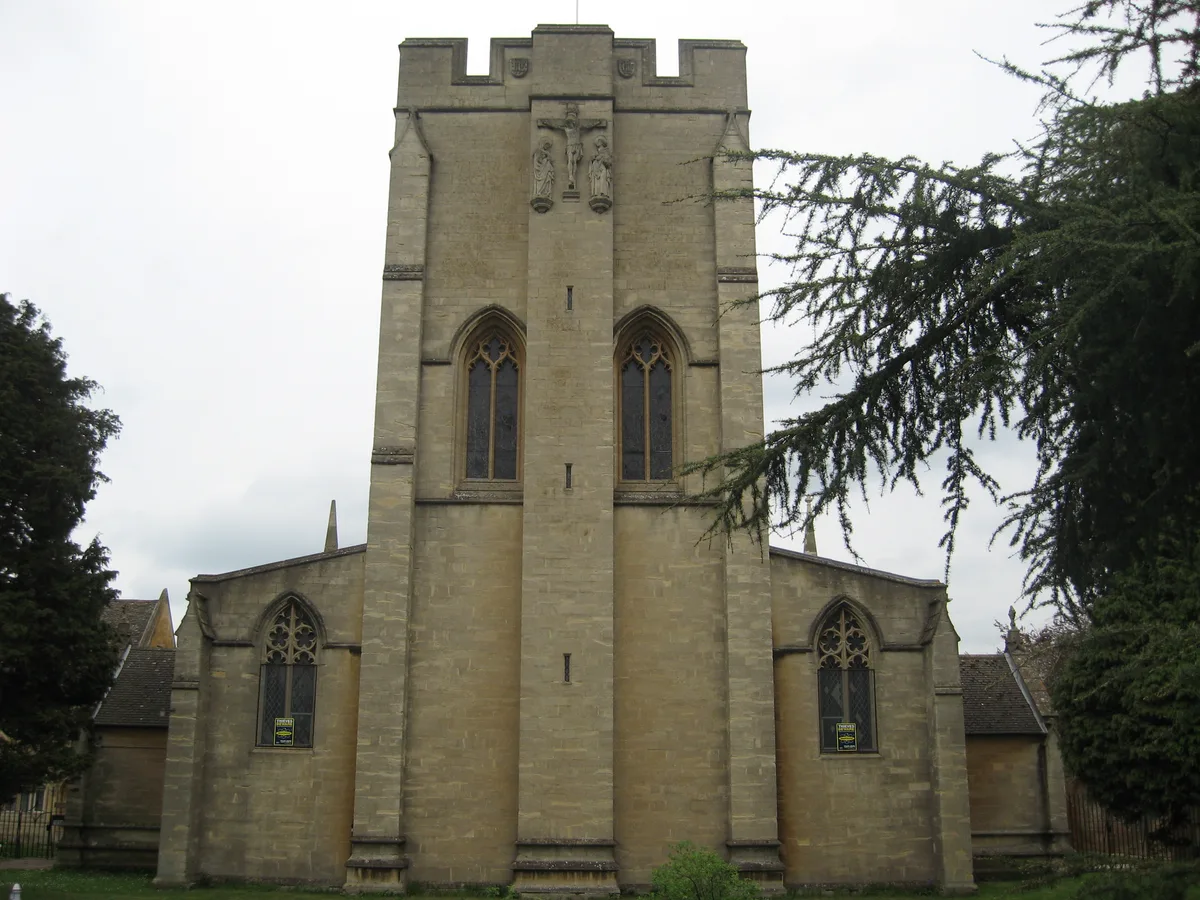
St John the Evangelist Church, Oxford
Historic churches · 0.1 km
Gallery Bouldering
Indoor climbing centres · 0.1 km

Roger Bannister World Record Mile
Memorials & monuments · 0.1 km

Roger Bannister
Memorials & monuments · 0.2 km

George & Delila
Cafés · 0.2 km

Ultimate Picture Palace
Theatres · 0.3 km

Chabad House of Oxford
Historic churches · 0.3 km
Bangladesh Islamic Education Centre
Historic churches · 0.3 km

East Oxford Farmers' and Community Market
Farmers’ markets · 0.4 km

The Port Mahon Inn
Historic pubs · 0.4 km
Nearby
📷 3Historic houses · South East England
16, James Street
16, James Street — house in Oxford, Oxfordshire, England, UK.
📷 5Public art & sculpture · South East England
Winged Head
Winged Head — a public art in South East England, United Kingdom.
📷 5Historic churches · South East England
St John the Evangelist Church, Oxford
St John the Evangelist Church, Oxford — church in Oxford, UK.
📷 3Indoor climbing centres · South East England
Gallery Bouldering
Gallery Bouldering — a indoor climbing in england-west-midlands, United Kingdom.
📷 3Memorials & monuments · South East England
Roger Bannister World Record Mile
Roger Bannister World Record Mile — a memorial in South East England, United Kingdom.
📷 5Memorials & monuments · South East England
Roger Bannister
Roger Bannister — a memorial in South East England, United Kingdom.
Where to eat & stay near William Morris
Places to stay
 📷 7
📷 7Hotels · South East England
Mercure Oxford Eastgate Hotel
Mercure Oxford Eastgate Hotel — a hotel in england west midlands. Brand: Mercure.
 📷 5
📷 5Hotels · South East England
Old Bank Hotel
Old Bank Hotel — a hotel in england west midlands.
 📷 5
📷 5B&Bs · South East England
St Michael's Guest House
St Michael's Guest House — a bed-and-breakfast in england west midlands.
 📷 5
📷 5Hostels · South East England
Central Backpackers Oxford
Central Backpackers Oxford — a hostel in england west midlands.
 📷 5
📷 5Hostels · South East England
Oxford Backpackers
Oxford Backpackers — a hostel in england west midlands.
 📷 7
📷 7Hotels · South East England
Old Parsonage Hotel
Old Parsonage Hotel — a hotel in england west midlands.
Places to eat & drink
📷 5Cafés · South East England
George & Delila
George & Delila — a café in england west midlands.
📷 7Historic pubs · South East England
The Port Mahon Inn
The Port Mahon Inn in England South East, United Kingdom.
 📷 5
📷 5Cafés · South East England
Queen's Lane Coffee House
Queen's Lane Coffee House — a café in england west midlands. Cuisine: coffee shop.
 📷 7
📷 7Historic pubs · South East England
Bear Inn
Bear Inn in England South East, United Kingdom.
 📷 7
📷 7Historic pubs · South East England
Turf Tavern
Turf Tavern in England South East, United Kingdom.
 📷 5
📷 5Cafés · South East England
Love Coffee Co.
Love Coffee Co. — a café in england west midlands.
More memorials in this region
 📷 5
📷 5Memorials & monuments · South East England
Air Forces Memorial
Air Forces Memorial is a memorial in the United Kingdom.
 📷 5
📷 5Memorials & monuments · South East England
All Saints Church
All Saints Church is a memorial in the United Kingdom.
 📷 5
📷 5Memorials & monuments · South East England
Bevans War Memorial
Bevans War Memorial is a memorial in the United Kingdom.
.jpg?width=1200) 📷 5
📷 5Memorials & monuments · South East England
Cumberland Obelisk
Cumberland Obelisk is a memorial in the United Kingdom.
Frequently asked questions
- Where is William Morris?
- William Morris is in Oxfordshire, South-East England, United Kingdom (postcode OX4 1LF), in the parish of Oxford, unparished area.
- What is William Morris?
- William Morris — a memorial in South East England, United Kingdom.
- How do I get to William Morris?
- The nearest railway station is Oxford, about 2.3 km away. The nearest town is Oxford. Drivers can use postcode OX4 1LF.
- Is William Morris free to visit?
- Yes, William Morris is free to enter.
- How do I get to William Morris?
- The nearest railway station is Oxford, about 2.3 km away. Drivers can navigate to postcode OX4 1LF.