
Memorials & monuments · South East England
William Kimber
In or near Oxford.
William Kimber — a memorial in South East England, United Kingdom.

Shaun Ferguson — CC BY-SA 2.0 via Wikimedia Commons licence

Plan your visit
- Typical visit
- 15 min–45 min
- Nearest railway station
- Oxford · 4.5 km
- Free entry
- Dog-friendly
Getting there & planning your visit
To visit the William Kimber memorial, you can take a train to Oxford station, which is 4.5 km away. The postcode for the memorial is OX3 8NL, and entry is free.
About
William Kimber is a memorial located in South East England, United Kingdom. Sourced from OpenStreetMap (ODbL licence); see local listings for visitor information, opening hours and admission details.
Photo gallery
From the Wikipedia article
William "Merry" Kimber (8 September 1872 – 26 December 1961), was an English Anglo concertina player and Morris dancer who played a key role in the twentieth century revival of Morris Dancing, a form of traditional English folk dancing. He was famous both for his concertina playing and for his fine, upright dancing, such that in his day he was presented in the highest circles of society. Kimber was born at Headington Quarry, Oxford, the eldest of six children of William and Sophia Ann Kimber. Kimber left school in 1882 to work as a bird-scarer before taking up the trade of a bricklayer. His father, a builder, was an amateur musician and a member of the local morris side. Kimber first danced with the side in 1887, when the side performed in celebration of Queen Victoria's golden jubilee. He played the concertina for his local Morris Dancers, the Headington Quarry Morris Men, and was the musician when Cecil Sharp encountered them in 1899. Sharp, who was to be in the forefront of the revival of English folk music and dancing, asked Kimber to return the next day and play the tunes again for him to record. In 1905, Mary Neal, the founder of the Espérance Club, asked Sharp for advice about folk dances which could be performed by the young women of the club; he told her about Kimber and the Headington morris, and Neal invited Kimber to come to London to teach the members the dances for their Christmas party. It was at these London lessions that Sharp and Kimber met once again; subsequently Kimber acted as Sharp's informant on the Headington Quarry Morris tradition, and as his assistant at lectures. Sharp would lecture while Kimber demonstrated the dances and played the concertina. Kimber's fame grew, and he danced at the Royal Albert Hall, the Mansion House, and in front of King Edward VII and Queen Alexandra at Chelsea Hospital. Kimber's version of the folk tune Country Gardens was noted by Cecil Sharp. Kimber's Anglo concertina playing — making use of the left-hand to add simple but effective chordal and rhythmic accompaniments — showed great vitality and lightness of touch. The recordings made of Kimber, many of which are now available on CD, are among the very few recordings that exist of English traditional concertina players, and have been very influential on later twentieth century exponents of the instrument. In 1894, Kimber married Florence Cripps, and they had eight children. "Merry" Kimber built a house for himself in St Anne's Road, Headington Quarry in 1911, which he named "Merryville". His wife died in 1917, and in 1920 he married Bessie Clark. He started morris teams in Headington Quarry in 1911, 1921, and 1948. In 1922, Kimber was presented with the gold medal of the English Folk Dance Society at the music festival held in the gardens of New College, Oxford, with the professor of music, Sir Hugh Allen, presiding in a smock and a garlanded top hat. From 1946, Kimber taught Morris dancing to boys at Headington Secondary School. Kimber died in 1961 at "Merryville", and at his funeral at Holy Trinity Church, Headington Quarry, his coffin was carried by the Headington Quarry Morris Men in their Morris regalia.
Excerpt from Wikipedia under CC BY-SA 4.0. See the source article linked in Sources below.
- Coordinates
- 51.7557, -1.2052
- County
- Oxfordshire
- District
- Oxford
- Parish
- Oxford, unparished area
- Postcode
- OX3 8NL
- Parliamentary constituency
- Oxford East
- Nearest railway station
- Oxford — 4.5 km
Sources
- osm: node/7796956873 (ODbL)
- wikipedia: William Kimber (CC BY-SA 4.0)
Other places nearby

Rock Edge Local Nature Reserve
Forests & woodlands · 0.2 km
Botnar Sunflowers
Public art & sculpture · 0.2 km

Professor Gathorne Robert Girdlestone "GRG"
Memorials & monuments · 0.4 km

Botnar Horse
Public art & sculpture · 0.4 km

John Henry Brookes
Memorials & monuments · 0.4 km

Edward Brooks VC
Memorials & monuments · 0.5 km

Grave of C. S. Lewis
Natural landmarks · 0.5 km

Headington Quarry War Memorial
Memorials & monuments · 0.5 km

Holy Trinity Church
Cathedrals · 0.5 km
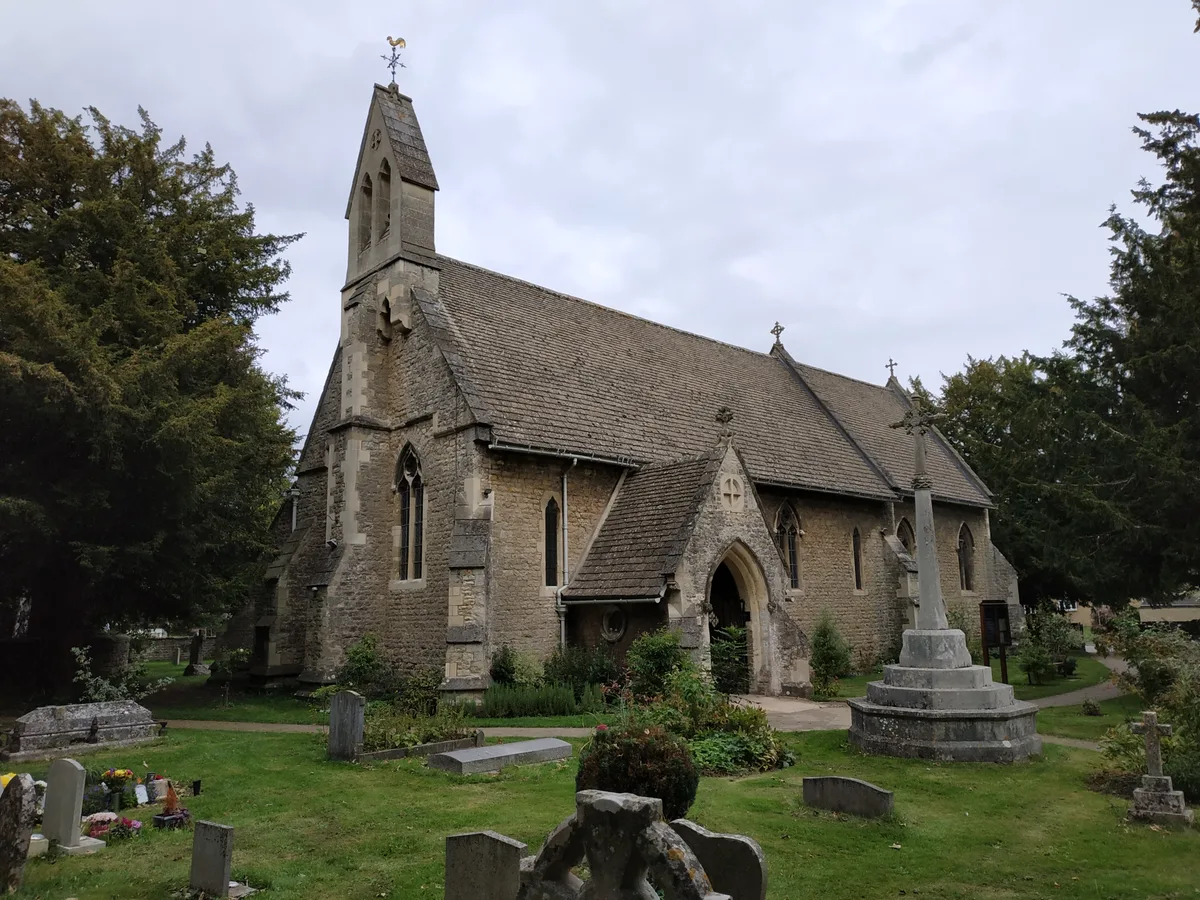
Holy Trinity Church
Abbeys & priories · 0.5 km

Ohm Portal
Public art & sculpture · 0.6 km
Science Oxford Centre
Museums · 0.6 km
Nearby
📷 3Forests & woodlands · South East England
Rock Edge Local Nature Reserve
Rock Edge Local Nature Reserve is a forest or woodland in the United Kingdom.
📷 3Public art & sculpture · South East England
Botnar Sunflowers
Botnar Sunflowers — a public art in South East England, United Kingdom.
📷 3Memorials & monuments · South East England
Professor Gathorne Robert Girdlestone "GRG"
Professor Gathorne Robert Girdlestone "GRG" — a memorial in South East England, United Kingdom.
📷 3Public art & sculpture · South East England
Botnar Horse
Botnar Horse — Public artwork (statue) by Tim Clement;Kat Hutchison;Apprentices at the Camelia Botnar Foundation.
📷 3Memorials & monuments · South East England
John Henry Brookes
John Henry Brookes — a memorial in South East England, United Kingdom.
📷 4Memorials & monuments · South East England
Edward Brooks VC
Edward Brooks VC — a memorial in South East England, United Kingdom.
Where to eat & stay near William Kimber
Places to stay
 📷 7
📷 7Hotels · South East England
Mercure Oxford Eastgate Hotel
Mercure Oxford Eastgate Hotel — a hotel in england west midlands. Brand: Mercure.
 📷 5
📷 5Campsites · South East England
Green Acres Farm Camp Site
Green Acres Farm Camp Site — a campsite in england west midlands.
 📷 5
📷 5Hotels · South East England
Old Bank Hotel
Old Bank Hotel — a hotel in england west midlands.
 📷 5
📷 5B&Bs · South East England
St Michael's Guest House
St Michael's Guest House — a bed-and-breakfast in england west midlands.
 📷 7
📷 7Hotels · South East England
Old Parsonage Hotel
Old Parsonage Hotel — a hotel in england west midlands.
 📷 5
📷 5Hotels · South East England
Linton Lodge
Linton Lodge — a hotel in england west midlands.
Places to eat & drink
 📷 7
📷 7Historic pubs · South East England
The Britannia Public House
The Britannia Public House in England South East, United Kingdom.
 📷 7
📷 7Historic pubs · South East England
The Port Mahon Inn
The Port Mahon Inn in England South East, United Kingdom.
 📷 5
📷 5Cafés · South East England
George & Delila
George & Delila — a café in england west midlands.
 📷 5
📷 5Cafés · South East England
Queen's Lane Coffee House
Queen's Lane Coffee House — a café in england west midlands. Cuisine: coffee shop.
 📷 7
📷 7Historic pubs · South East England
Turf Tavern
Turf Tavern in England South East, United Kingdom.
 📷 5
📷 5Historic pubs · South East England
King's Arms
King's Arms in England South East, United Kingdom.
More memorials in this region
 📷 5
📷 5Memorials & monuments · South East England
Air Forces Memorial
Air Forces Memorial is a memorial in the United Kingdom.
 📷 5
📷 5Memorials & monuments · South East England
All Saints Church
All Saints Church is a memorial in the United Kingdom.
 📷 5
📷 5Memorials & monuments · South East England
Bevans War Memorial
Bevans War Memorial is a memorial in the United Kingdom.
.jpg?width=1200) 📷 5
📷 5Memorials & monuments · South East England
Cumberland Obelisk
Cumberland Obelisk is a memorial in the United Kingdom.
Frequently asked questions
- Where is William Kimber?
- William Kimber is in Oxfordshire, South-East England, United Kingdom (postcode OX3 8NL), in the parish of Oxford, unparished area.
- What is William Kimber?
- William Kimber — a memorial in South East England, United Kingdom.
- How do I get to William Kimber?
- The nearest railway station is Oxford, about 4.5 km away. The nearest town is Oxford. Drivers can use postcode OX3 8NL.
- Is William Kimber free to visit?
- Yes, William Kimber is free to enter.
- How do I get to William Kimber?
- The nearest railway station is Oxford, about 4.5 km away. Drivers can navigate to postcode OX3 8NL.