
Public art & sculpture · Scottish Highlands
Virgin and Child
In or near Ardersier.
Virgin and Child — a public art in scotland-highlands, United Kingdom.

Douglas Nelson — CC BY-SA 2.0 via Wikimedia Commons licence

Plan your visit
- Typical visit
- 1 h–2 h
- Nearest railway station
- Nairn · 0.4 km
- Free entry
- Dog-friendly
Getting there & planning your visit
You can visit the Virgin and Child public art located in the Scottish Highlands, with the nearest railway station being Nairn, just 0.4 km away. The postcode for sat-nav is IV12 4RJ, and entry is free.
About
Virgin and Child is a public art located in scotland-highlands, United Kingdom. Sourced from OpenStreetMap (ODbL licence); see local listings for visitor information, opening hours and admission details.
Photo gallery
See it from the streetimagery from 2024
Imagery © Mapillary contributors, CC BY-SA 4.0
Official information
Nairn Museum showcases the heritage of Nairn and Nairnshire, featuring exhibits on maritime history, local farming, and military stories. Visitors can explore four open gallery rooms while two are under maintenance, offering a glimpse into the region's rich cultural history.
From the Wikipedia article
In Christian art, a Madonna (Italian: [maˈdɔnna]) is a religious depiction of the Blessed Virgin Mary in a singular form or sometimes accompanied by the Child Jesus. These images are central icons for both the Roman Catholic and Orthodox churches, and are found within a number of Evangelical-Lutheran churches as well. The word is from Italian ma donna 'my lady' (archaic). The Madonna and Child type is very prevalent in Christian iconography, divided into many traditional subtypes especially in Eastern Orthodox iconography, often known after the location of a notable icon of the type, such as the Theotokos of Vladimir, Agiosoritissa, Blachernitissa, etc., or descriptive of the depicted posture, as in Hodegetria, Eleusa, etc. The term Madonna in the sense of "picture or statue of the Virgin Mary" enters English usage in the 17th century, primarily in reference to works of the Italian Renaissance. In an Eastern Orthodox context, such images are typically known as Theotokos. "Madonna" may be generally used of representations of Mary, with or without the infant Jesus, where she is the focus and central figure of the image, possibly flanked or surrounded by angels or saints. Other types of Marian imagery that have a narrative context, depicting scenes from the Life of the Virgin, e.g. the Annunciation to Mary, are not typically called "Madonna". The classical "Madonna" or "Theotokos" imagery develops from the 5th century, as Marian devotion rose to great importance after the Council of Ephesus formally affirmed her status as "Mother of God or Theotokos ("God-bearer") in 431. The Theotokos iconography as it developed in the 6th to 8th century rose to great importance in the high medieval period (12th to 14th centuries) both in the Eastern Orthodox and in the Latin spheres. According to a tradition first recorded in the 8th century, and still strong in the Eastern Church, the iconography of images of Mary goes back to a portrait drawn from life by Luke the Evangelist, with a number of icons (such as the Panagia Portaitissa) claimed to either represent this original icon or to be a direct copy of it. In the Western tradition, depictions of the Madonna were greatly diversified by Renaissance masters such as Duccio, Leonardo da Vinci, Michelangelo, Raphael, Giovanni Bellini, Caravaggio, and Rubens (and further by certain modernists such as Salvador Dalí and Henry Moore), while Eastern Orthodox iconography adheres more closely to the inherited traditional types.
Excerpt from Wikipedia under CC BY-SA 4.0. See the source article linked in Sources below.
- Coordinates
- 57.5839, -3.8743
- District
- Highland
- Postcode
- IV12 4RJ
- Parliamentary constituency
- Moray West, Nairn and Strathspey
- Phone
- 01667 456791
- Nearest railway station
- Nairn — 0.4 km
- Opening
- Monday-Friday 10am-4:30pm; Saturday 10am-1:30pm
Sources
- osm: node/13328134084 (ODbL)
- wikipedia: Virgin and Child (CC BY-SA 4.0)
Other places nearby
St Mary's Roman Catholic Church And Manse, Academy Street, Nairn
Historic churches · 0.0 km

Old Parish Church, Academy Street, Nairn
Historic churches · 0.1 km

Nairn Rosebank Parish Church, Academy Street, Nairn
Historic churches · 0.1 km

Captain James Rose RN Academical Square For the square see.NH8856 : Academical Square Tablet
Memorials & monuments · 0.2 km
Jubilee Fountain
Memorials & monuments · 0.2 km
Straith Monument
Memorials & monuments · 0.2 km
Straith Monument, High Street, Nairn
Memorials & monuments · 0.2 km

Dr. John Grigor Statue
Memorials & monuments · 0.2 km

Waverley Hotel
Hotels · 0.2 km

Viewfield House
Historic houses · 0.2 km
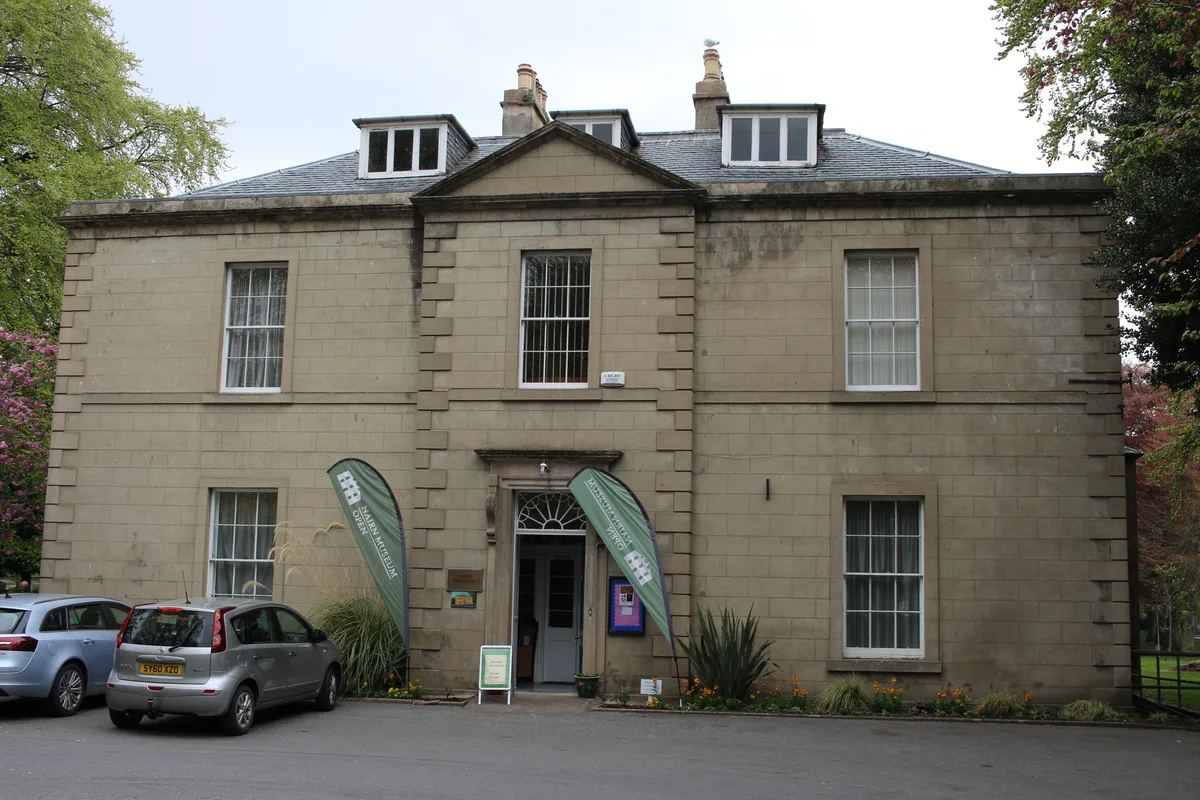
Nairn Museum
Museums · 0.2 km
The High Church and Church Hall, High Street, Nairn
Historic churches · 0.2 km
Nearby
📷 5Historic churches · Scottish Highlands
St Mary's Roman Catholic Church And Manse, Academy Street, Nairn
St Mary's Roman Catholic Church And Manse, Academy Street, Nairn — category C listed building-listed church in scotland-highlands, United Kingdom.
📷 5Historic churches · Scottish Highlands
Old Parish Church, Academy Street, Nairn
Old Parish Church, Academy Street, Nairn — category A listed building-listed church in scotland-highlands, United Kingdom.
📷 5Historic churches · Scottish Highlands
Nairn Rosebank Parish Church, Academy Street, Nairn
Nairn Rosebank Parish Church, Academy Street, Nairn — category B listed building-listed church in scotland-highlands, United Kingdom.
📷 3Memorials & monuments · Scottish Highlands
Captain James Rose RN Academical Square For the square see.NH8856 : Academical Square Tablet
Captain James Rose RN Academical Square For the square see.NH8856 : Academical Square Tablet — a memorial in scotland-highlands, United Kingdom.
📷 4Memorials & monuments · Scottish Highlands
Jubilee Fountain
Jubilee Fountain — a memorial in scotland-highlands, United Kingdom.
📷 3Memorials & monuments · Scottish Highlands
Straith Monument
Straith Monument — a memorial in scotland-highlands, United Kingdom.
Where to eat & stay near Virgin and Child
Places to stay
📷 7Hotels · Scottish Highlands
Waverley Hotel
Waverley Hotel — a hotel in scotland highlands.
 📷 5
📷 5Caravan parks · Scottish Highlands
Nairn Lochloy Holiday Park
Nairn Lochloy Holiday Park — a caravan park in scotland highlands. Brand: Parkdean Resorts.
 📷 5
📷 5Campsites · Scottish Highlands
Nairn Lochloy Holiday Park (Touring)
Nairn Lochloy Holiday Park (Touring) — a campsite in scotland highlands.
 📷 5
📷 5 📷 5
📷 5Campsites · Scottish Highlands
Rosemarkie Camping & Caravan Club Site
Rosemarkie Camping & Caravan Club Site — a campsite in scotland highlands.
 📷 5
📷 5Caravan parks · Scottish Highlands
Fortrose Bay Campsite
Fortrose Bay Campsite — a caravan park in scotland highlands.
Places to eat & drink
 📷 7
📷 7Historic pubs · Scottish Highlands
Commercial Bar, 84 High Street, Invergordon
Commercial Bar, 84 High Street, Invergordon in Scotland Highlands, United Kingdom.
 📷 7
📷 7Historic pubs · Scottish Highlands
Imperial Bar, 1-9 Academy Street, Inverness
Imperial Bar, 1-9 Academy Street, Inverness in Scotland Highlands, United Kingdom.
 📷 5
📷 5Historic pubs · Scottish Highlands
15-21 Queensgate, Inverness
15-21 Queensgate, Inverness in Scotland Highlands, United Kingdom.
 📷 7
📷 7Historic pubs · Scottish Highlands
93-97 Academy Street, Inverness
93-97 Academy Street, Inverness in Scotland Highlands, United Kingdom.
 📷 5
📷 5Historic pubs · Scottish Highlands
67 Church Street, Inverness
67 Church Street, Inverness in Scotland Highlands, United Kingdom.
More places in this region
 📷 3
📷 3Public art & sculpture · Scottish Highlands
Mother Earth
Mother Earth — Public artwork (sculpture) by Andy Scott.
 📷 4
📷 4Public art & sculpture · Scottish Highlands
Commando Memorial
Commando Memorial in Scotland Highlands, United Kingdom.
 📷 4
📷 4Public art & sculpture · Scottish Highlands
William Wallace Statue, Aberdeen
William Wallace Statue, Aberdeen in Scotland Highlands, United Kingdom.
 📷 3
📷 3Public art & sculpture · Scottish Highlands
Tilted Globe
Tilted Globe in Scotland Highlands, United Kingdom.
Frequently asked questions
- Where is Virgin and Child?
- Virgin and Child is in the Scottish Highlands, United Kingdom (postcode IV12 4RJ).
- What is Virgin and Child?
- Virgin and Child — a public art in scotland-highlands, United Kingdom.
- How do I get to Virgin and Child?
- The nearest railway station is Nairn, about 0.4 km away. The nearest town is Ardersier. Drivers can use postcode IV12 4RJ.
- Is Virgin and Child free to visit?
- Yes, Virgin and Child is free to enter.
- How do I get to Virgin and Child?
- The nearest railway station is Nairn, about 0.4 km away. Drivers can navigate to postcode IV12 4RJ.