
Historic houses · North Wales
Vaynol
Also known as: Y Faenol
In or near Llanfairpwllgwyngyll.
Vaynol or Y Faenol (Welsh [ə ˈveɨnɔl]) is a country estate dating from the Tudor period near Y Felinheli in Gwynedd, North Wales (grid reference SH536695). It has 1,000 acres (4.0 km2) of park, farmla

Meirion — CC BY-SA 2.0 via Wikimedia Commons licence

Plan your visit
- Typical visit
- 1 h–2 h
- Nearest railway station
- Llanfairpwll · 2.4 km
- Family-friendly
- Limited wheelchair access
Getting there & planning your visit
To visit Vaynol, the nearest railway station is Llanfairpwll, located 2.4 km away. The postcode for sat-nav is LL57 4BP. Please note that wheelchair accessibility is limited.
About
Vaynol or Y Faenol (Welsh [ə ˈveɨnɔl]) is a country estate dating from the Tudor period near Y Felinheli in Gwynedd, North Wales (grid reference SH536695). It has 1,000 acres (4.0 km2) of park, farmland, and gardens, with more than thirty listed buildings, surrounded by a wall which is 7 miles (11 km) long. "Y Faenol" means "the manor" and is a mutated form of the Welsh word maenol. The buildings on the estate include two Grade I listed halls: Faenol Old Hall, much of which dates from the Williams' period of ownership, and Vaynol Hall, built in 1793 and extended during the 19th century. Once Vaynol Hall was built, Faenol Old Hall became a farmhouse and subsequently deteriorated; in 2003 it appeared on the BBC's Restoration programme, championed by Robert Hardy. In 2009, the BBC revisited the project, and said that Faenol Hall was now "in private ownership and has been restored". There is also a Grade I listed chapel and a very old barn on the site. The Vaynol estate should not be confused with the neighbouring National Trust land called Glan Faenol.
Photo gallery
From the Wikipedia article
Vaynol or Y Faenol (Welsh [ə ˈveɨnɔl]) is a country estate dating from the Tudor period near Y Felinheli in Gwynedd, North Wales (grid reference SH536695). It has 1,000 acres (4.0 km2) of park, farmland, and gardens, with more than thirty listed buildings, surrounded by a wall which is 7 miles (11 km) long. "Y Faenol" means "the manor" and is a mutated form of the Welsh word maenol. The buildings on the estate include two Grade I listed halls: Faenol Old Hall, much of which dates from the Williams' period of ownership, and Vaynol Hall, built in 1793 and extended during the 19th century. Once Vaynol Hall was built, Faenol Old Hall became a farmhouse and subsequently deteriorated; in 2003 it appeared on the BBC's Restoration programme, championed by Robert Hardy. In 2009, the BBC revisited the project, and said that Faenol Hall was now "in private ownership and has been restored". There is also a Grade I listed chapel and a very old barn on the site. The Vaynol estate should not be confused with the neighbouring National Trust land called Glan Faenol.
Excerpt from Wikipedia under CC BY-SA 4.0. See the source article linked in Sources below.
Background
History
The estate's origins are in the 16th century, when the bishops of Bangor sold property belonging to their manor, Maenol Bangor. The estate was developed during that century by the Williams family. It passed to the Crown on the death without issue of Sir William Williams, 6th Baronet in 1696. In 1723 it was presented to John Smith of Tedworth, Wiltshire, and in 1762 passed to his nephew Thomas Assheton Smith I (1752–1828). Assheton Smith was later MP for Caernarvonshire and then Andover, and his son, also Thomas (1776–1858) sat for the same constituencies but was known as a cricketer, Master of Foxhounds and owner of steam yachts. Assheton Smith I was the 3rd largest landowner in Gwynedd.…
Description
In the second half of the 19th century the park had a zoo, but it was dismantled by 1900. The park has been the setting for Bryn Terfel's Faenol Festival since 2000, and in 2005 it hosted the National Eisteddfod. On 25 August 2006, Irish vocal pop band Westlife held a concert for their Face to Face Tour supporting their album Face to Face. BBC Radio 1's Big Weekend was held at the park in May 2010.
Sourced from Wikipedia under CC BY-SA 4.0.
- Coordinates
- 53.2020, -4.1930
- District
- Gwynedd
- Parish
- Pentir
- Postcode
- LL57 4BP
- Parliamentary constituency
- Bangor Aberconwy
- Nearest railway station
- Llanfairpwll — 2.4 km
Sources
- wikipedia: Vaynol (CC BY-SA 4.0)
Other places nearby
_NLW3363030.jpg?width=1200)
Vaynol Hall
Historic houses · 0.1 km

Faenol Festival
Other places · 0.2 km

Chapel Of St Mary To N Of Vaynol Old Hall
Chapels · 0.2 km

Ysgol Glanaethwy
Natural landmarks · 0.9 km

Port Church and Port Church House
Historic churches · 1.3 km

Section of Britannia Bridge
Memorials & monuments · 1.5 km

Lion on W side of S entrance to Britannia Bridge
Public art & sculpture · 1.5 km
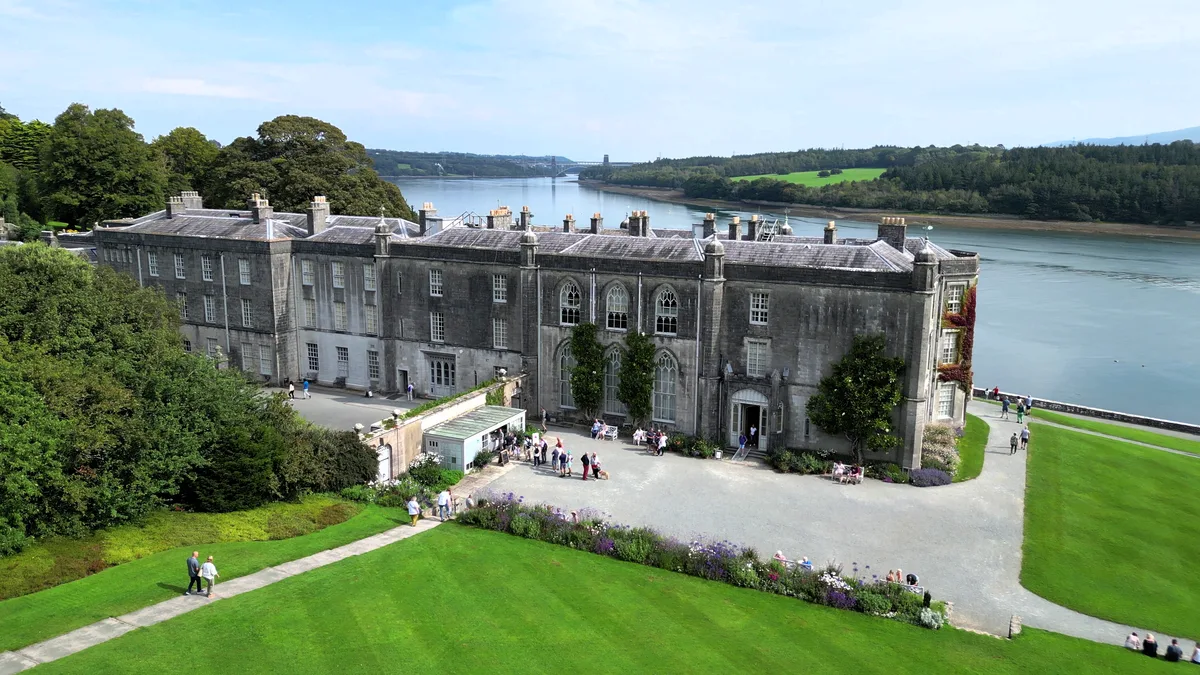
Plas Newydd
Historic houses · 1.5 km

Waterloo Cavalry Museum
Museums · 1.5 km

Nelson's Statue
Memorials & monuments · 1.6 km
%3B_June_2023.jpg?width=1200)
Britannia Bridge
Historic bridges · 1.6 km

Plas Newydd Burial Chamber
Archaeological sites · 1.6 km
Nearby
📷 3📷 4Other places · North Wales
Faenol Festival
The Faenol Festival (Welsh: Gŵyl y Faenol) was a music festival organised by Welsh singer Bryn Terfel, originally held annually on the Faenol Estate (Welsh: Y Faenol), near Y Felinheli in Gwynedd, nor
📷 3Chapels · North Wales
Chapel Of St Mary To N Of Vaynol Old Hall
Chapel Of St Mary To N Of Vaynol Old Hall — Grade I listed building in the United Kingdom.
📷 5Natural landmarks · North Wales
Ysgol Glanaethwy
Ysgol Glanaethwy — a school heritage in wales-north, United Kingdom.
📷 5Historic churches · North Wales
Port Church and Port Church House
Port Church and Port Church House — Grade II listed building-listed church in wales-north, United Kingdom.
📷 3Memorials & monuments · North Wales
Section of Britannia Bridge
Section of Britannia Bridge — a memorial in North Wales, United Kingdom.
Where to eat & stay near Vaynol
Places to stay
 📷 7
📷 7 📷 5
📷 5 📷 7
📷 7 📷 7
📷 7 📷 5
📷 5Caravan parks · North Wales
The Straits Lodge Park
The Straits Lodge Park — a caravan park in wales north.
 📷 5
📷 5Caravan parks · North Wales
Ael y Garnedd Caravan park
Ael y Garnedd Caravan park — a caravan park in wales north.
Places to eat & drink
 📷 5
📷 5 📷 6
📷 6 📷 5
📷 5 📷 5📷 5
 📷 5
📷 5More historic houses in this region
 📷 3
📷 3Historic houses · North Wales
2 & 2A Record Street, Ruthin
2 & 2A Record Street, Ruthin — Grade II listed house in Ruthin, Denbighshire.
 📷 3
📷 3Historic houses · North Wales
Aberconwy House
Aberconwy House — historic house in Conwy, Wales.
 📷 3
📷 3 📷 3
📷 3Frequently asked questions
- Where is Vaynol?
- Vaynol is in North Wales, United Kingdom (postcode LL57 4BP), in the parish of Pentir.
- What is Vaynol?
- Vaynol or Y Faenol (Welsh [ə ˈveɨnɔl]) is a country estate dating from the Tudor period near Y Felinheli in Gwynedd, North Wales (grid reference SH536695). It has 1,000 acres (4.0 km2) of park, farmla
- How do I get to Vaynol?
- The nearest railway station is Llanfairpwll, about 2.4 km away. The nearest town is Llanfairpwllgwyngyll. Drivers can use postcode LL57 4BP.
- How do I get to Vaynol?
- The nearest railway station is Llanfairpwll, about 2.4 km away. Drivers can navigate to postcode LL57 4BP.