
Cathedrals · East Midlands
The Lawn, Lincoln
In or near Lincoln.
The Lawn is an early nineteenth century Greek revival building on Union Road, in Lincoln, Lincolnshire, England, 0.3 miles (0.5 km) to the west of Lincoln Cathedral. The complex features a walled gard

Richard Croft — CC BY-SA 2.0 via Wikimedia Commons licence

Plan your visit
- Typical visit
- 1 h–2 h
- Best time of year
- Year-round
- Nearest railway station
- Lincoln · 1.0 km
- Family-friendly
- Limited wheelchair access
Getting there & planning your visit
The Lawn in Lincoln can be reached from Lincoln railway station, which is 1 km away. Entry information is not provided, and wheelchair accessibility is limited. The postcode for sat-nav is LN1 3AA.
About
The Lawn is an early nineteenth century Greek revival building on Union Road, in Lincoln, Lincolnshire, England, 0.3 miles (0.5 km) to the west of Lincoln Cathedral. The complex features a walled garden and children's play area. The building, which is a Grade II* listed building, housed The Lawn Hospital for Mental and Nervous Diseases from 1921 until 1985.
Photo gallery
Heritage listing
The Lawn is an early nineteenth century Greek revival building on Union Road, in Lincoln, Lincolnshire, England, 0.3 miles (0.5 km) to the west of Lincoln Cathedral. The complex features a walled garden and children's play area. The building, which is a Grade II* listed building, housed The Lawn Hospital for Mental and Nervous Diseases from 1921 until 1985.
From the Historic England List Entry under OGL v3.
From the Wikipedia article
The Lawn is an early nineteenth century Greek revival building on Union Road, in Lincoln, Lincolnshire, England, 0.3 miles (0.5 km) to the west of Lincoln Cathedral. The complex features a walled garden and children's play area. The building, which is a Grade II* listed building, housed The Lawn Hospital for Mental and Nervous Diseases from 1921 until 1985.
Excerpt from Wikipedia under CC BY-SA 4.0. See the source article linked in Sources below.
Background
History
, physician and life governor of the hospital from 1820 until his death in 1853]] ]] The hospital's origins lie in a bequest by Dr Paul Parnell to establish an asylum in Lincoln. After delay caused by indecision by the management of the asylum, the project went ahead in 1817, and a facility designed by Richard Ingleman in the Greek revival style opened as the Lincoln Lunatic Asylum in April 1820. It was at the asylum that, in the 1830s, Robert Gardiner Hill, with the support of Edward Parker Charlesworth, pioneered a mode of treatment that suited "all types" of patients, so that mechanical restraints and coercion could be dispensed with—a situation he finally achieved in 1838. In 1839…
Sourced from Wikipedia under CC BY-SA 4.0.
- Coordinates
- 53.2350, -0.5439
- County
- Lincolnshire
- District
- Lincoln
- Parish
- Lincoln, unparished area
- Postcode
- LN1 3AA
- Parliamentary constituency
- Lincoln
- Established
- 1817
- Nearest railway station
- Lincoln — 1 km
- Official site
- www.hpft.nhs.uk
Sources
- wikipedia: The Lawn, Lincoln (CC BY-SA 4.0)
Other places nearby

The Lawn, Lincoln
Open-air theatres · 0.0 km

Roman city gate
Archaeological sites · 0.1 km

Lucy Tower
Historic houses · 0.2 km
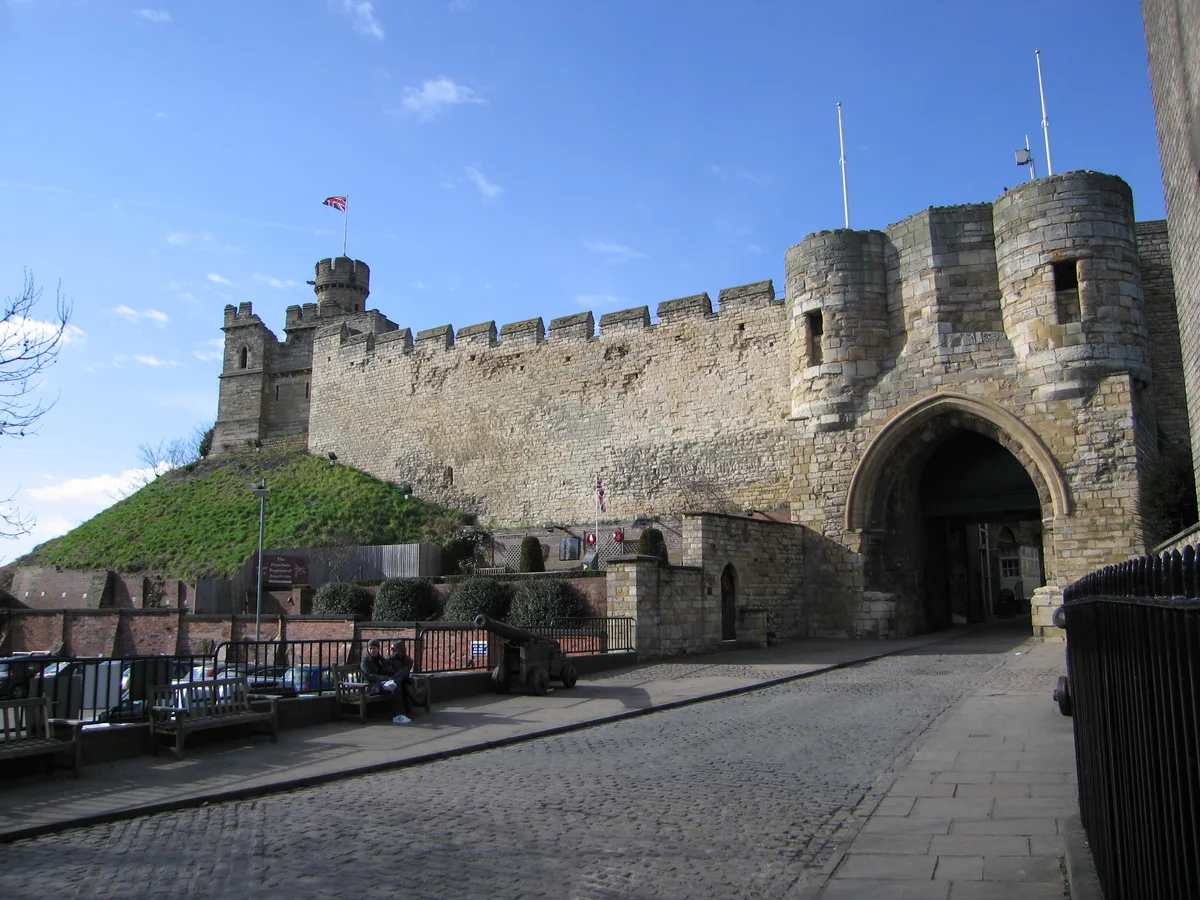
Lincoln Castle
Castles · 0.2 km

King George III
Public art & sculpture · 0.2 km

Lincoln Eleanor Cross
Memorials & monuments · 0.2 km

Westgate Water Tower
Memorials & monuments · 0.3 km

Lincoln UTC
Natural landmarks · 0.3 km

St Paul in the Bail
Archaeological sites · 0.3 km

Museum of Lincolnshire Life
Museums · 0.3 km

Mint Wall (Roman fortifications)
Archaeological sites · 0.3 km
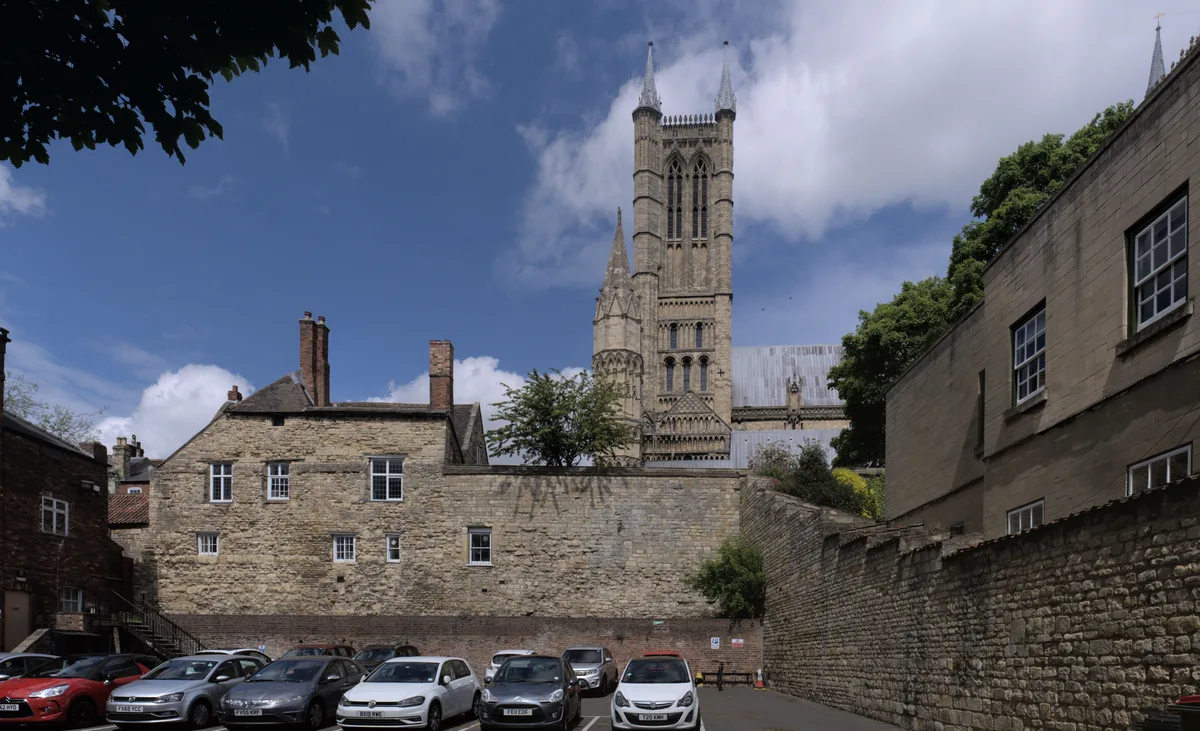
Lincoln Roman colonia (Lindum)
Archaeological sites · 0.3 km
Nearby
📷 5Open-air theatres · East Midlands
The Lawn, Lincoln
The Lawn, Lincoln — a open-air theatre in england east midlands.
📷 3Archaeological sites · East Midlands
Roman city gate
Roman city gate — an archaeological site in East Midlands, United Kingdom.
📷 3Historic houses · East Midlands
Lucy Tower
Lucy Tower — a historic house in East Midlands, United Kingdom.
📷 5Castles · East Midlands
Lincoln Castle
Lincoln Castle — Grade I listed building in Lincolnshire, England, UK.
📷 3Public art & sculpture · East Midlands
King George III
King George III — a public art in East Midlands, United Kingdom.
📷 3Memorials & monuments · East Midlands
Lincoln Eleanor Cross
Lincoln Eleanor Cross — a memorial in East Midlands, United Kingdom.
Where to eat & stay near The Lawn, Lincoln
Places to stay
 📷 5
📷 5 📷 5
📷 5B&Bs · East Midlands
Cathedral View Guest House
Cathedral View Guest House — a bed-and-breakfast in england east midlands.
 📷 5
📷 5Hotels · East Midlands
The Old Palace Lodge
The Old Palace Lodge — a hotel in england east midlands.
 📷 7
📷 7Hotels · East Midlands
DoubleTree by Hilton Lincoln
DoubleTree by Hilton Lincoln — a hotel in england east midlands. 4-star. Brand: DoubleTree.
Hostels · East Midlands
Lincoln Digs
Lincoln Digs — a hostel in england east midlands.
 📷 5
📷 5Places to eat & drink
 📷 5
📷 5 📷 5
📷 5Restaurants · East Midlands
Cafe Zoot
Cafe Zoot — a restaurant in england east midlands.
📷 7 📷 5
📷 5Historic pubs · East Midlands
268, High Street
268, High Street in England East Midlands, United Kingdom.
 📷 5
📷 5Cafés · East Midlands
Madame Waffle
Madame Waffle — a café in england east midlands.
 📷 5
📷 5Cafés · East Midlands
Little Lincoln Cafe
Little Lincoln Cafe — a café in england east midlands.
More cathedrals in this region
 Flagship📷 3
Cathedrals · East Midlands
Vaudey Abbey
Vaudey Abbey is a cathedral in the United Kingdom.
 📷 4
📷 4Cathedrals · East Midlands
Bourne Abbey
Bourne Abbey is a cathedral in the United Kingdom.
 📷 4
📷 4Cathedrals · East Midlands
Crowland Abbey
Crowland Abbey is a cathedral in the United Kingdom.
 📷 4
📷 4Frequently asked questions
- Where is The Lawn, Lincoln?
- The Lawn, Lincoln is in Lincolnshire, the East Midlands, United Kingdom (postcode LN1 3AA), in the parish of Lincoln, unparished area.
- What is The Lawn, Lincoln?
- The Lawn is an early nineteenth century Greek revival building on Union Road, in Lincoln, Lincolnshire, England, 0.3 miles (0.5 km) to the west of Lincoln Cathedral. The complex features a walled gard
- How do I get to The Lawn, Lincoln?
- The nearest railway station is Lincoln, about 1.0 km away. The nearest town is Lincoln. Drivers can use postcode LN1 3AA.
- When was The Lawn, Lincoln built?
- Built or established in 1817.
- Is The Lawn, Lincoln a listed building?
- The Lawn, Lincoln is officially recognised as Grade II* listed building listed.
- How do I get to The Lawn, Lincoln?
- The nearest railway station is Lincoln, about 1.0 km away. Drivers can navigate to postcode LN1 3AA.