
Public art & sculpture · East Midlands
Spider
In or near Cromford.
Spider — a public art in East Midlands, United Kingdom.

David Hallam-Jones — CC BY-SA 2.0 via Wikimedia Commons licence

Plan your visit
- Typical visit
- 1 h–2 h
- Nearest railway station
- Steeple Grange · 0.3 km
- Free entry
- Dog-friendly
Getting there & planning your visit
To visit the Spider public art installation, head to postcode DE4 4GT in Derbyshire Dales. The nearest railway station is Steeple Grange, located 0.3 km away. Entry is free.
About
Spider is a public art located in East Midlands, United Kingdom. Sourced from OpenStreetMap (ODbL licence); see local listings for visitor information, opening hours and admission details.
Photo gallery
Protected designations
- Site of Special Scientific Interest: Via Gellia Woodlands SSSI
Designations sourced from Natural England open data under OGL v3.
From the Wikipedia article
Spiders (order Araneae) are air-breathing arthropods that have eight limbs, chelicerae with fangs generally able to inject venom, and spinnerets that extrude silk. They are the largest order of arachnids and rank seventh in total species diversity among all orders of organisms. Spiders are found worldwide on every continent except Antarctica, and have become established in nearly every land habitat. As of January 2026, 53,680 spider species in 139 families have been recorded by taxonomists. However, there has been debate among scientists about how families should be classified, with over 20 different classifications proposed since 1900. Anatomically, spiders (as with all arachnids) differ from other arthropods in that the usual body segments are fused into two tagmata, the cephalothorax or prosoma, and the opisthosoma, or abdomen, and joined by a small, cylindrical pedicel. However, as there is currently neither paleontological nor embryological evidence that spiders ever had a separate thorax-like division, there exists an argument against the validity of the term cephalothorax, which means fused cephalon (head) and the thorax. Similarly, arguments can be formed against the use of the term "abdomen", as the opisthosoma of all spiders contains a heart and respiratory organs, organs atypical of an abdomen. Unlike insects, spiders do not have antennae. In all except the most primitive group, the Mesothelae, spiders have the most centralized nervous systems of all arthropods, as all their ganglia are fused into one mass in the cephalothorax. Unlike most arthropods, spiders have no extensor muscles in their limbs and instead extend them by hydraulic pressure. Their abdomens bear appendages, modified into spinnerets that extrude silk from up to six types of glands. Spider webs vary widely in size, shape and the amount of sticky thread used. It now appears that the spiral orb web may be one of the earliest forms, and spiders that produce tangled cobwebs are more abundant and diverse than orb-weaver spiders. Spider-like arachnids with silk-producing spigots (Uraraneida) appeared in the Devonian period, about 386 million years ago, but these animals apparently lacked spinnerets. True spiders have been found in Carboniferous rocks from 318 to 299 million years ago and are very similar to the most primitive surviving suborder, the Mesothelae. The main groups of modern spiders, Mygalomorphae and Araneomorphae, first appeared in the Triassic period, more than 200 million years ago. The species Bagheera kiplingi was described as herbivorous in 2008, but all other known species are predators, mostly preying on insects and other spiders, although a few large species also take birds and lizards. An estimated 25 million tons of spiders kill 400–800 million tons of prey every year. Spiders use numerous strategies to capture prey: trapping it in sticky webs, lassoing it with sticky bolas, mimicking the prey to avoid detection, or running it down. Most detect prey mainly by sensing vibrations, but the active hunters have acute vision and hunters of the genus Portia show signs of intelligence in their choice of tactics and ability to develop new ones. Spiders' guts are too narrow to take solids, so they liquefy their food by flooding it with digestive enzymes. They also grind food with the bases of their pedipalps, as arachnids do not have the mandibles that crustaceans and insects have. To avoid being eaten by the females, which are typically much larger,…
Excerpt from Wikipedia under CC BY-SA 4.0. See the source article linked in Sources below.
- Coordinates
- 53.0976, -1.5667
- County
- Derbyshire
- District
- Derbyshire Dales
- Parish
- Wirksworth
- Postcode
- DE4 4GT
- Parliamentary constituency
- Derbyshire Dales
- Nearest railway station
- Steeple Grange — 0.3 km
Sources
- osm: node/6700389887 (ODbL)
- wikipedia: Spider (CC BY-SA 4.0)
Other places nearby

Black Rocks
Climbing & bouldering crags · 0.3 km

Bolehill
Mountains & hills · 0.4 km
Bolehill
Mountains & hills · 0.5 km

Bolehill And Steeple Grange War Memorial
Memorials & monuments · 0.6 km

Love the Wood and the Stones
Public art & sculpture · 0.6 km
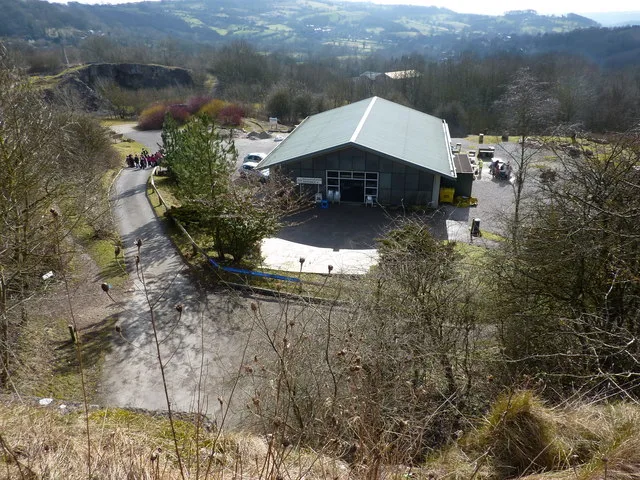
National Stone Centre
Museums · 0.6 km

Colehill Quarry
Climbing & bouldering crags · 0.7 km
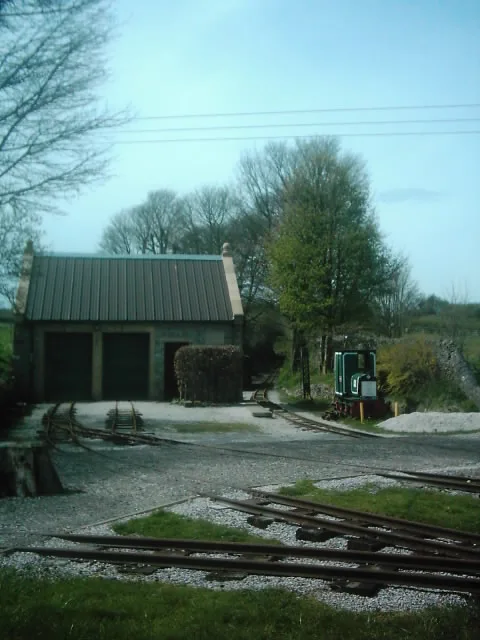
Steeple Grange Light Railway
Heritage railways · 0.7 km

Ravenstor railway station
Heritage railways · 0.9 km

Sheep Pasture Engine House
Historic houses · 1.1 km

Cromford
Towns & cities · 1.2 km

Middleton Top Campsite (Caravan & Camping Club)
Campsites · 1.3 km
Nearby
📷 5Climbing & bouldering crags · East Midlands
Black Rocks
Black Rocks — a climbing crag in england east midlands.
📷 5📷 5Mountains & hills · East Midlands
Bolehill
Bolehill — mountain in england east midlands. Elevation: 323 m.
📷 3Memorials & monuments · East Midlands
Bolehill And Steeple Grange War Memorial
Bolehill And Steeple Grange War Memorial — Grade II listed building-listed memorial in england-east-midlands, United Kingdom.
📷 3Public art & sculpture · East Midlands
Love the Wood and the Stones
Love the Wood and the Stones — a public art in East Midlands, United Kingdom.
📷 3Museums · East Midlands
National Stone Centre
National Stone Centre is a museum in the United Kingdom.
Where to eat & stay near Spider
Places to stay
📷 5Campsites · East Midlands
Middleton Top Campsite (Caravan & Camping Club)
Middleton Top Campsite (Caravan & Camping Club) — a campsite in england east midlands.
 📷 5
📷 5 📷 5
📷 5Hotels · East Midlands
New Bath Hotel
New Bath Hotel — a hotel in england east midlands.
 📷 5
📷 5Caravan parks · East Midlands
Birchwood Farm
Birchwood Farm — a caravan park in england east midlands.
 📷 5
📷 5Campsites · East Midlands
Peak View Caravan Site
Peak View Caravan Site — a campsite in england east midlands.
 📷 7
📷 7Places to eat & drink
 📷 7
📷 7Historic pubs · East Midlands
Greyhound Hotel
Greyhound Hotel in England East Midlands, United Kingdom.
 📷 5
📷 5 📷 5
📷 5 📷 5
📷 5Restaurants · East Midlands
Le Mistral
Le Mistral — a restaurant in england east midlands.
📷 5📷 5More places in this region
 📷 5
📷 5Public art & sculpture · East Midlands
West Walton Village Sign
West Walton Village Sign — a public art in East Midlands, United Kingdom.
 📷 5
📷 5Public art & sculpture · East Midlands
Tilney St Lawrence Village Sign
Tilney St Lawrence Village Sign — a public art in East Midlands, United Kingdom.
 📷 5
📷 5Public art & sculpture · East Midlands
Emneth Village Sign
Emneth Village Sign — a public art in East Midlands, United Kingdom.
 📷 5
📷 5Public art & sculpture · East Midlands
Marshland St James Village Sign
Marshland St James Village Sign — a public art in East Midlands, United Kingdom.
Frequently asked questions
- Where is Spider?
- Spider is in Derbyshire, the East Midlands, United Kingdom (postcode DE4 4GT), in the parish of Wirksworth.
- What is Spider?
- Spider — a public art in East Midlands, United Kingdom.
- How do I get to Spider?
- The nearest railway station is Steeple Grange, about 0.3 km away. The nearest town is Cromford. Drivers can use postcode DE4 4GT.
- Is Spider a protected site?
- Yes — Spider is part of the Via Gellia Woodlands SSSI Site of Special Scientific Interest.
- Is Spider free to visit?
- Yes, Spider is free to enter.
- How do I get to Spider?
- The nearest railway station is Steeple Grange, about 0.3 km away. Drivers can navigate to postcode DE4 4GT.