
Public art & sculpture · Central Scotland
Skull
Also known as: Penglog, Blaosc
In or near Glasgow.
Skull — a public art in Central Scotland, United Kingdom.

Patrick Mackie — CC BY-SA 2.0 via Wikimedia Commons licence

Plan your visit
- Typical visit
- 1 h–2 h
- Nearest railway station
- Argyle Street · 0.3 km
- Free entry
- Dog-friendly
- Wheelchair accessible
Getting there & planning your visit
To visit the public art installation "Skull," head to Glasgow City, postcode G1 5HB. The nearest railway station is Argyle Street, located just 0.3 km away. Entry is free.
About
Skull is a public art located in Central Scotland, United Kingdom. Sourced from OpenStreetMap (ODbL licence); see local listings for visitor information, opening hours and admission details.
Photo gallery
See it from the streetimagery from 2021
Imagery © Mapillary contributors, CC BY-SA 4.0
Official information
The Tron Theatre is a cultural venue in Glasgow that hosts a variety of performances, including plays and community events. It offers accessible services such as captioned and audio-described performances to enhance the experience for all visitors.
From the Wikipedia article
The skull, or cranium, is typically a bony enclosure around the brain of a vertebrate. In some fish and amphibians, the skull is of cartilage. The skull is at the head end of the vertebrate. In a human, the skull comprises two prominent parts: the neurocranium and the facial skeleton, which evolved from the first pharyngeal arch. The skull forms the frontmost portion of the axial skeleton and is a product of cephalization and vesicular enlargement of the brain, with several special senses structures such as the eyes, ears, nose, tongue and, in fish, specialized tactile organs such as barbels near the mouth. The skull is composed of three types of bone: cranial bones, facial bones and ossicles, which is made up of a number of fused flat and irregular bones. The cranial bones are joined at firm fibrous junctions called sutures and contains many foramina, fossae, processes, and sinuses. In zoology, the openings in the skull are called fenestrae, the most prominent of which is the foramen magnum, where the brainstem goes through to join the spinal cord. In human anatomy, the neurocranium (or braincase), is further divided into the calvaria and the endocranium, together forming a cranial cavity that houses the brain. The interior periosteum forms part of the dura mater, the facial skeleton and splanchnocranium with the mandible being its largest bone. The mandible articulates with the temporal bones of the neurocranium at the paired temporomandibular joints. The skull itself articulates with the spinal column at the atlanto-occipital joint. The human skull fully develops two years after birth. Functions of the skull include physical protection for the brain, providing attachments for neck muscles, facial muscles and muscles of mastication, providing fixed eye sockets and outer ears (ear canals and auricles) to enable stereoscopic vision and sound localisation, forming nasal and oral cavities that allow better olfaction, taste and digestion, and contributing to phonation by acoustic resonance within the cavities and sinuses. In some animals such as ungulates and elephants, the skull also has a function in anti-predator defense and sexual selection by providing the foundation for horns, antlers and tusks. The English word skull is probably derived from Old Norse skulle, while the Latin word cranium comes from the Greek root κρανίον (kranion).
Excerpt from Wikipedia under CC BY-SA 4.0. See the source article linked in Sources below.
Background
History
Trepanning, a practice in which a hole is created in the skull, has been described as the oldest surgical procedure for which there is archaeological evidence, found in the forms of cave paintings and human remains. At one burial site in France dated to 6500 BCE, 40 out of 120 prehistoric skulls found had trepanation holes.
Sourced from Wikipedia under CC BY-SA 4.0.
- Coordinates
- 55.8564, -4.2458
- District
- Glasgow City
- Postcode
- G1 5HB
- Parliamentary constituency
- Glasgow East
- Phone
- +44 141 552 4267
- Nearest railway station
- Argyle Street — 0.3 km
Sources
- osm: node/1362150042 (ODbL)
- wikipedia: Skull (CC BY-SA 4.0)
Other places nearby

Tron Theatre
Open-air theatres · 0.0 km
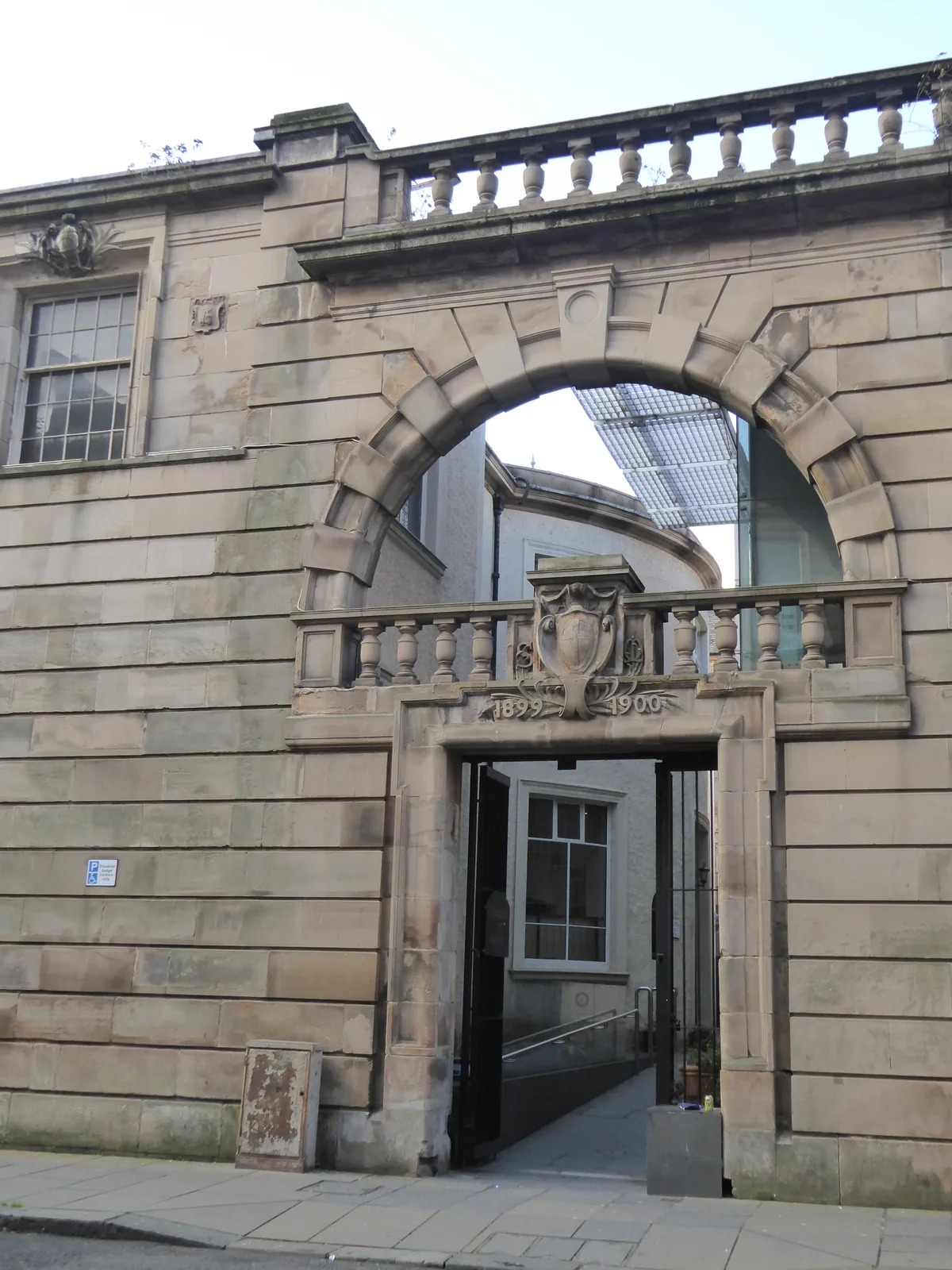
Tron Theatre
Theatres · 0.0 km

Modern Institute
Galleries · 0.1 km

Tranmission
Galleries · 0.1 km
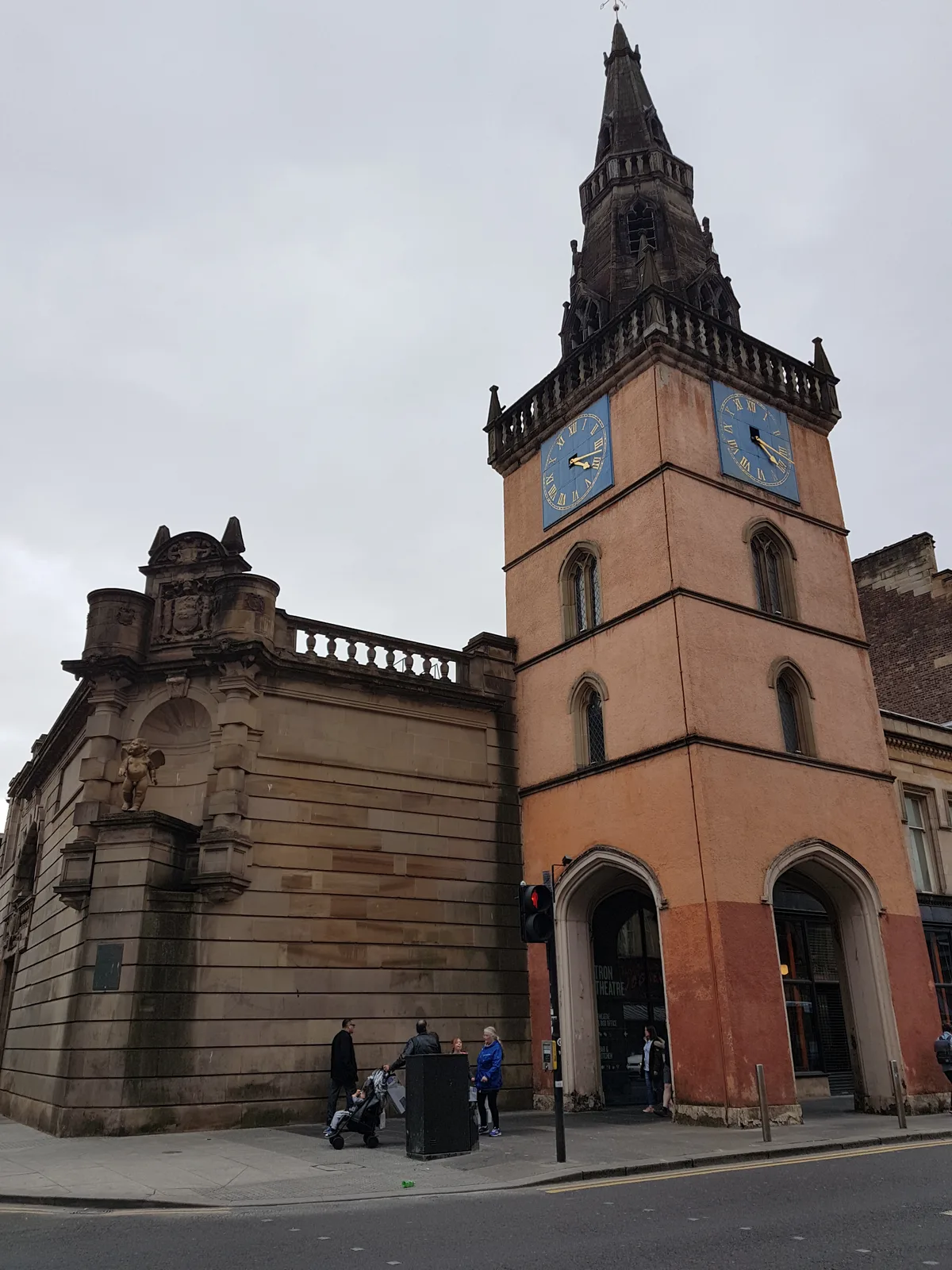
Collegiate Church of the Blessed Virgin Mary and St Anne, Glasgow
Historic churches · 0.1 km

Cherub
Public art & sculpture · 0.1 km

Trongate Gallery
Galleries · 0.1 km

Glasgow Women's Library
Historic libraries · 0.1 km

Sharmanka Kinetic Theatre/Gallery
Galleries · 0.1 km

Britannia Music Hall
Open-air theatres · 0.1 km

Empire
Public art & sculpture · 0.1 km
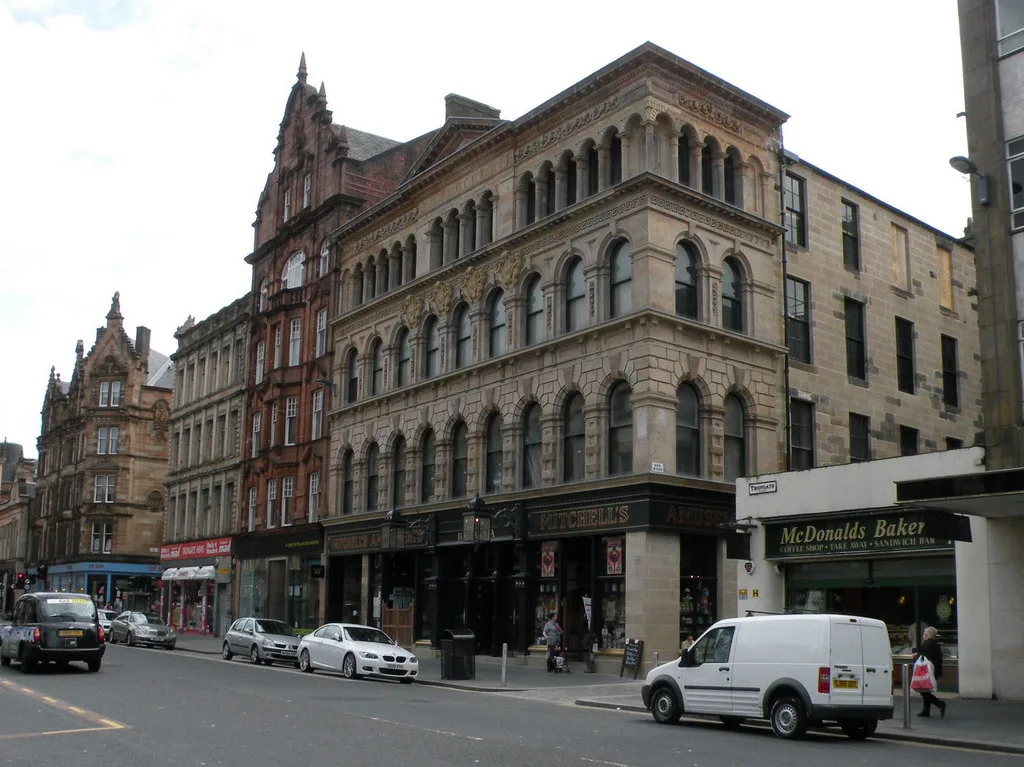
Britannia Panopticon
Theatres · 0.1 km
Nearby
📷 5Open-air theatres · Central Scotland
Tron Theatre
Tron Theatre — a open-air theatre in scotland central.
📷 5📷 3Galleries · Central Scotland
Modern Institute
Modern Institute — a gallery in Central Scotland, United Kingdom.
📷 3Galleries · Central Scotland
Tranmission
Tranmission — a gallery in Central Scotland, United Kingdom.
📷 3Historic churches · Central Scotland
Collegiate Church of the Blessed Virgin Mary and St Anne, Glasgow
Collegiate Church of the Blessed Virgin Mary and St Anne, Glasgow — church in Glasgow, Scotland, UK.
📷 5Public art & sculpture · Central Scotland
Cherub
Cherub — a public art in Central Scotland, United Kingdom.
Where to eat & stay near Skull
Places to stay
 📷 5
📷 5Hotels · Central Scotland
Merchant City Inn
Merchant City Inn — a hotel in scotland central.
 📷 5
📷 5Hotels · Central Scotland
Ibis Styles Glasgow Centre George Square
Ibis Styles Glasgow Centre George Square — a hotel in scotland central. 3-star. Brand: Ibis Styles.
 📷 5
📷 5Hostels · Central Scotland
Wallace of Campsie House
Wallace of Campsie House — a hostel in scotland central.
 📷 5
📷 5 📷 5
📷 5Hotels · Central Scotland
Millennium Hotel Glasgow
Millennium Hotel Glasgow — a hotel in scotland central.
 📷 7
📷 7Places to eat & drink
 📷 5
📷 5Historic pubs · Central Scotland
Public House, 9, 11, 13 Watson Street, Glasgow
Public House, 9, 11, 13 Watson Street, Glasgow in Scotland Central, United Kingdom.
 📷 5
📷 5Historic pubs · Central Scotland
Public House, 69 Hutcheson Street, Glasgow
Public House, 69 Hutcheson Street, Glasgow in Scotland Central, United Kingdom.
 📷 5
📷 5Historic pubs · Central Scotland
40, 41 Carlton Place
40, 41 Carlton Place in Scotland Central, United Kingdom.
 📷 7
📷 7Historic pubs · Central Scotland
Bank of Scotland, 2 St Vincent Place, Glasgow
Bank of Scotland, 2 St Vincent Place, Glasgow in Scotland Central, United Kingdom.
 📷 5
📷 5Historic pubs · Central Scotland
27a, 29 St Vincent Place, Public House
27a, 29 St Vincent Place, Public House in Scotland Central, United Kingdom.
 📷 7
📷 7Historic pubs · Central Scotland
The Crystal Palace
The Crystal Palace in Scotland Central, United Kingdom.
More places in this region
 📷 3
📷 3Public art & sculpture · Central Scotland
Arboreal
Arboreal — Public artwork (poem) by Richard Livermore.
 📷 3
📷 3Public art & sculpture · Central Scotland
Aspiration
Aspiration — Public artwork (sculpture) by Keith McCarter.
 📷 3
📷 3Public art & sculpture · Central Scotland
Casting
Casting — Public artwork (poem) by Morgan Downie.
 📷 3
📷 3Public art & sculpture · Central Scotland
Deserted Village
Deserted Village — Public artwork (poem) by Anne Connolly.
Frequently asked questions
- Where is Skull?
- Skull is in central Scotland, United Kingdom (postcode G1 5HB).
- What is Skull?
- Skull — a public art in Central Scotland, United Kingdom.
- How do I get to Skull?
- The nearest railway station is Argyle Street, about 0.3 km away. The nearest town is Glasgow. Drivers can use postcode G1 5HB.
- Is Skull free to visit?
- Yes, Skull is free to enter.
- How do I get to Skull?
- The nearest railway station is Argyle Street, about 0.3 km away. Drivers can navigate to postcode G1 5HB.