
Memorials & monuments · London
Sir Harry Vane
In or near Tyburn.
Sir Harry Vane — a memorial in London, United Kingdom.

Julian Osley — CC BY-SA 2.0 via Wikimedia Commons licence

Plan your visit
- Typical visit
- 15 min–45 min
- Nearest railway station
- Hampstead · 0.3 km
- Free entry
- Dog-friendly
Getting there & planning your visit
To visit the Sir Harry Vane memorial, you can take a train to Hampstead station, which is approximately 0.3 km away. Entry is free, and the location is accessible. The postcode for your sat-nav is NW3 1RG.
About
Sir Harry Vane is a memorial located in London, United Kingdom. Sourced from OpenStreetMap (ODbL licence); see local listings for visitor information, opening hours and admission details.
Photo gallery
From the Wikipedia article
Sir Henry Vane (1613 – 14 June 1662), often referred to as Harry Vane and Henry Vane the Younger to distinguish him from his father, was an English politician and colonial administrator. He was briefly present in North America, serving one term as the governor of the Massachusetts Bay Colony (1636-37), and supported the creation of Roger Williams' Rhode Island Colony and Harvard College. A proponent of religious tolerance, as governor, he defended Anne Hutchinson and her right to teach religious topics in her home; this put him in direct conflict with the Puritan leaders in the Massachusetts Colony. He returned to England after losing re-election and eventually, Hutchinson was banned from the colony. He was a leading Parliamentarian during the English Civil War and worked closely with Oliver Cromwell. He played no part in the execution of King Charles I in 1649. He left Parliament in disgust at Pride's Purge in December 1648 and did not return until weeks after the King's execution. He refused to take an oath approving the King's execution. Vane served on the Council of State that functioned as the government executive during the Interregnum, but split with Cromwell over issues of governance and removed himself from power when Cromwell dissolved Parliament in 1653. He returned to power during the short-lived Commonwealth period from 1659–1660, following the death of Oliver Cromwell in 1658 and the failure the rule of his son and successor Richard Cromwell. His fight for government reform, a constitution, and civil and religious liberties made him a man "too dangerous to let live" in King Charles II's view. He was arrested under orders from Charles II following his restoration to the throne in 1660. After a long debate, Vane was exempted from the Indemnity and Oblivion Act, and he was denied the amnesty granted to most men for their roles in the Civil War and Interregnum. Although he was formally granted clemency by Charles II, he was indicted for high treason by a Middlesex grand jury after charges were presented by the king's attorney general, Sir Geoffrey Palmer, in 1662. In a court proceeding in which he was denied counsel and the opportunity to properly prepare a defence, he was convicted by a Royalist jury. Charles withdrew his earlier clemency, and Vane was beheaded on Tower Hill on 14 June 1662. Vane was recognised by his political peers as a competent administrator and persuasive negotiator and politician. His politics were driven by a desire for religious tolerance in an era when governments were used to establish official churches and suppress dissenting views. Although his views were in a small minority, he was able to successfully build coalitions to advance his agenda. His actions contributed to both the rise and downfall of the English Commonwealth. His books and pamphlets written on political and religious subjects are still analysed today. His writing A Healing Question advocated for a constitutional convention, pre-dating the American Constitutional Convention by over a century. Vane is remembered in Massachusetts and Rhode Island as an early champion of liberty. The New England Historical and Genealogical Society wrote of him in 1848: Those who have been accustomed to view Roger Williams in his true character, – a great and wonderful man, a pioneer in establishing religious and consequently political liberty, – must accord the same virtues to Sir Henry Vane. It is true, the latter did not lay down his life here in our…
Excerpt from Wikipedia under CC BY-SA 4.0. See the source article linked in Sources below.
- Coordinates
- 51.5551, -0.1744
- District
- Camden
- Parish
- Camden, unparished area
- Postcode
- NW3 1RG
- Parliamentary constituency
- Hampstead and Highgate
- Nearest railway station
- Hampstead — 0.3 km
Sources
- osm: node/7977855697 (ODbL)
- wikipedia: Sir Harry Vane (CC BY-SA 4.0)
Other places nearby
Rosslyn Arms monthly exibitions
Public art & sculpture · 0.1 km

Edith Sitwell
Memorials & monuments · 0.1 km

The Royal School, Hampstead
Natural landmarks · 0.1 km
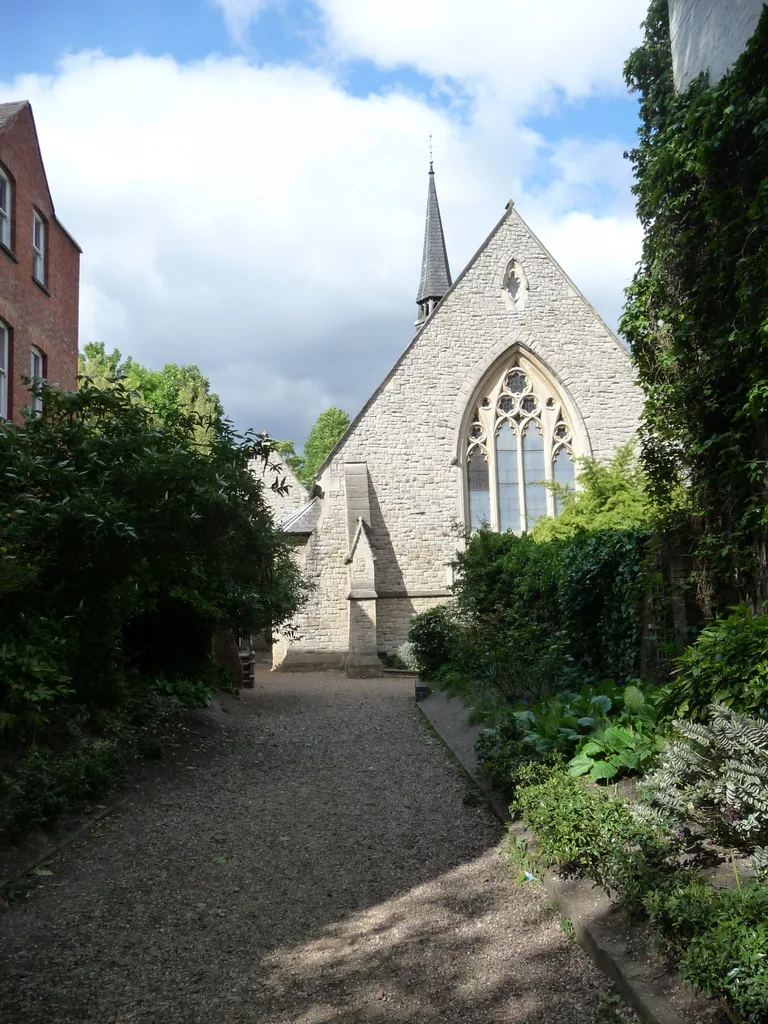
Rosslyn Hill Unitarian Chapel
Historic churches · 0.1 km

Hampstead
Chapels · 0.1 km

William Nicholson
Memorials & monuments · 0.1 km

Ben Nicholson
Memorials & monuments · 0.2 km
St Anthony's Preparatory School
Historic churches · 0.2 km

Jim Henson
Memorials & monuments · 0.2 km

Zebra 1
Public art & sculpture · 0.2 km

The Flask
Historic houses · 0.3 km

The Flask
Historic pubs · 0.3 km
Nearby
📷 5Public art & sculpture · London
Rosslyn Arms monthly exibitions
Rosslyn Arms monthly exibitions — a public art in London, United Kingdom.
📷 5Memorials & monuments · London
Edith Sitwell
Edith Sitwell — a memorial in London, United Kingdom.
📷 5Natural landmarks · London
The Royal School, Hampstead
The Royal School, Hampstead — a school heritage in england-london, United Kingdom.
📷 5Historic churches · London
Rosslyn Hill Unitarian Chapel
Rosslyn Hill Unitarian Chapel — grade II listed church in the London Borough of Camden, England,UK.
📷 5📷 5Memorials & monuments · London
William Nicholson
William Nicholson — a memorial in London, United Kingdom.
Where to eat & stay near Sir Harry Vane
Places to stay
 📷 5
📷 5 📷 5
📷 5 📷 5
📷 5Hotels · London
Anchor House Hotel
Anchor House Hotel — a hotel in england london.
 📷 5
📷 5Hotels · London
St John's Wood Boutique Hotel
St John's Wood Boutique Hotel — a hotel in england london.
 📷 5
📷 5 📷 5
📷 5Places to eat & drink
📷 5 📷 5
📷 5Restaurants · London
Burgh House and Hampstead Museum
Burgh House and Hampstead Museum — a restaurant in england london.
 📷 5
📷 5Historic pubs · London
Wells Tavern
Wells Tavern in England London, United Kingdom.
 📷 5
📷 5Historic pubs · London
Holly Bush
Holly Bush in England London, United Kingdom.
 📷 5
📷 5Historic pubs · London
The Duke of Hamilton
The Duke of Hamilton in England London, United Kingdom.
 📷 5
📷 5Historic pubs · London
The Magdala
The Magdala in England London, United Kingdom.
More memorials in this region
.jpg?width=1200) 📷 5
📷 5Memorials & monuments · London
1st Surrey Rifles War Memorial
1st Surrey Rifles War Memorial is a memorial in the United Kingdom.
 📷 5
📷 5Memorials & monuments · London
24th East Surrey Division War Memorial
24th East Surrey Division War Memorial is a memorial in the United Kingdom.
 📷 5
📷 5Memorials & monuments · London
Abney Park Cemetery CWGC Cross
Abney Park Cemetery CWGC Cross is a memorial in the United Kingdom.
 📷 5
📷 5Memorials & monuments · London
Admiral Sir John Franklin
Admiral Sir John Franklin is a memorial in the United Kingdom.
Frequently asked questions
- Where is Sir Harry Vane?
- Sir Harry Vane is in London, United Kingdom (postcode NW3 1RG), in the parish of Camden, unparished area.
- What is Sir Harry Vane?
- Sir Harry Vane — a memorial in London, United Kingdom.
- How do I get to Sir Harry Vane?
- The nearest railway station is Hampstead, about 0.3 km away. The nearest town is Tyburn. Drivers can use postcode NW3 1RG.
- Is Sir Harry Vane free to visit?
- Yes, Sir Harry Vane is free to enter.
- How do I get to Sir Harry Vane?
- The nearest railway station is Hampstead, about 0.3 km away. Drivers can navigate to postcode NW3 1RG.