
Public art & sculpture · North West England
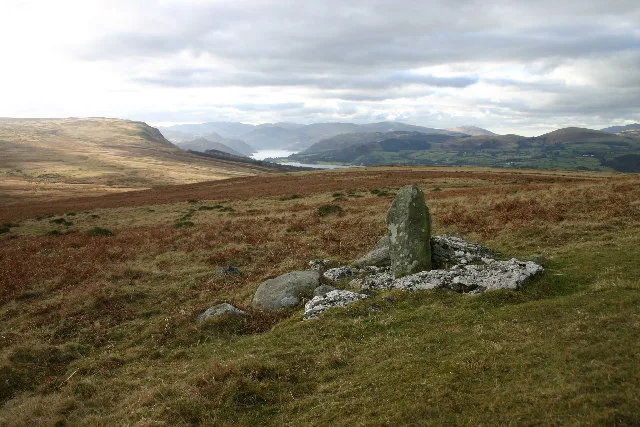
Roman Seat
In or near Howtown.
Roman Seat — a public art in North West England, United Kingdom.

Michael Graham — CC BY-SA 2.0 via Wikimedia Commons licence

Plan your visit
- Typical visit
- 1 h–2 h
- Nearest railway station
- Penrith (North Lakes) · 7.7 km
- Free entry
- Dog-friendly
Getting there & planning your visit
To visit the Roman Seat, the nearest railway station is Penrith (North Lakes), located 7.7 km away. Entry is free, and the postcode for sat-nav is CA10 2LT.
About
Roman Seat is a public art located in North West England, United Kingdom. Sourced from OpenStreetMap (ODbL licence); see local listings for visitor information, opening hours and admission details.
Photo gallery
Protected designations
- Site of Special Scientific Interest: River Eden and Tributaries SSSI
Designations sourced from Natural England open data under OGL v3.
From the Wikipedia article
The Roman Senate (Latin: Senātus Rōmānus) was the highest and constituting assembly of ancient Rome and its aristocracy. With different powers throughout its existence, it lasted from the first days of the city of Rome (traditionally founded in 753 BC) as the Senate of the Roman Kingdom, to the Senate of the Roman Republic and Senate of the Roman Empire and eventually the Byzantine Senate of the Eastern Roman Empire, existing well into the post-classical era and Middle Ages. During the days of the Roman Kingdom, the Senate was generally little more than an advisory council to the king. However, as Rome was an electoral monarchy, the Senate also elected new Roman kings. The last king of Rome, Lucius Tarquinius Superbus, was overthrown following a coup d'état led by Lucius Junius Brutus, who founded the Roman Republic. During the early Republic, the Senate was politically weak, while the various executive Roman magistrates who appointed the senators for life (or until expulsion by Roman censors) were quite powerful. Since the transition from monarchy to constitutional rule was most likely gradual, it took several generations before the Senate was able to assert itself over the executive magistrates. By the middle Republic, the Senate had reached the apex of its republican power. The late Republic saw a decline in the Senate's power, which began following the reforms of the tribunes Tiberius and Gaius Gracchus. After the transition of the Republic into the Principate, the Senate lost much of its political power as well as its prestige. Following the constitutional reforms of Emperor Diocletian, the Senate became politically irrelevant. When the seat of government was transferred out of Rome, the Senate was reduced to a purely municipal body. That decline in status was reinforced when Constantine the Great created an additional senate in Constantinople. After Romulus Augustulus was deposed in 476, the Senate in the Western Empire functioned under the rule of Odoacer (476–489) and during Ostrogothic rule (489–535). It was restored to its official status after the reconquest of Italy by Justinian I but the Western Senate ultimately disappeared after 603, the date of its last recorded public act. Some Roman aristocrats in the Middle Ages bore the title senator, but by this point it was a purely honorific title and does not reflect the continued existence of the classical Senate. The Eastern Senate survived in Constantinople through the 13th century. Although the Latin Senatus was the origin of the modern-day concept of the senate in etymological sense, the Roman Senate was not the ancestor or predecessor of parliamentarism and modern senatorial structures in any direct sense, as the Roman senate was not a de jure legislative body.
Excerpt from Wikipedia under CC BY-SA 4.0. See the source article linked in Sources below.
- Coordinates
- 54.5972, -2.8022
- District
- Westmorland and Furness
- Parish
- Barton and Pooley Bridge
- Postcode
- CA10 2LT
- Parliamentary constituency
- Westmorland and Lonsdale
- Established
- 753
- Nearest railway station
- Penrith (North Lakes) — 7.7 km
Sources
- osm: node/9883912415 (ODbL)
- wikipedia: Roman Senate (CC BY-SA 4.0)
Other places nearby

standing stone 1 m with cast iron collar
Windmills · 0.1 km

Cockpit Stone Circle
Stone circles · 0.5 km

Cockpit Stone Circle
Archaeological sites · 0.5 km

White Raise cairn
Burial mounds & barrows · 0.7 km
Heughscar Hill
Mountains & hills · 0.7 km
Hag Stones
Archaeological sites · 0.9 km

Stone Carving/Artwork
Archaeological sites · 1.3 km

Park Foot Holiday Park
Caravan parks · 1.3 km

Stone Circle
Archaeological sites · 1.4 km

Hillcroft Park
Caravan parks · 1.4 km
Park Foot Camping
Campsites · 1.6 km

Park Foot Camping
Campsites · 1.6 km
Nearby
📷 5Windmills · North West England
standing stone 1 m with cast iron collar
standing stone 1 m with cast iron collar — a post mill in england-north-east, United Kingdom.
📷 3Stone circles · North West England
Cockpit Stone Circle
Cockpit Stone Circle — a stone circle in North West England, United Kingdom.
📷 5Archaeological sites · North West England
Cockpit Stone Circle
Cockpit Stone Circle — archaeological in england north east.
📷 3Burial mounds & barrows · North West England
White Raise cairn
White Raise cairn — a burial mound in North West England, United Kingdom.
📷 3📷 3Archaeological sites · North West England
Hag Stones
Hag Stones — an archaeological site in North West England, United Kingdom.
Where to eat & stay near Roman Seat
Places to stay
📷 5Caravan parks · North West England
Park Foot Holiday Park
Park Foot Holiday Park — a caravan park in scotland lowlands.
📷 5Caravan parks · North West England
Hillcroft Park
Hillcroft Park — a caravan park in scotland lowlands.
📷 5📷 5 📷 5
📷 5Campsites · North West England
Waterside House Camp Site
Waterside House Camp Site — a campsite in scotland lowlands.
 📷 7
📷 7B&Bs · North West England
1863 Ullswater
1863 Ullswater — a bed-and-breakfast in scotland lowlands.
Places to eat & drink
 📷 5
📷 5Historic pubs · North West England
Horse And Farrier Inn And Stables
Horse And Farrier Inn And Stables in Scotland Lowlands, United Kingdom.
 📷 7
📷 7Historic pubs · North West England
Two Lions public house and integral stables
Two Lions public house and integral stables in Scotland Lowlands, United Kingdom.
 📷 6
📷 6Historic pubs · North West England
Gloucester Arms
Gloucester Arms in Scotland Lowlands, United Kingdom.
 📷 7
📷 7Cafés · North West England
Narrowbar Cafe
Narrowbar Cafe — a café in scotland lowlands.
 📷 3
📷 3 📷 7
📷 7Historic pubs · North West England
The Travellers Rest
The Travellers Rest in England North West, United Kingdom.
More places in this region
 📷 3
📷 3Public art & sculpture · North West England
Anyone Who Has a Heart
Anyone Who Has a Heart — Public artwork (sculpture).
 📷 3
📷 3Public art & sculpture · North West England
Generation of Possibilities
Generation of Possibilities — Public artwork (sculpture) by Paul Frank Lewthwaite.
 📷 3
📷 3Public art & sculpture · North West England
Inhuman barriers
Inhuman barriers — Public artwork (mural) by Never Crew.
 📷 3
📷 3Public art & sculpture · North West England
James Fraser
James Fraser — Public artwork (statue) by Thomas Woolner.
Frequently asked questions
- Where is Roman Seat?
- Roman Seat is in North-West England, United Kingdom (postcode CA10 2LT), in the parish of Barton and Pooley Bridge.
- What is Roman Seat?
- Roman Seat — a public art in North West England, United Kingdom.
- How do I get to Roman Seat?
- The nearest railway station is Penrith (North Lakes), about 7.7 km away. The nearest town is Howtown. Drivers can use postcode CA10 2LT.
- When was Roman Seat built?
- Built or established in 753.
- Is Roman Seat a protected site?
- Yes — Roman Seat is part of the River Eden and Tributaries SSSI Site of Special Scientific Interest.
- Is Roman Seat free to visit?
- Yes, Roman Seat is free to enter.
- How do I get to Roman Seat?
- The nearest railway station is Penrith (North Lakes), about 7.7 km away. Drivers can navigate to postcode CA10 2LT.