
Memorials & monuments · London
Queen Alexandra Memorial
In or near London.
Queen Alexandra Memorial — a Grade I-listed memorial in england-london, United Kingdom.

Philip Halling — CC BY-SA 2.0 via Wikimedia Commons licence

Plan your visit
- Typical visit
- 15 min–45 min
- Nearest railway station
- Green Park · 0.5 km
- Free entry
- Dog-friendly
Getting there & planning your visit
To visit the Queen Alexandra Memorial, you can reach it via Green Park station, which is 0.5 km away. Entry is free, but please note that the site is not wheelchair accessible. The postcode for sat-nav is SW1A 1EF.
About
Queen Alexandra Memorial is a Grade I-listed building in england-london, United Kingdom. Grade I status is conferred by Historic England (or Cadw, Historic Environment Scotland or NIEA equivalents) on buildings of exceptional national interest. See the linked Wikipedia article for full historical and architectural details.
Photo gallery
360° viewimagery from 2026
Imagery © Mapillary contributors, CC BY-SA 4.0
Heritage listing
The Queen Alexandra Memorial on Marlborough Road, London, which commemorates Queen Alexandra, was executed by the sculptor Sir Alfred Gilbert between 1926 and 1932. It consists of a bronze screen incorporating allegorical figures, set into the garden wall of Marlborough House and facing St James's Palace. A late example of a work in the Art Nouveau style, it was regarded by the sculptor as his "Swan song". Before 1926 Gilbert was living in exile abroad, having fled Britain in 1901 bankrupt and disgraced after failing to complete the tomb of the Duke of Clarence in St George's Chapel, Windsor Castle.
From the Historic England List Entry under OGL v3.
From the Wikipedia article
The Queen Alexandra Memorial on Marlborough Road, London, which commemorates Queen Alexandra, was executed by the sculptor Sir Alfred Gilbert between 1926 and 1932. It consists of a bronze screen incorporating allegorical figures, set into the garden wall of Marlborough House and facing St James's Palace. A late example of a work in the Art Nouveau style, it was regarded by the sculptor as his "Swan song". Before 1926 Gilbert was living in exile abroad, having fled Britain in 1901 bankrupt and disgraced after failing to complete the tomb of the Duke of Clarence in St George's Chapel, Windsor Castle. Gilbert later claimed that the Duke's mother, Princess Alexandra (Queen Alexandra after her husband's accession to the throne as Edward VII), was the only member of the royal family who supported him after this debacle. She is also supposed to have expressed a wish in her old age that Gilbert might execute her memorial, should he outlive her. In 1926 Gilbert was invited to return to Britain, a result of the machinations of his biographer, the journalist Isabel McAllister. She had the twofold aim of getting Gilbert to complete the Clarence tomb (which he had succeeded in doing by 1928) and to receive the commission for a memorial to Queen Alexandra, who had died the previous year. The artist Lady Helena Gleichen offered her studio in St James's Palace for Gilbert's use. The Committee to Erect a Memorial to Queen Alexandra was set up in late 1926 and approached Gilbert in December of that year. The symbolism of the central sculptural group is explained by Gilbert in an "exegesis" he prepared for the committee in 1927: Central Group—represents "Love Enthroned", supported by Faith and Hope, on either side, and Love is directing a Boy sent out across the "River of Life", which springs from beneath Her Throne—symbolizing Queen Alexandra's charity to Children, also the water typifies Her advent to Great Britain from across the water. The composition is in a style adapted from…
Excerpt from Wikipedia under CC BY-SA 4.0. See the source article linked in Sources below.
- Coordinates
- 51.5047, -0.1368
- District
- Westminster
- Parish
- Westminster, unparished area
- Postcode
- SW1A 1EF
- Parliamentary constituency
- Cities of London and Westminster
- Established
- 1926
- Nearest railway station
- Green Park — 0.5 km
Sources
- wikidata: Q17527305 (CC0)
- wikipedia: Queen Alexandra Memorial (CC BY-SA 4.0)
Other places nearby

Dean's Residence, Queen's Chapel
Chapels · 0.0 km
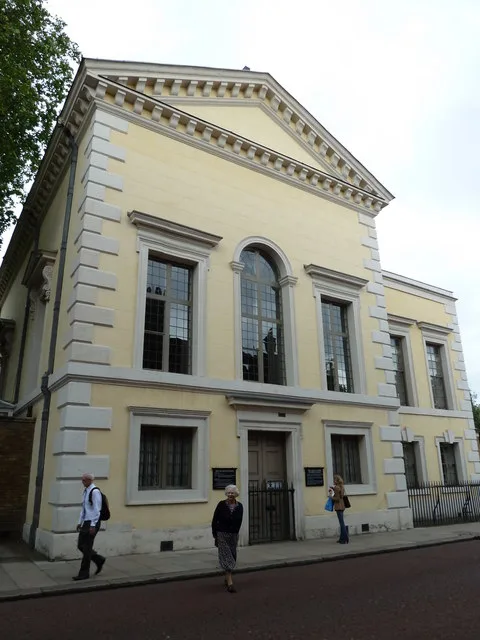
Queen's Chapel
Historic churches · 0.0 km

Marlborough House
Castles · 0.1 km
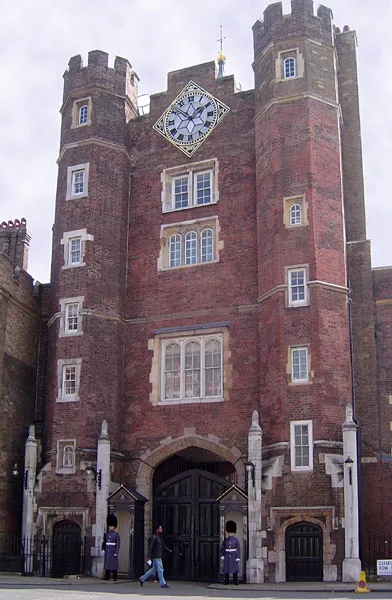
St James's Palace
Palaces · 0.1 km

York House, St. James's Palace
Gardens · 0.1 km
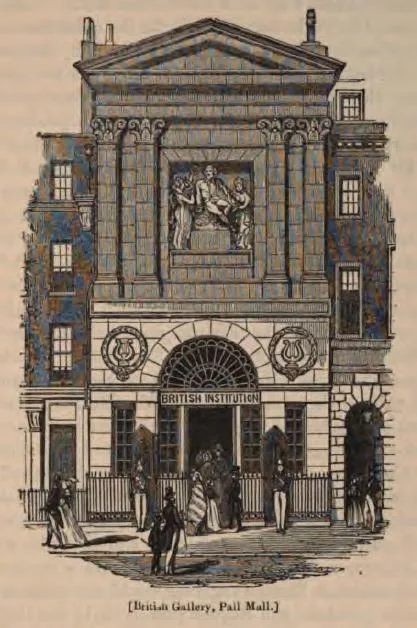
Boydell Shakespeare Gallery
Galleries · 0.1 km

77–78 Pall Mall
Gardens · 0.1 km

79 Pall Mall
Historic houses · 0.1 km

Texas Legation
Memorials & monuments · 0.1 km
.jpg?width=1200)
Schomberg House
Historic houses · 0.1 km

Clarence House
Castles · 0.1 km

The Mall
Natural landmarks · 0.1 km
Nearby
📷 5Chapels · London
Dean's Residence, Queen's Chapel
Dean's Residence, Queen's Chapel — part of chapel in London, UK.
📷 5Historic churches · London
Queen's Chapel
Queen's Chapel — church building in Westminster, London, England, UK.
📷 5★ Iconic📷 5📷 5Gardens · London
York House, St. James's Palace
York House, St. James's Palace — a garden in england-london, United Kingdom.
📷 5Galleries · London
Boydell Shakespeare Gallery
Boydell Shakespeare Gallery — former art gallery in London.
Where to eat & stay near Queen Alexandra Memorial
Places to stay
 📷 7
📷 7 📷 7
📷 7Hotels · London
St James's Hotel and Club
St James's Hotel and Club — a hotel in england london.
 📷 5
📷 5Hotels · London
The Cavendish
The Cavendish — a hotel in england london.
 📷 7
📷 7 📷 5
📷 5Hotels · London
Sofitel London St James
Sofitel London St James — a hotel in england london.
 📷 6
📷 6Places to eat & drink
 📷 5
📷 5 📷 5
📷 5Restaurants · London
Quaglino's
Quaglino's — a restaurant in england london. Cuisine: french;italian pizza;seafood.
 📷 7
📷 7 📷 7
📷 7Restaurants · London
British Academy of Film and Television Arts
British Academy of Film and Television Arts — a restaurant in england london.
 📷 5
📷 5 📷 5
📷 5More memorials in this region
.jpg?width=1200) 📷 5
📷 5Memorials & monuments · London
1st Surrey Rifles War Memorial
1st Surrey Rifles War Memorial is a memorial in the United Kingdom.
 📷 5
📷 5Memorials & monuments · London
24th East Surrey Division War Memorial
24th East Surrey Division War Memorial is a memorial in the United Kingdom.
 📷 5
📷 5Memorials & monuments · London
Abney Park Cemetery CWGC Cross
Abney Park Cemetery CWGC Cross is a memorial in the United Kingdom.
 📷 5
📷 5Memorials & monuments · London
Admiral Sir John Franklin
Admiral Sir John Franklin is a memorial in the United Kingdom.
Frequently asked questions
- Where is Queen Alexandra Memorial?
- Queen Alexandra Memorial is in London, United Kingdom (postcode SW1A 1EF), in the parish of Westminster, unparished area.
- What is Queen Alexandra Memorial?
- Queen Alexandra Memorial — a Grade I-listed memorial in england-london, United Kingdom.
- How do I get to Queen Alexandra Memorial?
- The nearest railway station is Green Park, about 0.5 km away. The nearest town is London. Drivers can use postcode SW1A 1EF.
- When was Queen Alexandra Memorial built?
- Built or established in 1926.
- Is Queen Alexandra Memorial a listed building?
- Queen Alexandra Memorial is officially recognised as Grade I listed.
- Is Queen Alexandra Memorial free to visit?
- Yes, Queen Alexandra Memorial is free to enter.
- How do I get to Queen Alexandra Memorial?
- The nearest railway station is Green Park, about 0.5 km away. Drivers can navigate to postcode SW1A 1EF.