
Public art & sculpture · London
Michael Faraday
In or near Covent Garden.
Michael Faraday — a public art in London, United Kingdom.

Robin Webster — CC BY-SA 2.0 via Wikimedia Commons licence

Plan your visit
- Typical visit
- 1 h–2 h
- Nearest railway station
- Temple · 0.3 km
- Free entry
- Dog-friendly
- Limited wheelchair access
Getting there & planning your visit
You can visit the Michael Faraday public art located in Westminster, London, with the nearest railway station being Temple, just 0.3 km away. Entry is free, but please note that wheelchair accessibility is limited. The postcode for navigation is WC2R 0ET.
About
Michael Faraday is a public art located in London, United Kingdom. Sourced from OpenStreetMap (ODbL licence); see local listings for visitor information, opening hours and admission details.
Photo gallery
From the Wikipedia article
Michael Faraday ( FAYR-uh-day; 22 September 1791 – 25 August 1867) was an English chemist and physicist who contributed vastly to the study of electrochemistry and electromagnetism. His main discoveries include the principles underlying electromagnetic induction, diamagnetism, and electrolysis. Although Faraday received little formal education, as a self-made man, he was one of the most influential scientists in history. It was by his research on the magnetic field around a conductor carrying a direct current that Faraday established the concept of the electromagnetic field in physics. Faraday also established that magnetism could affect rays of light and that there was an underlying relationship between the two phenomena. He similarly discovered the principles of electromagnetic induction, diamagnetism, and the laws of electrolysis. His inventions of electromagnetic rotary devices formed the foundation of electric motor technology, and it was largely due to his efforts that electricity became practical for use in technology. The SI unit of capacitance, the farad, is named after him. As a chemist, Faraday discovered benzene and carbon tetrachloride, investigated the clathrate hydrate of chlorine, invented an early form of the Bunsen burner and the system of oxidation numbers, and popularised terminology such as "anode", "cathode", "electrode" and "ion". Faraday ultimately became the first and foremost Fullerian Professor of Chemistry at the Royal Institution, a lifetime position. Faraday was an experimentalist who conveyed his ideas in clear and simple language, and thought and sensed the physical world in a visual manner, rather than in words or symbols. His mathematical abilities did not extend as far as trigonometry and were limited to the simplest algebra. Physicist and mathematician James Clerk Maxwell took the work of Faraday and others and summarised it in a set of equations which is accepted as the basis of all modern theories of electromagnetic phenomena. On Faraday's uses of lines of force, Maxwell wrote that they show Faraday "to have been in reality a mathematician of a very high order – one from whom the mathematicians of the future may derive valuable and fertile methods." Faraday devoted considerable time and energy to public service. He worked on optimising lighthouses and protecting ships from corrosion. With Charles Lyell, he produced a forensic investigation on a colliery explosion at Haswell, County Durham, indicating for the first time that coal dust contributed to the severity of the explosion, and demonstrating how ventilation could have prevented it. Faraday also investigated industrial pollution at Swansea, air pollution at the Royal Mint, and wrote to The Times on the foul condition of the River Thames during the Great Stink. He refused to work on developing chemical weapons for use in the Crimean War, citing ethical reservations. He declined to have his lectures published, preferring people to recreate the experiments for themselves, to better experience the discovery, and told a publisher: "I have always loved science more than money and because my occupation is almost entirely personal I cannot afford to get rich." Albert Einstein kept a portrait of Faraday on his study wall, alongside those of Isaac Newton and Maxwell. Physicist Ernest Rutherford stated, "When we consider the magnitude and extent of his discoveries and their influence on the progress of science and of industry, there is no honour too great…
Excerpt from Wikipedia under CC BY-SA 4.0. See the source article linked in Sources below.
- Coordinates
- 51.5099, -0.1189
- District
- Westminster
- Parish
- Westminster, unparished area
- Postcode
- WC2R 0ET
- Parliamentary constituency
- Cities of London and Westminster
- Nearest railway station
- Temple — 0.3 km
Sources
- osm: node/13594092400 (ODbL)
- wikipedia: Michael Faraday (CC BY-SA 4.0)
Other places nearby

Memorial to Walter Besant
Public art & sculpture · 0.0 km

Arthur Sullivan
Memorials & monuments · 0.1 km

Savoy Hotel
Historic houses · 0.1 km
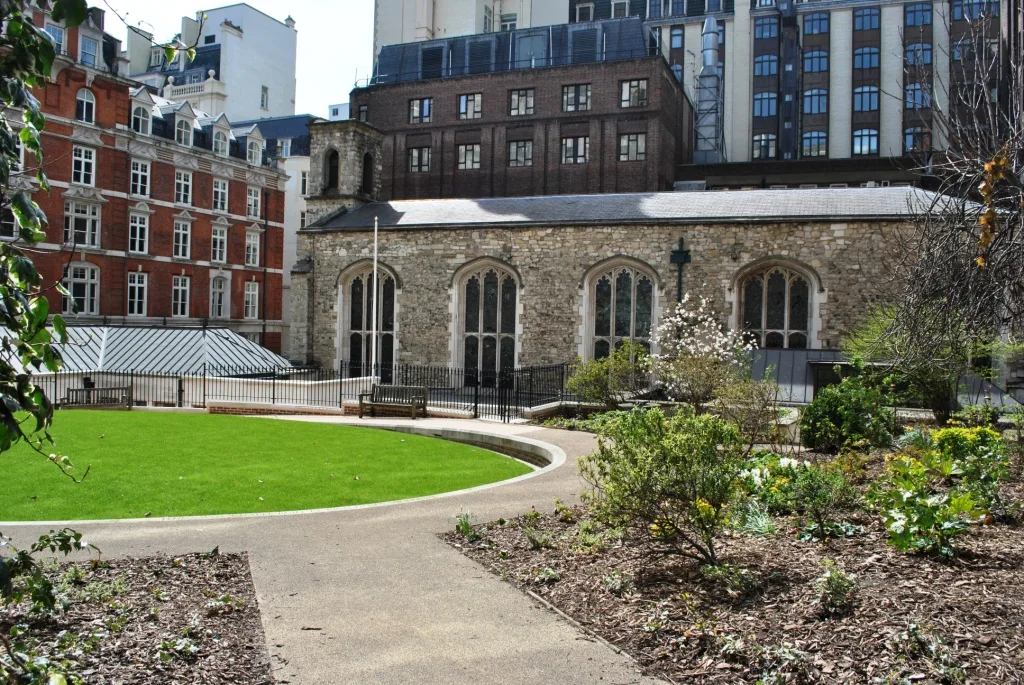
Savoy Chapel
Historic churches · 0.1 km

Civil Service Rifles War Memorial
Memorials & monuments · 0.1 km

Robert Raikes
Memorials & monuments · 0.1 km
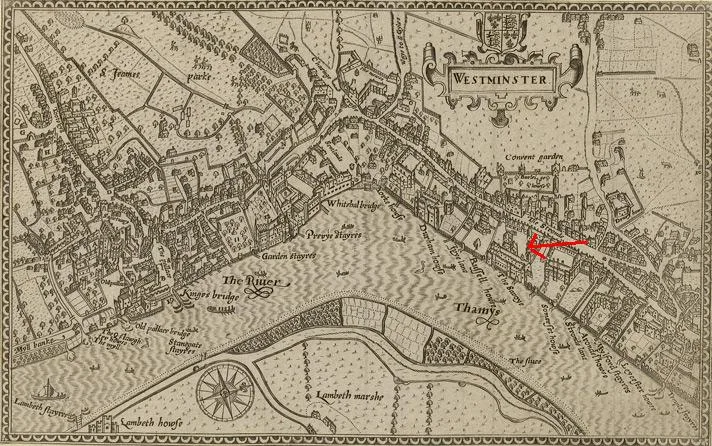
Savoy Palace
Palaces · 0.1 km

Sewer ventilation lamp
Natural landmarks · 0.1 km
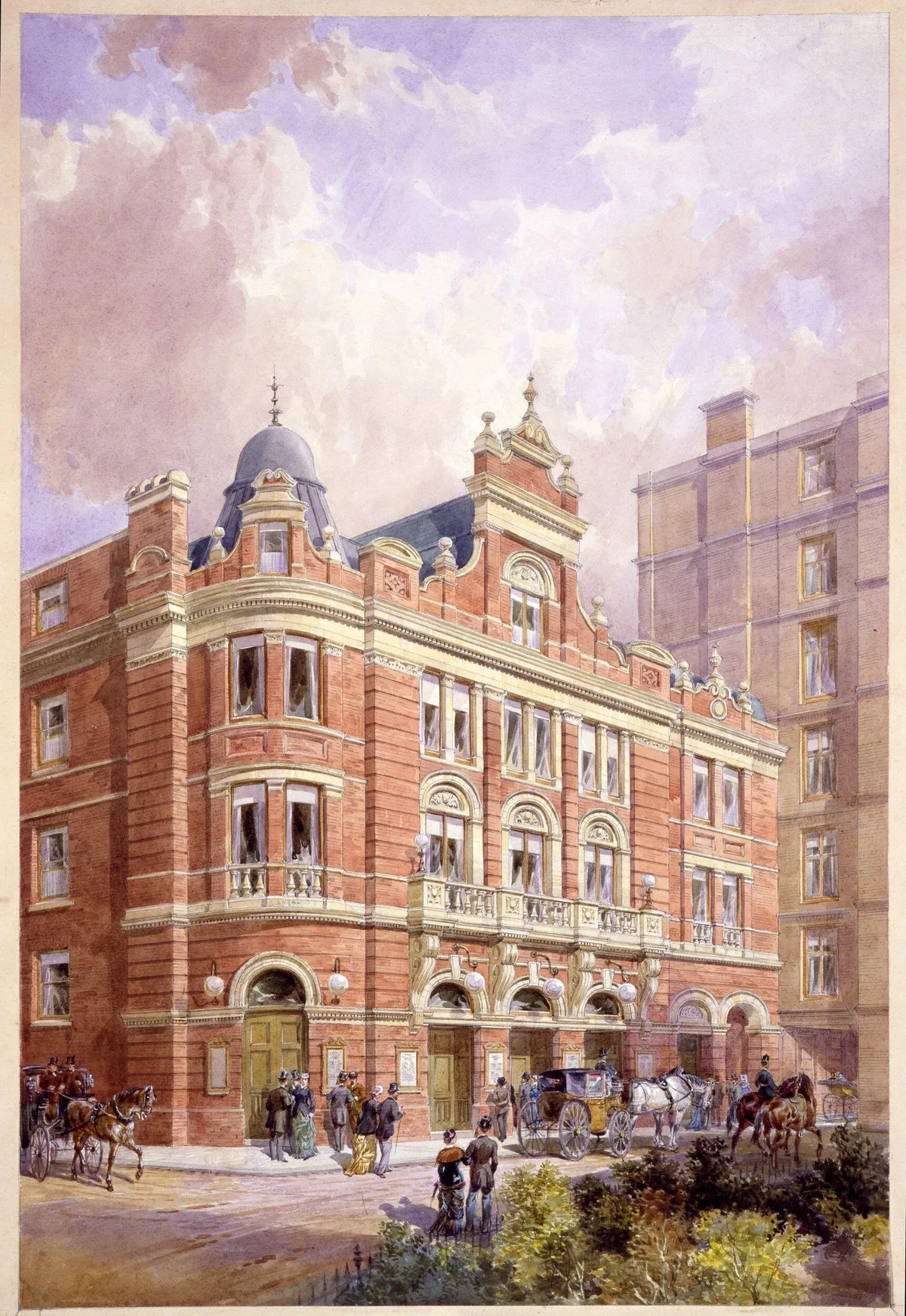
Savoy Theatre
Theatres · 0.1 km

Savoy Theatre
Open-air theatres · 0.1 km

Henry Fawcett Memorial
Memorials & monuments · 0.1 km

Simpson's-in-the-Strand
Historic houses · 0.1 km
Nearby
📷 5Public art & sculpture · London
Memorial to Walter Besant
Memorial to Walter Besant in England London, United Kingdom.
📷 5📷 5Historic houses · London
Savoy Hotel
Savoy Hotel — a Grade II-listed historic house in england-london, United Kingdom.
📷 5Historic churches · London
Savoy Chapel
Savoy Chapel — chapel off the Strand, London.
📷 5Memorials & monuments · London
Civil Service Rifles War Memorial
Civil Service Rifles War Memorial — a memorial in London, United Kingdom.
📷 5Where to eat & stay near Michael Faraday
Places to stay
 📷 5
📷 5Hotels · London
Strand Palace Hotel
Strand Palace Hotel — a hotel in england london.
 📷 5
📷 5 📷 7
📷 7 📷 5📷 5
 📷 7
📷 7Hotels · London
St Martins Lane Hotel
St Martins Lane Hotel — a hotel in england london.
Places to eat & drink
 📷 7
📷 7Historic pubs · London
The Coal Hole
The Coal Hole in England London, United Kingdom.
 📷 5
📷 5Historic pubs · London
Nell Gwynne Tavern
Nell Gwynne Tavern in England London, United Kingdom.
 📷 5
📷 5Restaurants · London
Delamina Townhouse
Delamina Townhouse — a restaurant in england london.
 📷 5
📷 5 📷 7
📷 7Restaurants · London
Balthazar London
Balthazar London — a restaurant in england london.
 📷 5
📷 5More places in this region
 📷 5
📷 5 📷 5
📷 5Public art & sculpture · London
A Conversation with Oscar Wilde
A Conversation with Oscar Wilde — Public artwork (sculpture).
 📷 5
📷 5Public art & sculpture · London
A Sculpture for Mary Wollstonecraft
A Sculpture for Mary Wollstonecraft — Public artwork (sculpture) by Maggi Hambling.
 📷 5
📷 5Public art & sculpture · London
A Slice of Reality
A Slice of Reality — Public artwork (installation) by Richard Wilson.
Frequently asked questions
- Where is Michael Faraday?
- Michael Faraday is in London, United Kingdom (postcode WC2R 0ET), in the parish of Westminster, unparished area.
- What is Michael Faraday?
- Michael Faraday — a public art in London, United Kingdom.
- How do I get to Michael Faraday?
- The nearest railway station is Temple, about 0.3 km away. The nearest town is Covent Garden. Drivers can use postcode WC2R 0ET.
- Is Michael Faraday free to visit?
- Yes, Michael Faraday is free to enter.
- How do I get to Michael Faraday?
- The nearest railway station is Temple, about 0.3 km away. Drivers can navigate to postcode WC2R 0ET.