
Memorials & monuments · London
Marcus Garvey
In or near Tyburn.
Marcus Garvey — a memorial in London, United Kingdom.

Mr Ignavy — CC BY-SA 2.0 via Wikimedia Commons licence

Plan your visit
- Typical visit
- 15 min–45 min
- Nearest railway station
- West Kensington · 0.3 km
- Free entry
- Dog-friendly
Getting there & planning your visit
To visit the Marcus Garvey memorial, the nearest railway station is West Kensington, located 0.3 km away. Entry is free, and the location is accessible. The postcode for sat-nav is W14 9DD.
About
Marcus Garvey is a memorial located in London, United Kingdom. Sourced from OpenStreetMap (ODbL licence); see local listings for visitor information, opening hours and admission details.
Photo gallery
See it from the streetimagery from 2026
Imagery © Mapillary contributors, CC BY-SA 4.0
From the Wikipedia article
Marcus Mosiah Garvey Jr. (17 August 1887 – 10 June 1940) was a Jamaican political activist. He was the founder and first President-General of the Universal Negro Improvement Association and African Communities League (UNIA-ACL, commonly known as UNIA), through which he declared himself Provisional President of Africa. Garvey was ideologically a black nationalist and Pan-Africanist. His ideas came to be known as Garveyism. Garvey was born into a moderately prosperous Afro-Jamaican family in Saint Ann's Bay and was apprenticed into the print trade as a teenager. Working in Kingston, he became involved in trade unionism. He later lived briefly in Costa Rica, Panama, and England. On returning to Jamaica, he founded the UNIA in 1914. In 1916, he moved to the United States and established a UNIA branch in New York City's Harlem district. Emphasizing unity between Africans and the African diaspora, he campaigned for an end to European colonial rule in Africa and advocated the political unification of the continent. He envisioned a unified Africa as a one-party state, governed by himself, that would enact laws to ensure black racial purity. Although he never visited the continent, he was committed to the Back-to-Africa movement, arguing that part of the diaspora should migrate there. Garveyist ideas became increasingly popular, and the UNIA grew in membership. His black separatist views—and his relationship with white racists like the Ku Klux Klan (KKK) in the interest of advancing their shared goal of racial separatism—caused a division between Garvey and other prominent African-American civil rights activists such as W. E. B. Du Bois, who promoted racial integration. Believing that black people needed to be financially independent from white-dominated societies, Garvey launched various businesses in the U.S., including the Negro Factories Corporation and Negro World newspaper. In 1919, he became President of the Black Star Line shipping and passenger company, designed to forge a link between North America and Africa and facilitate African-American migration to Liberia. In 1923 Garvey was convicted of mail fraud for selling the company's stock, and was imprisoned in the United States Penitentiary, Atlanta for nearly two years. Garvey blamed Jews, claiming that they were prejudiced against him because of his links to the KKK. His sentence was commuted by U.S. president Calvin Coolidge and he was deported to Jamaica in 1927. Settling in Kingston with his wife Amy Jacques, Garvey established the People's Political Party in 1929, briefly serving as a city councillor. With the UNIA in increasing financial difficulty, he relocated to London in 1935, where his anti-socialist stance distanced him from many of the city's black activists. He died there in 1940, and in 1964 his body was returned to Jamaica for reburial in Kingston's National Heroes Park. Garvey was a controversial figure. Some in the African diasporic community regarded him as a pretentious demagogue, and were highly critical of his collaboration with white supremacists, his violent rhetoric, and his prejudice against mixed-race people and Jews. He received praise for encouraging a sense of pride and self-worth among Africans and the African diaspora amid widespread poverty, discrimination and colonialism. In Jamaica, he is recognized as a national hero, the first person to be recognized as such. His ideas exerted a considerable influence on such movements as Rastafari, the Nation of…
Excerpt from Wikipedia under CC BY-SA 4.0. See the source article linked in Sources below.
Background
Description
UNIA membership grew rapidly in 1918. In June that year it was incorporated, and in July a commercial arm, the African Communities' League, filed for incorporation. Garvey envisioned UNIA establishing an import-and-export business, a restaurant, and a laundry. He also proposed raising the funds to secure a permanent building as a base for the group. In April, Garvey launched a weekly newspaper, the Negro World, which Edmund David Cronon later noted remained "the personal propaganda organ of its founder". Financially, the Negro World was backed by philanthropists such as Madam C. J. Walker, but six months after its launch was pursuing a special appeal for donations to keep it afloat. Various…
Sourced from Wikipedia under CC BY-SA 4.0.
- Coordinates
- 51.4903, -0.2095
- District
- Hammersmith and Fulham
- Parish
- Hammersmith and Fulham, unparished area
- Postcode
- W14 9DD
- Parliamentary constituency
- Chelsea and Fulham
- Nearest railway station
- West Kensington — 0.3 km
Sources
- osm: node/7995272730 (ODbL)
- wikipedia: Marcus Garvey (CC BY-SA 4.0)
Other places nearby

Barons Court Theatre
Open-air theatres · 0.1 km

Gwendwr Garden
Parks · 0.1 km

The W14 Kensington
Hotels · 0.2 km

Rider Haggard
Memorials & monuments · 0.2 km

West Kensington
Chapels · 0.2 km
The Goossens family
Memorials & monuments · 0.2 km

Amber Hotel (reception elsewhere)
Hotels · 0.3 km

Barons Court tube station
Historic houses · 0.3 km

Piotr Ouspensky
Memorials & monuments · 0.3 km

Nicolai Legat
Memorials & monuments · 0.3 km

The Fulham Boys School
Natural landmarks · 0.4 km

23 Matheson Road
Hotels · 0.4 km
Nearby
📷 5Open-air theatres · London
Barons Court Theatre
Barons Court Theatre — a open-air theatre in england london.
📷 5📷 5📷 5Memorials & monuments · London
Rider Haggard
Rider Haggard — a memorial in London, United Kingdom.
📷 5Chapels · London
West Kensington
West Kensington — a methodist chapel in england-london, United Kingdom.
📷 5Memorials & monuments · London
The Goossens family
The Goossens family — a memorial in London, United Kingdom.
Where to eat & stay near Marcus Garvey
Places to stay
📷 5📷 5Hotels · London
Amber Hotel (reception elsewhere)
Amber Hotel (reception elsewhere) — a hotel in england london.
📷 5 📷 5
📷 5Hotels · London
Simply Rooms and Suites Kensington
Simply Rooms and Suites Kensington — a hotel in england london.
 📷 7
📷 7 📷 7
📷 7Hotels · London
Residence Inn by Marriott
Residence Inn by Marriott — a hotel in england london. 3-star. Brand: Residence Inn.
Places to eat & drink
 📷 5
📷 5Historic pubs · London
Seven Stars, West Kensington
Seven Stars, West Kensington in England London, United Kingdom.
 📷 5
📷 5Historic pubs · London
Scarsdale Tavern
Scarsdale Tavern in England London, United Kingdom.
 📷 5
📷 5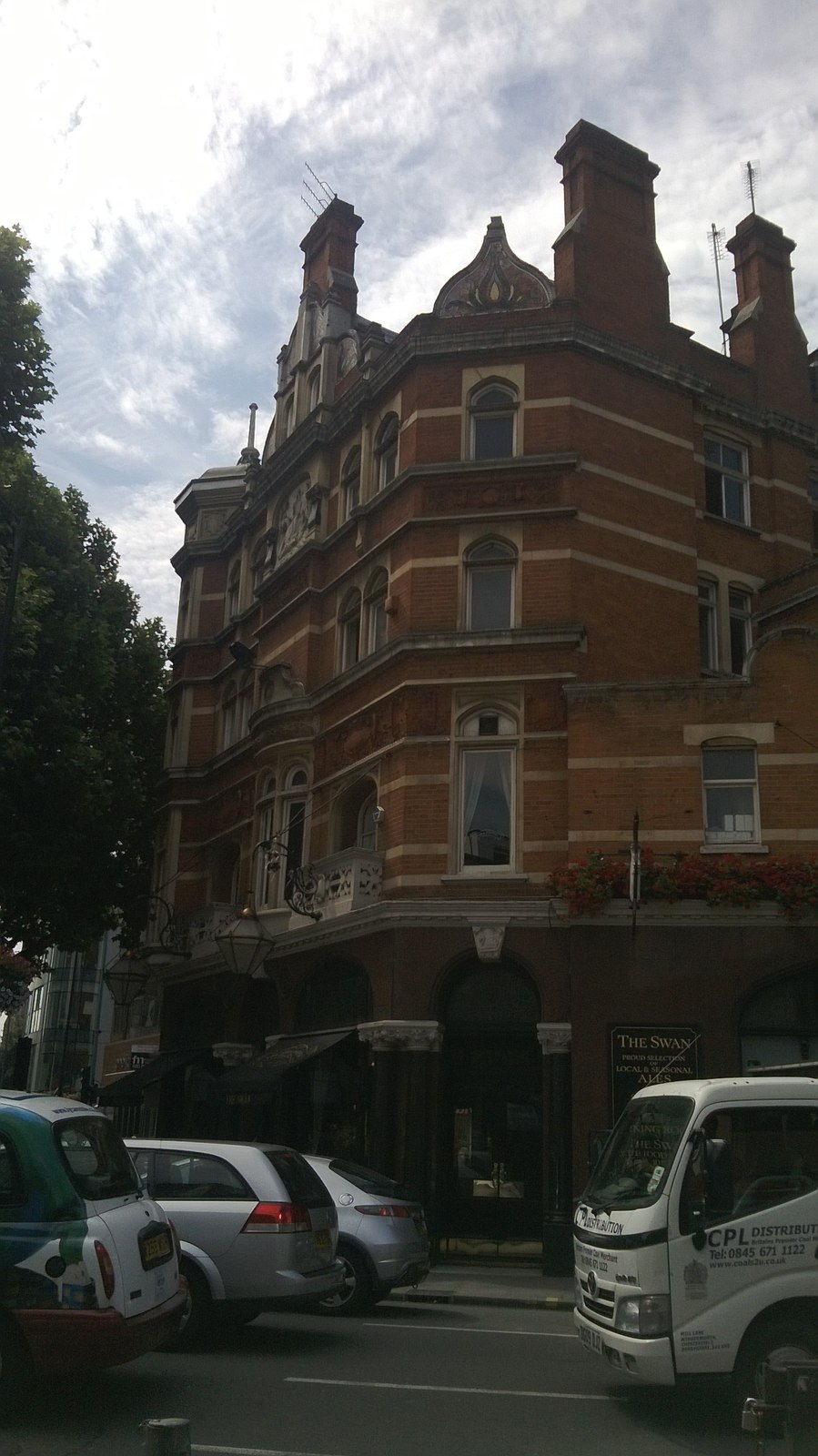 📷 5
📷 5 📷 6
📷 6Historic pubs · London
The Duke of Hammersmith
The Duke of Hammersmith in England London, United Kingdom.
 📷 7
📷 7Historic pubs · London
Prince of Teck
Prince of Teck — Historic pub — listed building or notable heritage status.
More memorials in this region
.jpg?width=1200) 📷 5
📷 5Memorials & monuments · London
1st Surrey Rifles War Memorial
1st Surrey Rifles War Memorial is a memorial in the United Kingdom.
 📷 5
📷 5Memorials & monuments · London
24th East Surrey Division War Memorial
24th East Surrey Division War Memorial is a memorial in the United Kingdom.
 📷 5
📷 5Memorials & monuments · London
Abney Park Cemetery CWGC Cross
Abney Park Cemetery CWGC Cross is a memorial in the United Kingdom.
 📷 5
📷 5Memorials & monuments · London
Admiral Sir John Franklin
Admiral Sir John Franklin is a memorial in the United Kingdom.
Frequently asked questions
- Where is Marcus Garvey?
- Marcus Garvey is in London, United Kingdom (postcode W14 9DD), in the parish of Hammersmith and Fulham, unparished area.
- What is Marcus Garvey?
- Marcus Garvey — a memorial in London, United Kingdom.
- How do I get to Marcus Garvey?
- The nearest railway station is West Kensington, about 0.3 km away. The nearest town is Tyburn. Drivers can use postcode W14 9DD.
- Is Marcus Garvey free to visit?
- Yes, Marcus Garvey is free to enter.
- How do I get to Marcus Garvey?
- The nearest railway station is West Kensington, about 0.3 km away. Drivers can navigate to postcode W14 9DD.