
Memorials & monuments · London
Jawaharlal Nehru
In or near Tyburn.
Jawaharlal Nehru — a memorial in London, United Kingdom.

David Hawgood — CC BY-SA 2.0 via Wikimedia Commons licence

Plan your visit
- Typical visit
- 15 min–45 min
- Nearest railway station
- Ladbroke Grove · 0.4 km
- Free entry
- Dog-friendly
Getting there & planning your visit
To visit the Jawaharlal Nehru memorial in Kensington and Chelsea, the nearest railway station is Ladbroke Grove, located 0.4 km away. Entry to the memorial is free.
About
Jawaharlal Nehru is a memorial located in London, United Kingdom. Sourced from OpenStreetMap (ODbL licence); see local listings for visitor information, opening hours and admission details.
Photo gallery
Official information
Select Gallery is located in Notting Hill and showcases a diverse collection of contemporary and pop art. Visitors can explore various artistic mediums, including vibrant screen prints and unique sculptures, all within a community-focused space.
From the Wikipedia article
Jawaharlal Nehru (14 November 1889 – 27 May 1964) was an Indian anti-colonial nationalist, secular humanist, social democrat, and statesman who was a central figure in India during the middle of the 20th century. Nehru was a principal leader of the Indian nationalist movement in the 1930s and 1940s. Upon India's independence in 1947, he served as the country's first prime minister for 16 years. Nehru promoted parliamentary democracy, secularism, and science and technology during the 1950s, powerfully influencing India's arc as a modern nation. In international affairs, he steered India clear of the two blocs of the Cold War. A well-regarded author, he wrote books such as Letters from a Father to His Daughter (1929), An Autobiography (1936) and The Discovery of India (1946), that have been read around the world. The son of Motilal Nehru, a prominent lawyer and Indian nationalist, Jawaharlal Nehru was educated in England—at Harrow School and Trinity College, Cambridge, and trained in the law at the Inner Temple. He became a barrister, returned to India, enrolled at the Allahabad High Court and gradually became interested in national politics, which eventually became a full-time occupation. He joined the Indian National Congress, rose to become the leader of a progressive faction during the 1920s, and eventually of the Congress, receiving the support of Mahatma Gandhi, who was to designate Nehru as his political heir. As Congress president in 1929, Nehru called for complete independence from the British Raj. Nehru promoted the idea of the secular nation-state in the 1937 provincial elections, allowing the Congress to sweep the elections and form governments in several provinces. In September 1939, the Congress ministries resigned to protest Viceroy Lord Linlithgow's decision to join the war without consulting them. After the All India Congress Committee's Quit India Resolution of 8 August 1942, senior Congress leaders were imprisoned, and for a time, the organisation was suppressed. Nehru, who had reluctantly heeded Gandhi's call for immediate independence, and had desired instead to support the Allied war effort during World War II, came out of a lengthy prison term to a much altered political landscape. Under Muhammad Ali Jinnah, the Muslim League had come to dominate Muslim politics in the interim. In the 1946 provincial elections, Congress won the elections, but the League won all the seats reserved for Muslims, which the British interpreted as a clear mandate for Pakistan in some form. Nehru became the interim prime minister of India in September 1946 and the League joined his government with some hesitancy in October 1946. Upon India's independence on 15 August 1947, Nehru gave a critically acclaimed speech, "Tryst with Destiny"; he was sworn in as the Dominion of India's prime minister and raised the Indian flag at the Red Fort in Delhi. On 26 January 1950, when India became a republic within the Commonwealth of Nations, Nehru became the Republic of India's first prime minister. He embarked on an ambitious economic, social, and political reform programme. Nehru promoted a pluralistic multi-party democracy. In foreign affairs, he led the establishment of the Non-Aligned Movement, a group of nations that did not seek membership in the two main ideological blocs of the Cold War. Under Nehru's leadership, the Congress dominated national and state-level politics and won elections in 1951, 1957 and 1962. He died in office from a heart…
Excerpt from Wikipedia under CC BY-SA 4.0. See the source article linked in Sources below.
Background
Description
with Nehru and other Commonwealth leaders, taken at the 1960 Commonwealth Conference, Windsor Castle]] After independence, Nehru wanted to maintain good relations with Britain and other British Commonwealth countries. As prime minister of the Dominion of India, he acquiesced only after Krishna Menon's redrafting of the 1949 London Declaration, under which India agreed to remain within the Commonwealth of Nations after becoming a republic in January 1950, and to recognise the British monarch as a "symbol of the free association of its independent member nations and as such the Head of the Commonwealth". The other nations of the Commonwealth recognised India's continuing membership of the…
Visiting
Cultural depictions of Jawaharlal Nehru}} There have been many documentaries about Nehru's life, and he has been portrayed in fictionalised films. The canonical performance is probably that of Roshan Seth, who played him three times: in Richard Attenborough's 1982 film Gandhi, Shyam Benegal's 1988 television series Bharat Ek Khoj, based on Nehru's The Discovery of India, and in a 2007 TV film entitled The Last Days of the Raj. Benegal directed the 1984 documentary film, Nehru, covering his political career. Indian film director Kiran Kumar made a film about Nehru titled Nehru: The Jewel of India in 1990 starring Partap Sharma in the titular role. In Ketan Mehta's film Sardar, Benjamin…
Sourced from Wikipedia under CC BY-SA 4.0.
- Coordinates
- 51.5141, -0.2085
- District
- Kensington and Chelsea
- Parish
- Kensington and Chelsea, unparished area
- Postcode
- W11 2JJ
- Parliamentary constituency
- Kensington and Bayswater
- Phone
- +44(0)2034173660
- Nearest railway station
- Ladbroke Grove — 0.4 km
- Official site
- selectgallery.art
Sources
- osm: node/7332239926 (ODbL)
- wikipedia: Jawaharlal Nehru (CC BY-SA 4.0)
Other places nearby

Osbert Lancaster
Memorials & monuments · 0.0 km
Howard Staunton
Memorials & monuments · 0.1 km

Bruce Kenrick
Memorials & monuments · 0.2 km

Sir William Ramsay
Memorials & monuments · 0.2 km

The Elgin
Historic houses · 0.2 km

The Elgin
Historic pubs · 0.2 km

Electric Cinema, Notting Hill
Theatres · 0.3 km

Plaque: Susan Garth
Memorials & monuments · 0.3 km

Select Gallery
Galleries · 0.3 km

Museum of Brands
Museums · 0.3 km
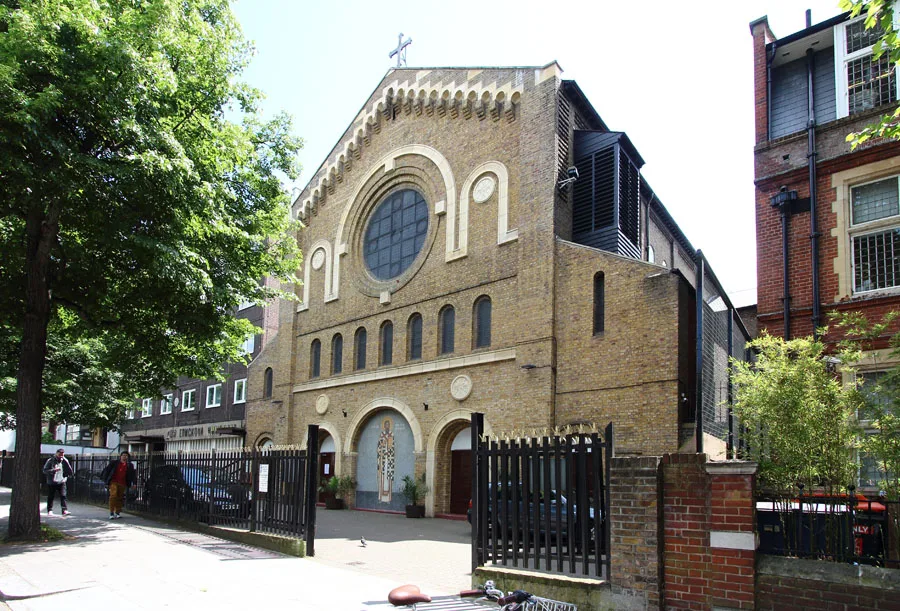
Church of St Sava, Notting Hill
Cathedrals · 0.3 km

Portobello Market
Other places · 0.3 km
Nearby
📷 5Memorials & monuments · London
Osbert Lancaster
Osbert Lancaster — a memorial in London, United Kingdom.
📷 5Memorials & monuments · London
Howard Staunton
Howard Staunton — a memorial in London, United Kingdom.
📷 5Memorials & monuments · London
Bruce Kenrick
Bruce Kenrick — a memorial in London, United Kingdom.
📷 5Memorials & monuments · London
Sir William Ramsay
Sir William Ramsay — a memorial in London, United Kingdom.
📷 5Historic houses · London
The Elgin
The Elgin — a Grade II-listed historic house in england-london, United Kingdom.
📷 7Historic pubs · London
The Elgin
The Elgin in England London, United Kingdom.
Where to eat & stay near Jawaharlal Nehru
Places to stay
 📷 5
📷 5 📷 5
📷 5Hotels · London
The Portobello Hotel
The Portobello Hotel — a hotel in england london.
 📷 5
📷 5 📷 7
📷 7 📷 7
📷 7 📷 5
📷 5Hotels · London
Hotel Blue Bells
Hotel Blue Bells — a hotel in england london.
Places to eat & drink
📷 7Historic pubs · London
The Elgin
The Elgin in England London, United Kingdom.
 📷 6
📷 6Restaurants · London
Core by Clare Smyth
Core by Clare Smyth — a restaurant in england london.
 📷 5
📷 5 📷 5
📷 5 📷 5
📷 5 📷 5
📷 5More memorials in this region
.jpg?width=1200) 📷 5
📷 5Memorials & monuments · London
1st Surrey Rifles War Memorial
1st Surrey Rifles War Memorial is a memorial in the United Kingdom.
 📷 5
📷 5Memorials & monuments · London
24th East Surrey Division War Memorial
24th East Surrey Division War Memorial is a memorial in the United Kingdom.
 📷 5
📷 5Memorials & monuments · London
Abney Park Cemetery CWGC Cross
Abney Park Cemetery CWGC Cross is a memorial in the United Kingdom.
 📷 5
📷 5Memorials & monuments · London
Admiral Sir John Franklin
Admiral Sir John Franklin is a memorial in the United Kingdom.
Frequently asked questions
- Where is Jawaharlal Nehru?
- Jawaharlal Nehru is in London, United Kingdom (postcode W11 2JJ), in the parish of Kensington and Chelsea, unparished area.
- What is Jawaharlal Nehru?
- Jawaharlal Nehru — a memorial in London, United Kingdom.
- How do I get to Jawaharlal Nehru?
- The nearest railway station is Ladbroke Grove, about 0.4 km away. The nearest town is Tyburn. Drivers can use postcode W11 2JJ.
- Is Jawaharlal Nehru free to visit?
- Yes, Jawaharlal Nehru is free to enter.
- How do I get to Jawaharlal Nehru?
- The nearest railway station is Ladbroke Grove, about 0.4 km away. Drivers can navigate to postcode W11 2JJ.