
Memorials & monuments · London
Herbert Henry Asquith
In or near Tyburn.
Herbert Henry Asquith — a memorial in London, United Kingdom.

PAUL FARMER — CC BY-SA 2.0 via Wikimedia Commons licence

Plan your visit
- Typical visit
- 15 min–45 min
- Nearest railway station
- Oxford Circus · 0.3 km
- Free entry
- Dog-friendly
Getting there & planning your visit
The Herbert Henry Asquith memorial is located in Westminster, London, with the postcode W1G 0RN. The nearest railway station is Oxford Circus, which is 0.3 km away. Entry to the memorial is free.
About
Herbert Henry Asquith is a memorial located in London, United Kingdom. Sourced from OpenStreetMap (ODbL licence); see local listings for visitor information, opening hours and admission details.
Photo gallery
360° viewimagery from 2023
Imagery © Mapillary contributors, CC BY-SA 4.0
Official information
David Breuer-Weil's exhibition features monumental bronze sculptures displayed across various locations in London, including Cavendish Square, Portman Square, and the Crypt of St Pancras New Church. The artworks explore themes of connectedness and belonging, with pieces designed to engage the public in urban spaces.
From the Wikipedia article
Herbert Henry Asquith, 1st Earl of Oxford and Asquith ( ASS-kwith; 12 September 1852 – 15 February 1928), was a British statesman who was Prime Minister of the United Kingdom from 1908 to 1916. He was the last prime minister from the Liberal Party to command a majority government, and the most recent Liberal to have served as Leader of the Opposition. He played a major role in the design and passage of major liberal legislation and a reduction of the power of the House of Lords. In August 1914 Asquith took the United Kingdom of Great Britain and Ireland and the British Empire into the First World War. During 1915 his government was vigorously attacked for a shortage of munitions and the failure of the Gallipoli Campaign. He formed a coalition government with other parties, but failed to satisfy critics, was forced to resign in December 1916 and never regained power. After attending Balliol College, Oxford, he became a successful barrister. In 1886 he was the Liberal candidate for East Fife, a seat he held for over thirty years. In 1892 he was appointed Home Secretary in William Ewart Gladstone's fourth ministry, remaining in the post until the Liberals lost the 1895 election. In the decade of opposition that followed, Asquith became a major figure in the party, and when the Liberals regained power under Sir Henry Campbell-Bannerman in 1905, Asquith was named Chancellor of the Exchequer. In 1908 Asquith succeeded him as prime minister. The Liberals were determined to advance their reform agenda. An impediment to this was the House of Lords, which rejected the People's Budget of 1909. Meanwhile, the South Africa Act 1909 passed. Asquith called an election for January 1910, and the Liberals won, though they were reduced to a minority government. After another general election in December 1910, he gained passage of the Parliament Act 1911, allowing a bill three times passed by the Commons in consecutive sessions to be enacted regardless of the Lords. Asquith was less successful in dealing with Irish Home Rule. Repeated crises led to gun running and violence, verging on civil war. When Britain declared war on Germany in response to the German invasion of Belgium, high-profile domestic conflicts were suspended regarding Ireland and women's suffrage. Asquith was more of a committee chair than a dynamic leader. He oversaw national mobilisation, the dispatch of the British Expeditionary Force to the Western Front, the creation of a mass army and the development of an industrial strategy designed to support Britain's war aims. The war became bogged down and there was a call for better leadership. He was forced to form a coalition with the Conservative Party and the Labour Party in early 1915. He was weakened by his own indecision over strategy, conscription and financing. David Lloyd George replaced him as prime minister in December 1916. They became bitter enemies and fought for control of the fast-declining Liberal Party. Asquith's role in creating the modern British welfare state (1906–1911) has been celebrated, but his weaknesses as a war leader and as a party leader after 1914 have been highlighted by historians. He had the longest continuous term as prime minister between 1827 and 1979 (when Margaret Thatcher's 11-year term began), serving more than eight consecutive years.
Excerpt from Wikipedia under CC BY-SA 4.0. See the source article linked in Sources below.
- Coordinates
- 51.5160, -0.1457
- District
- Westminster
- Parish
- Westminster, unparished area
- Postcode
- W1G 0RN
- Parliamentary constituency
- Cities of London and Westminster
- Nearest railway station
- Oxford Circus — 0.3 km
Sources
- osm: node/8082068499 (ODbL)
- wikipedia: Herbert Henry Asquith (CC BY-SA 4.0)
Other places nearby

Statue of Lord George Bentinck
Memorials & monuments · 0.1 km

Josef Dallos
Memorials & monuments · 0.1 km
Sir Ronald Ross
Memorials & monuments · 0.1 km

Visitor I
Natural landmarks · 0.1 km

Sir Jonathan Hutchinson
Memorials & monuments · 0.1 km
Quintin Hogg
Memorials & monuments · 0.1 km

Winged Figure
Public art & sculpture · 0.1 km
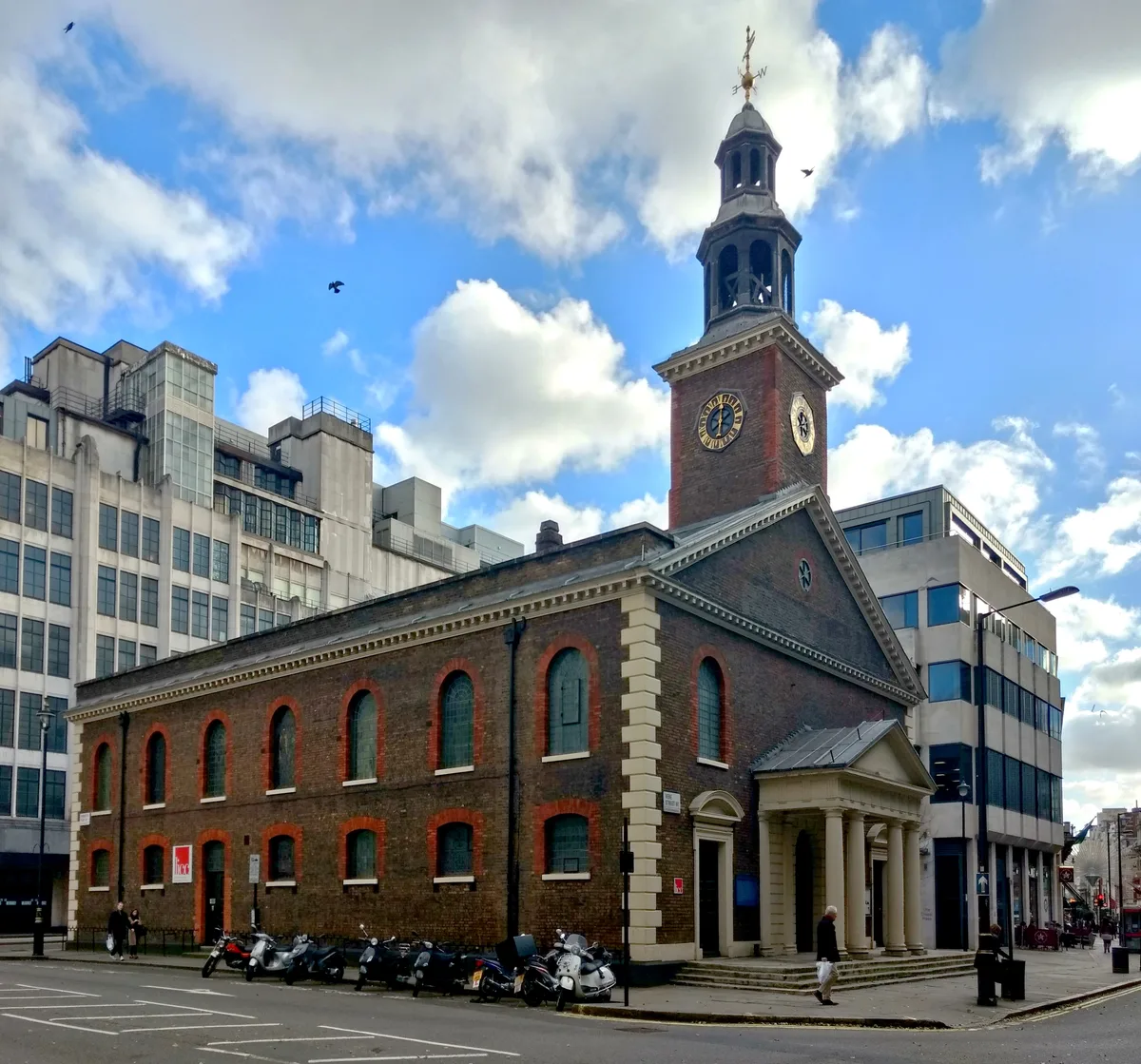
St Peter, Vere Street
Historic churches · 0.1 km

Winged Figure
Public art & sculpture · 0.1 km

The Friendship Bench
Public art & sculpture · 0.1 km

Casino de Paris
Theatres · 0.2 km

George Edmund Street
Memorials & monuments · 0.2 km
Nearby
📷 5Memorials & monuments · London
Statue of Lord George Bentinck
Statue of Lord George Bentinck — a memorial in London, United Kingdom.
📷 5📷 5Memorials & monuments · London
Sir Ronald Ross
Sir Ronald Ross — a memorial in London, United Kingdom.
📷 5Natural landmarks · London
Visitor I
Visitor I — Public artwork (sculpture) by David Breuer-Weil.
📷 5Memorials & monuments · London
Sir Jonathan Hutchinson
Sir Jonathan Hutchinson — a memorial in London, United Kingdom.
📷 5Where to eat & stay near Herbert Henry Asquith
Places to stay
 📷 5
📷 5Hotels · London
Radisson Blu Edwardian Bond Street
Radisson Blu Edwardian Bond Street — a hotel in england london. 4-star. Brand: Radisson Blu.
 📷 5
📷 5 📷 5
📷 5Hotels · London
Holiday Inn London - Oxford Circus
Holiday Inn London - Oxford Circus — a hotel in england london. 3,5-star. Brand: Holiday Inn.
 📷 5
📷 5Hotels · London
Treehouse Hotel London
Treehouse Hotel London — a hotel in england london. Brand: Treehouse Hotel London.
 📷 7
📷 7Hotels · London
The Mandeville Hotel
The Mandeville Hotel — a hotel in england london.
 📷 5
📷 5Places to eat & drink
 📷 5
📷 5Restaurants · London
Wigmore Hall Restaurant
Wigmore Hall Restaurant — a restaurant in england london.
 📷 5
📷 5 📷 7
📷 7Historic pubs · London
Argyll Arms
Argyll Arms in England London, United Kingdom.
 📷 5
📷 5 📷 5
📷 5 📷 5
📷 5Restaurants · London
Scandinavian Kitchen
Scandinavian Kitchen — a restaurant in england london. Cuisine: coffee shop;danish.
More memorials in this region
.jpg?width=1200) 📷 5
📷 5Memorials & monuments · London
1st Surrey Rifles War Memorial
1st Surrey Rifles War Memorial is a memorial in the United Kingdom.
 📷 5
📷 5Memorials & monuments · London
24th East Surrey Division War Memorial
24th East Surrey Division War Memorial is a memorial in the United Kingdom.
 📷 5
📷 5Memorials & monuments · London
Abney Park Cemetery CWGC Cross
Abney Park Cemetery CWGC Cross is a memorial in the United Kingdom.
 📷 5
📷 5Memorials & monuments · London
Admiral Sir John Franklin
Admiral Sir John Franklin is a memorial in the United Kingdom.
Frequently asked questions
- Where is Herbert Henry Asquith?
- Herbert Henry Asquith is in London, United Kingdom (postcode W1G 0RN), in the parish of Westminster, unparished area.
- What is Herbert Henry Asquith?
- Herbert Henry Asquith — a memorial in London, United Kingdom.
- How do I get to Herbert Henry Asquith?
- The nearest railway station is Oxford Circus, about 0.3 km away. The nearest town is Tyburn. Drivers can use postcode W1G 0RN.
- Is Herbert Henry Asquith free to visit?
- Yes, Herbert Henry Asquith is free to enter.
- How do I get to Herbert Henry Asquith?
- The nearest railway station is Oxford Circus, about 0.3 km away. Drivers can navigate to postcode W1G 0RN.