
Historic churches · Central Scotland
Dysart
Also known as: An Dìseart (Fìobha), An Dìseart
In or near Pathhead.
Dysart in Scotland Islands, United Kingdom.

Douglas Nelson — CC BY-SA 2.0 via Wikimedia Commons licence

Plan your visit
- Typical visit
- 30 min–1 h
- Nearest railway station
- Kirkcaldy · 3.0 km
- Free entry
Getting there & planning your visit
To visit Dysart, the nearest railway station is Kirkcaldy, located 3 km away. The postcode for Dysart is KY1 2TD, which you can use for sat-nav directions. Entry to the church is free.
About
Dysart is a place of interest in Scotland Islands, United Kingdom — drawn from open-data sources for visitor reference. See the linked Wikipedia article for the full description.
Photo gallery
See it from the streetimagery from 2019
Imagery © Mapillary contributors, CC BY-SA 4.0
From the Wikipedia article
Dysart ( ; Scottish Gaelic: Dìseart (IPA:[ˈtʲiːʃəɾʃt̪])) is a town and former royal burgh located on the south-east coast between Kirkcaldy and West Wemyss in Fife, Scotland. Dysart was once part of a wider estate owned by the St Clair or Sinclair family. They were responsible for gaining burgh of barony status for the town towards the end of the 15th century. The first record of the town was made in the early 13th century, its initial role being to settle civil matters between the church and landowners. During the middle of the 15th century, trade with the Low Countries began for salt and coal exportation. In the 16th and 17th centuries, trade expanded to the Baltic Countries. Dysart acquired two nicknames: "Salt Burgh" and "Little Holland" as a result. Following the sudden decline of the town's harbour caused by the closure of the Lady Blanche Pit, the town was amalgamated into the royal burgh of Kirkcaldy under an act of Parliament, the Kirkcaldy Corporation Order Confirmation Act 1930 (20 & 21 Geo. 5. c. xciii). Urban clearance during the 1950s and 1960s saw large parts of the historic town demolished for new housing. Demand from the town's residents meant that part of the historic town — most notably the 16th-century and the 18th-century houses of Pan Ha' opposite the harbour — were salvaged and preserved for future generations.
Excerpt from Wikipedia under CC BY-SA 4.0. See the source article linked in Sources below.
Background
History
The name of the town derives from the Scottish Gaelic, dìseart, meaning "a hermitage or religious retreat", which itself was a loan-word from the Latin, desertum, meaning "a desert or deserted place". This is most likely linked to Saint Serf, who lived as a hermit in a cave in the area in the 8th century. Prior to the 16th century, little is known about the history of the town. The earliest record of the town's existence is a document about a papal decision between Dysart Kirk and Dunfermline Abbey in 1220. Another record followed in 1245, this time about the reconsecration of Dysart Kirk undertaken by David de Bernham of St Andrews. The initial role of the town, like many communities in…
Sourced from Wikipedia under CC BY-SA 4.0.
- Coordinates
- 56.1256, -3.1254
- District
- Fife
- Postcode
- KY1 2TD
- Parliamentary constituency
- Cowdenbeath and Kirkcaldy
- Nearest railway station
- Kirkcaldy — 3 km
- Official site
- www.scottish.parliament.uk
Sources
- wikidata: Q2631587 (CC0)
- wikipedia: Dysart, Fife (CC BY-SA 4.0)
Other places nearby
Dysart Parish Church
Abbeys & priories · 0.0 km
Dysart Parish Church, West Port, Dysart
Historic churches · 0.0 km
War Memorial, Townhead, Dysart
Memorials & monuments · 0.0 km
Free Church, West Quality Street, Dysart
Historic churches · 0.1 km
Thomas Millie Dow
Memorials & monuments · 0.1 km

Ymca Hall, Townhead, Dysart
Historic churches · 0.2 km

Harbourmaster's House, Dysart
Historic houses · 0.3 km

John McDouall Stuart Memorial Plaque
Memorials & monuments · 0.3 km

Dysart, Panhall, Shore Road, St Serf's Church
Historic churches · 0.3 km

Coastal Centre Exhibition
Museums · 0.3 km

Bay House, 1 Pan Ha', Panhall, Dysart
Historic houses · 0.3 km

Tolbooth and Town Hall, 14 Victoria Street, Dysart
Historic houses · 0.3 km
Nearby
Flagship📷 5Abbeys & priories · Central Scotland
Dysart Parish Church
Dysart Parish Church — category B listed building-listed abbey in scotland-central, United Kingdom.
📷 5Historic churches · Central Scotland
Dysart Parish Church, West Port, Dysart
Dysart Parish Church, West Port, Dysart — category B listed building-listed church in scotland-central, United Kingdom.
📷 5Memorials & monuments · Central Scotland
War Memorial, Townhead, Dysart
War Memorial, Townhead, Dysart — category C listed building-listed memorial in scotland-central, United Kingdom.
📷 5Historic churches · Central Scotland
Free Church, West Quality Street, Dysart
Free Church, West Quality Street, Dysart — category C listed building-listed church in scotland-central, United Kingdom.
📷 5Memorials & monuments · Central Scotland
Thomas Millie Dow
Thomas Millie Dow — a memorial in Central Scotland, United Kingdom.
📷 5Historic churches · Central Scotland
Ymca Hall, Townhead, Dysart
Ymca Hall, Townhead, Dysart — category B listed building-listed church in scotland-central, United Kingdom.
Where to eat & stay near Dysart
Places to stay
 📷 7
📷 7Hotels · Central Scotland
Strathearn Hotel
Strathearn Hotel — a hotel in scotland central.
 📷 5
📷 5Caravan parks · Central Scotland
North Lodge Holiday Park
North Lodge Holiday Park — a caravan park in scotland central.
 📷 5
📷 5Hotels · Central Scotland
Oswald House Hotel
Oswald House Hotel — a hotel in scotland central.
 📷 5
📷 5Caravan parks · Central Scotland
Kinghorn Harbour Holiday Park
Kinghorn Harbour Holiday Park — a caravan park in scotland central.
 📷 5
📷 5Caravan parks · Central Scotland
Kingdom Caravan Park
Kingdom Caravan Park — a caravan park in scotland central.
 📷 5
📷 5Caravan parks · Central Scotland
Sandhills Caravan Park
Sandhills Caravan Park — a caravan park in scotland central.
Places to eat & drink
 📷 5
📷 5Historic pubs · Central Scotland
Feuars Arms, 66-68 Commercial Street, Kirkcaldy
Feuars Arms, 66-68 Commercial Street, Kirkcaldy in Scotland Central, United Kingdom.
 📷 7
📷 7Historic pubs · Central Scotland
461 and 463 High Street, Kirkcaldy
461 and 463 High Street, Kirkcaldy in Scotland Central, United Kingdom.
 📷 7
📷 7Historic pubs · Central Scotland
The Royal Scot, 395-399 High Street, Kirkcaldy
The Royal Scot, 395-399 High Street, Kirkcaldy in Scotland Central, United Kingdom.
 📷 5
📷 5Historic pubs · Central Scotland
The Robert Nairn
The Robert Nairn in Scotland Central, United Kingdom.
 📷 7
📷 7Historic pubs · Central Scotland
Belvedere Hotel, West Wemyss
Belvedere Hotel, West Wemyss in Scotland Central, United Kingdom.
 📷 5
📷 5Historic pubs · Central Scotland
Coaltown of Balgonie
Coaltown of Balgonie in Scotland Islands, United Kingdom.
More places in this region
 📷 5
📷 5Historic churches · Central Scotland
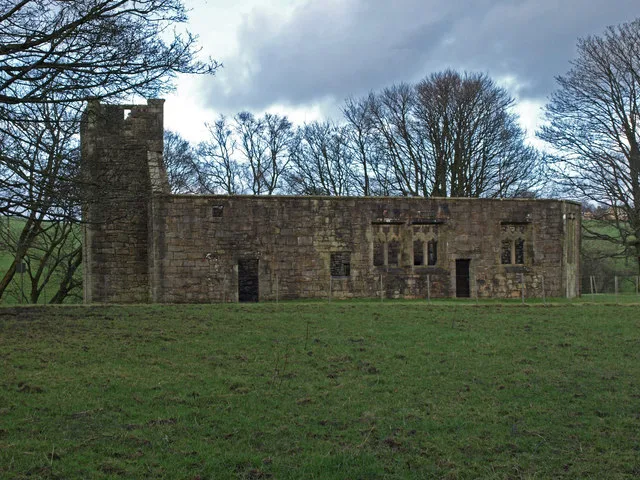
Castle Semple Collegiate Church
Castle Semple Collegiate Church — church building in Renfrewshire, Scotland, UK.
 📷 3
📷 3Historic churches · Central Scotland
Chapel of St Fyndoca, Inishail
Chapel of St Fyndoca, Inishail — architectural structure in Argyll and Bute, Scotland, UK.
 📷 3
📷 3Historic churches · Central Scotland
Chapel of St. Oran, Colonsay
Chapel of St. Oran, Colonsay — chapel on Colonsay, Argyll and Bute, Scotland, UK.
 📷 3
📷 3Historic churches · Central Scotland
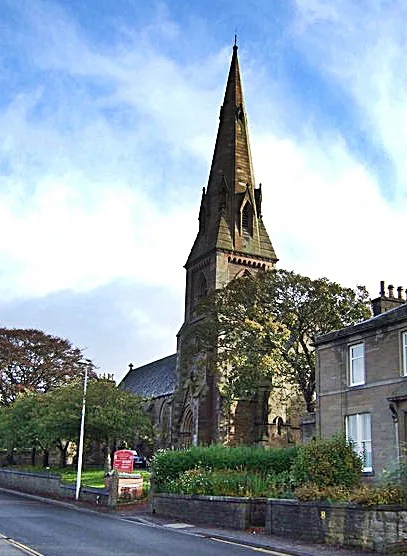
Church of St Mary the Virgin, Arbroath
Church of St Mary the Virgin, Arbroath — church in Arbroath, UK.
Frequently asked questions
- Where is Dysart?
- Dysart is in central Scotland, United Kingdom (postcode KY1 2TD).
- What is Dysart?
- Dysart in Scotland Islands, United Kingdom.
- How do I get to Dysart?
- The nearest railway station is Kirkcaldy, about 3.0 km away. The nearest town is Pathhead. Drivers can use postcode KY1 2TD.
- Is Dysart free to visit?
- Yes, Dysart is free to enter.
- How do I get to Dysart?
- The nearest railway station is Kirkcaldy, about 3.0 km away. Drivers can navigate to postcode KY1 2TD.