
Public art & sculpture · East Midlands
Door
Also known as: Drws, Doras
In or near East Carlton.
Door — a public art in East Midlands, United Kingdom.

Andrew Tatlow — CC BY-SA 2.0 via Wikimedia Commons licence

Plan your visit
- Typical visit
- 1 h–2 h
- Nearest railway station
- Corby · 5.8 km
- Free entry
- Dog-friendly
Getting there & planning your visit
To visit the Door public art installation in North Northamptonshire, use the postcode LE16 8YF for sat-nav directions. The nearest railway station is Corby, located 5.8 km away. Entry to the installation is free.
About
Door is a public art located in East Midlands, United Kingdom. Sourced from OpenStreetMap (ODbL licence); see local listings for visitor information, opening hours and admission details.
Photo gallery
From the Wikipedia article
A door is a hinged or otherwise movable barrier that allows ingress (entry) into and egress (exit) from an enclosure. The created opening in the wall is a doorway or portal. A door's essential and primary purpose is to provide security by controlling access to the doorway (portal). Conventionally, it is a panel that fits into the doorway of a building, room, or vehicle. Doors are generally made of a material suited to the door's task. They are commonly attached by hinges, but can move by other means, such as slides or counterbalancing. The door may be able to move in various ways (at angles away from the doorway/portal, by sliding on a plane parallel to the frame, by folding in angles on a parallel plane, or by spinning along an axis at the center of the frame) to allow or prevent ingress or egress. In most cases, a door's interior matches its exterior side. But in other cases (e.g., a vehicle door) the two sides are radically different. Many doors incorporate locking mechanisms to ensure that only some people can open them (such as with a key). Doors may have devices such as knockers or doorbells by which people outside announce their presence. Apart from providing access into and out of a space, doors may have the secondary functions of ensuring privacy by preventing unwanted attention from outsiders, of separating areas with different functions, of allowing light to pass into and out of a space, of controlling ventilation or air drafts so that interiors may be more effectively heated or cooled, of dampening noise, and of blocking the spread of fire. Doors can have aesthetic, symbolic, or ritualistic purposes. Receiving the key to a door can signify a change in status from outsider to insider. Doors and doorways frequently appear in literature and the arts with metaphorical or allegorical import as a portent of change.
Excerpt from Wikipedia under CC BY-SA 4.0. See the source article linked in Sources below.
Background
History
The earliest recorded doors appear in the paintings of Egyptian tombs, which show them as single or double doors, each of a single piece of wood. Tombs often included false doors, thought to be doors to the afterlife. In Egypt, where the climate is intensely dry, doors were not framed against warping, but in other countries required framed doors—which, according to Vitruvius (iv. 6.) was done with stiles (sea/si) and rails (see: Frame and panel), the enclosed panels filled with tympana set in grooves in the stiles and rails. The stiles were the vertical boards, one of which, tenoned or hinged, is known as the hanging stile, the other as the middle or meeting stile. The horizontal cross…
Architecture
called The Gates of Paradise, 1425–1452, gilded bronze, height: 5.2 m]] (Vienna, Austria)]] There are many kinds of doors, with different purposes:
Visiting
Whenever a door is opened outward from a room to a corridor or hallway, there is a risk that it could strike another person who is moving. The risk of and from striking someone with an inward opening door is less as occupants are unlikely to be in that area unless they are exiting, unlikely to be moving fast, and are likely to be somewhat focused on the door and able to avoid or minimize a collision. In many cases this can be avoided by architectural design which favors doors which open inward to rooms (from the perspective of a common area such as a corridor, the door opens outward). In cases where this is infeasible, it may be possible to avoid an accident by placing vision panels in the…
Sourced from Wikipedia under CC BY-SA 4.0.
- Coordinates
- 52.4971, -0.7726
- District
- North Northamptonshire
- Parish
- East Carlton
- Postcode
- LE16 8YF
- Parliamentary constituency
- Kettering
- Nearest railway station
- Corby — 5.8 km
Sources
- osm: node/8112453870 (ODbL)
- wikipedia: Door (CC BY-SA 4.0)
Other places nearby

East Carlton Hall
Manor houses · 0.1 km

Church of St Peter, East Carlton
Historic churches · 0.3 km

East Carlton
Towns & cities · 0.9 km

Church of St Mary Magdalene
Historic churches · 1.3 km

Cottingham
Villages · 1.3 km

Wilbarston
Towns & cities · 2.2 km

Fox Inn Public House
Historic pubs · 2.4 km

Stoke Albany War Memorial
Memorials & monuments · 3.1 km

Knights Lodge Public House
Historic pubs · 3.2 km

Stoke Albany
Towns & cities · 3.5 km
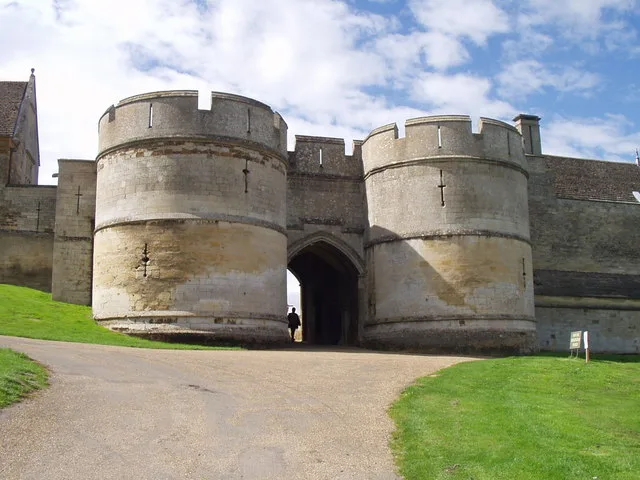
Rockingham Castle
Castles · 3.7 km

Great Easton
Villages · 3.8 km
Nearby
📷 3Manor houses · East Midlands
East Carlton Hall
East Carlton Hall — a manor in East Midlands, United Kingdom.
📷 3Historic churches · East Midlands
Church of St Peter, East Carlton
Church of St Peter, East Carlton — church in East Carlton, Northamptonshire, England, UK.
📷 5Towns & cities · East Midlands
East Carlton
East Carlton — village and civil parish in Northamptonshire, United Kingdom.
📷 3Historic churches · East Midlands
Church of St Mary Magdalene
Church of St Mary Magdalene — Grade I listed church in Cottingham, Northamptonshire, England, UK.
📷 5📷 3Towns & cities · East Midlands
Wilbarston
Wilbarston — village and civil parish in Northamptonshire, England, UK.
Where to eat & stay near Door
Places to stay
 📷 7
📷 7Hotels · East Midlands
Hampton by Hilton Corby/Kettering
Hampton by Hilton Corby/Kettering — a hotel in england west midlands. 4-star. Brand: Hampton.
 📷 5
📷 5Hotels · East Midlands
The Saxon Crown
The Saxon Crown — a hotel in england west midlands.
 📷 5
📷 5Campsites · East Midlands
Rural Relaxing
Rural Relaxing — a campsite in england west midlands.
 📷 5
📷 5 📷 5
📷 5 📷 5
📷 5Places to eat & drink
📷 5Historic pubs · East Midlands
Fox Inn Public House
Fox Inn Public House in England East Midlands, United Kingdom.
📷 5Historic pubs · East Midlands
Knights Lodge Public House
Knights Lodge Public House in England East Midlands, United Kingdom.
📷 5Historic pubs · East Midlands
The Sun Public House
The Sun Public House in England East Midlands, United Kingdom.
 📷 5
📷 5Historic pubs · East Midlands
The Spread Eagle Public House
The Spread Eagle Public House in England East Midlands, United Kingdom.
 📷 5
📷 5Historic pubs · East Midlands
Horse and Trumpet Inn
Horse and Trumpet Inn in England East Midlands, United Kingdom.
 📷 5
📷 5Historic pubs · East Midlands
The Nevill Arms Public House
The Nevill Arms Public House in England East Midlands, United Kingdom.
More places in this region
 📷 5
📷 5Public art & sculpture · East Midlands
West Walton Village Sign
West Walton Village Sign — a public art in East Midlands, United Kingdom.
 📷 5
📷 5Public art & sculpture · East Midlands
Tilney St Lawrence Village Sign
Tilney St Lawrence Village Sign — a public art in East Midlands, United Kingdom.
 📷 5
📷 5Public art & sculpture · East Midlands
Emneth Village Sign
Emneth Village Sign — a public art in East Midlands, United Kingdom.
 📷 5
📷 5Public art & sculpture · East Midlands
Marshland St James Village Sign
Marshland St James Village Sign — a public art in East Midlands, United Kingdom.
Frequently asked questions
- Where is Door?
- Door is in the East Midlands, United Kingdom (postcode LE16 8YF), in the parish of East Carlton.
- What is Door?
- Door — a public art in East Midlands, United Kingdom.
- How do I get to Door?
- The nearest railway station is Corby, about 5.8 km away. The nearest town is East Carlton. Drivers can use postcode LE16 8YF.
- Is Door free to visit?
- Yes, Door is free to enter.
- How do I get to Door?
- The nearest railway station is Corby, about 5.8 km away. Drivers can navigate to postcode LE16 8YF.