
Memorials & monuments · London
David Lloyd George
In or near London.
David Lloyd George — a memorial in London, United Kingdom.

Bryn Holmes — CC BY-SA 2.0 via Wikimedia Commons licence

Plan your visit
- Typical visit
- 15 min–45 min
- Nearest railway station
- Westminster · 0.1 km
- Free entry
- Dog-friendly
- Wheelchair accessible
Getting there & planning your visit
The David Lloyd George memorial is located in Westminster, London, with the postcode SW1A 2JR. The nearest railway station is Westminster, just 0.1 km away. Entry to the memorial is free, and it is wheelchair accessible.
About
David Lloyd George is a memorial located in London, United Kingdom. Sourced from OpenStreetMap (ODbL licence); see local listings for visitor information, opening hours and admission details.
Photo gallery
See it from the streetimagery from 2026
Imagery © Mapillary contributors, CC BY-SA 4.0
From the Wikipedia article
David Lloyd George, 1st Earl Lloyd-George of Dwyfor (17 January 1863 – 26 March 1945) was Prime Minister of the United Kingdom from 1916 to 1922. A Liberal Party politician from Wales, he was known for leading the United Kingdom during the First World War, for social-reform policies, for his role in the Paris Peace Conference, and for negotiating the establishment of the Irish Free State. Born in Chorlton-on-Medlock, Manchester, and raised in Llanystumdwy, Lloyd George gained a reputation as an orator and proponent of a Welsh blend of radical Liberal ideas that included support for Welsh devolution, the disestablishment of the Church of England in Wales, equality for labourers and tenant farmers, and reform of land ownership. He won an 1890 by-election to become the Member of Parliament for Caernarvon Boroughs, and was continuously re-elected to the seat for 55 years. He served in Henry Campbell-Bannerman's cabinet from 1905. After H. H. Asquith succeeded to the premiership in 1908, Lloyd George replaced him as Chancellor of the Exchequer. To fund extensive welfare reforms, he proposed taxes on land ownership and high incomes in the 1909 People's Budget, which the Conservative-dominated House of Lords rejected. The resulting constitutional crisis was only resolved after elections in 1910 and passage of the Parliament Act 1911. His budget was enacted in 1910, with the National Insurance Act 1911 and other measures helping to establish the modern welfare state. He was embroiled in the 1913 Marconi scandal but remained in office and secured the disestablishment of the Church of England in Wales. In 1915, Lloyd George became Minister of Munitions and expanded artillery shell production for the war. In 1916, he was appointed Secretary of State for War but was frustrated by his limited power and clashes with Army commanders over strategy. Asquith proved ineffective as prime minister and was replaced by Lloyd George in December 1916. He centralised authority by creating a smaller war cabinet. To combat food shortages caused by U-boats, he implemented the convoy system, established rationing, and stimulated farming. After supporting the disastrous French Nivelle offensive in 1917, he had to reluctantly approve Field Marshal Douglas Haig's plans for the Battle of Passchendaele, which resulted in huge casualties with little strategic benefit. Opposed by British military commanders, he was finally able to see the Allies brought under one command in March 1918. The war effort turned in the Allies' favour and was won in November. Following the December 1918 "Coupon" election, he and the Conservatives maintained their coalition with popular support. Lloyd George was a leading participant at the Paris Peace Conference of 1919, but the situation in Ireland worsened, erupting into the Irish War of Independence, which lasted until Lloyd George negotiated independence for the Irish Free State in 1921. At home, he initiated education and housing reforms, but trade-union militancy rose to record levels, the economy became depressed in 1920 and unemployment rose; spending cuts followed in 1921–22, and in 1922 he became embroiled in a scandal over the sale of honours and the Chanak Crisis. The Carlton Club meeting decided the Conservatives should end the coalition and contest the next election alone. Lloyd George resigned as prime minister, but continued as the leader of a Liberal faction. After an awkward reunion with Asquith's faction in 1923, Lloyd George…
Excerpt from Wikipedia under CC BY-SA 4.0. See the source article linked in Sources below.
- Coordinates
- 51.5009, -0.1267
- District
- Westminster
- Parish
- Westminster, unparished area
- Postcode
- SW1A 2JR
- Parliamentary constituency
- Cities of London and Westminster
- Nearest railway station
- Westminster — 0.1 km
Sources
- osm: node/347144267 (ODbL)
- wikipedia: David Lloyd George (CC BY-SA 4.0)
Other places nearby

Jan Smuts
Memorials & monuments · 0.0 km

Winston Churchill
Memorials & monuments · 0.0 km
Statue of Jan Smuts
Historic houses · 0.0 km

Parliament Square
Natural landmarks · 0.0 km

Lord Palmerston
Memorials & monuments · 0.0 km
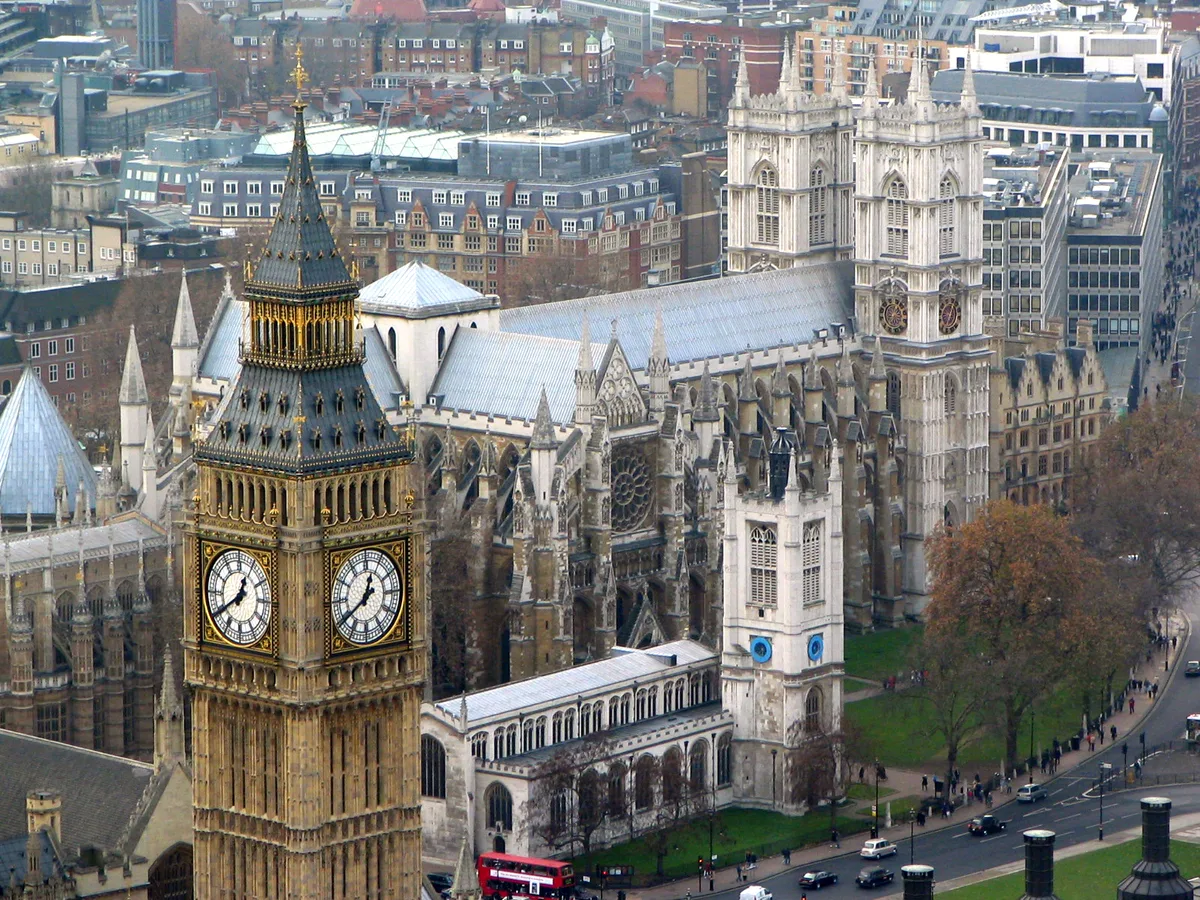
Palace of Westminster and Westminster Abbey including Saint Margaret's Church
UNESCO World Heritage · 0.0 km

Flags Of UK Overseas Territories
Natural landmarks · 0.0 km

Millicent Fawcett
Memorials & monuments · 0.0 km

Statue of the Earl of Derby
Historic houses · 0.0 km
Earl of Derby
Memorials & monuments · 0.0 km

Earl of Beaconsfield
Memorials & monuments · 0.1 km

PC Keith Palmer GM
Memorials & monuments · 0.1 km
Nearby
📷 5Memorials & monuments · London
Jan Smuts
Jan Smuts — a memorial in London, United Kingdom.
📷 5Historic houses · London
Statue of Jan Smuts
Statue of Jan Smuts — a Grade II-listed historic house in england-london, United Kingdom.
📷 5Natural landmarks · London
Parliament Square
Parliament Square — a place in London, United Kingdom.
📷 10UNESCO World Heritage · London
Palace of Westminster and Westminster Abbey including Saint Margaret's Church
Palace of Westminster and Westminster Abbey including Saint Margaret's Church — UNESCO World Heritage Site.
Where to eat & stay near David Lloyd George
Places to stay
 📷 5
📷 5Hotels · London
Conrad London St. James
Conrad London St. James — a hotel in england london.
 📷 5
📷 5Hotels · London
London Marriott Hotel County Hall
London Marriott Hotel County Hall — a hotel in england london.
 📷 5
📷 5Hotels · London
The Royal Horseguards Hotel, London
The Royal Horseguards Hotel, London — a hotel in england london.
 📷 5
📷 5Hotels · London
Great Scotland Yard Hotel
Great Scotland Yard Hotel — a hotel in england london. 5-star. Brand: Unbound Collection.
 📷 5
📷 5 📷 5
📷 5Hotels · London
Club Quarters Hotel
Club Quarters Hotel — a hotel in england london.
Places to eat & drink
 📷 7
📷 7Historic pubs · London
The Tattershall Castle
The Tattershall Castle — Historic pub — listed building or notable heritage status.
 📷 5
📷 5 📷 5
📷 5 📷 7
📷 7 📷 5
📷 5Cafés · London
Regency Cafe
Regency Cafe — a café in england london. Cuisine: fish and chips;tea;breakfast;local.
 📷 5
📷 5More memorials in this region
.jpg?width=1200) 📷 5
📷 5Memorials & monuments · London
1st Surrey Rifles War Memorial
1st Surrey Rifles War Memorial is a memorial in the United Kingdom.
 📷 5
📷 5Memorials & monuments · London
24th East Surrey Division War Memorial
24th East Surrey Division War Memorial is a memorial in the United Kingdom.
 📷 5
📷 5Memorials & monuments · London
Abney Park Cemetery CWGC Cross
Abney Park Cemetery CWGC Cross is a memorial in the United Kingdom.
 📷 5
📷 5Memorials & monuments · London
Admiral Sir John Franklin
Admiral Sir John Franklin is a memorial in the United Kingdom.
Frequently asked questions
- Where is David Lloyd George?
- David Lloyd George is in London, United Kingdom (postcode SW1A 2JR), in the parish of Westminster, unparished area.
- What is David Lloyd George?
- David Lloyd George — a memorial in London, United Kingdom.
- How do I get to David Lloyd George?
- The nearest railway station is Westminster, about 0.1 km away. The nearest town is London. Drivers can use postcode SW1A 2JR.
- Is David Lloyd George free to visit?
- Yes, David Lloyd George is free to enter.
- How do I get to David Lloyd George?
- The nearest railway station is Westminster, about 0.1 km away. Drivers can navigate to postcode SW1A 2JR.