
Historic bridges · South West England
Cross Bridge
In or near South Newton.
Cross Bridge — Grade II listed building-listed bridge in england-south-east, United Kingdom.

Colin Smith — CC BY-SA 2.0 via Wikimedia Commons licence

Plan your visit
- Typical visit
- 15 min–30 min
- Nearest railway station
- Salisbury · 4.0 km
- Free entry
- Dog-friendly
Getting there & planning your visit
To visit Cross Bridge, the nearest railway station is Salisbury, located 4 km away. The postcode for navigation is SP2 0HP. Entry to the bridge is free.
About
Cross Bridge is a Grade II listed building-listed bridge in england-south-east, United Kingdom, registered on the National Heritage List for England (NHLE entry 1023726). Listed status protects buildings and structures of special architectural or historic interest. See the linked Wikipedia article for further details.
Photo gallery
Heritage listing
Muscle contraction is the activation of tension-generating sites within muscle cells. In physiology, muscle contraction does not necessarily mean muscle shortening because muscle tension can be produced without changes in muscle length (isometric contraction), such as when holding something heavy in the same position. The termination of muscle contraction is followed by muscle relaxation, which is a return of the muscle fibers to their low tension-generating state. For the contractions to happen, the muscle cells must rely on the interaction of two types of filament: thin and thick filaments. The major constituent of thin filaments is a chain formed by helical coiling of two strands of actin, and thick filaments predominantly consist of chains of the motor-protein myosin.
From the Historic England List Entry under OGL v3.
Protected designations
- Site of Special Scientific Interest: River Avon System SSSI
- Area of Outstanding Natural Beauty: Cranborne Chase & West Wiltshire Downs
Designations sourced from Natural England open data under OGL v3.
From the Wikipedia article
Muscle contraction is the activation of tension-generating sites within muscle cells. In physiology, muscle contraction does not necessarily mean muscle shortening because muscle tension can be produced without changes in muscle length (isometric contraction), such as when holding something heavy in the same position. The termination of muscle contraction is followed by muscle relaxation, which is a return of the muscle fibers to their low tension-generating state. For the contractions to happen, the muscle cells must rely on the interaction of two types of filament: thin and thick filaments. The major constituent of thin filaments is a chain formed by helical coiling of two strands of actin, and thick filaments predominantly consist of chains of the motor-protein myosin. Together, these two filaments form myofibrils - the basic functional organelles in the skeletal muscle system. In vertebrates, skeletal muscle contractions are neurogenic as they require synaptic input from motor neurons. A single motor neuron is able to innervate multiple muscle fibers, thereby causing the fibers to contract at the same time. Once innervated, the protein filaments within each skeletal muscle fiber slide past each other to produce a contraction, which is explained by the sliding filament theory. The contraction produced can be described as a twitch, summation, or tetanus, depending on the frequency of action potentials. In skeletal muscles, muscle tension is at its greatest when the muscle is stretched to an intermediate length as described by the length-tension relationship. Unlike skeletal muscle, the contractions of smooth and cardiac muscles are myogenic (meaning that they are initiated by the smooth or heart muscle cells themselves instead of being stimulated by an outside event such as nerve stimulation), although they can be modulated by stimuli from the autonomic nervous system. The mechanisms of contraction in these muscle tissues are similar to those in skeletal muscle tissues. Muscle contraction can also be described in terms of two variables: length and tension. In natural movements that underlie locomotor activity, muscle contractions are multifaceted as they are able to produce changes in length and tension in a time-varying manner. Therefore, neither length nor tension is likely to remain the same in skeletal muscles that contract during locomotion. Contractions can be described as isometric if the muscle tension changes but the muscle length remains the same. In contrast, a muscle contraction is described as isotonic if muscle tension remains the same throughout the contraction. If the muscle length shortens, the contraction is concentric; if the muscle length lengthens, the contraction is eccentric.
Excerpt from Wikipedia under CC BY-SA 4.0. See the source article linked in Sources below.
- Coordinates
- 51.0824, -1.8607
- District
- Wiltshire
- Parish
- Wilton
- Postcode
- SP2 0HP
- Parliamentary constituency
- Salisbury
- Nearest railway station
- Salisbury — 4 km
Sources
- wikidata: Q26274680 (CC0)
- wikipedia: Cross-bridge cycle (CC BY-SA 4.0)
Other places nearby

Burden's Ball Bridge
Historic bridges · 0.1 km

The Pembroke Arms
Hotels · 0.3 km
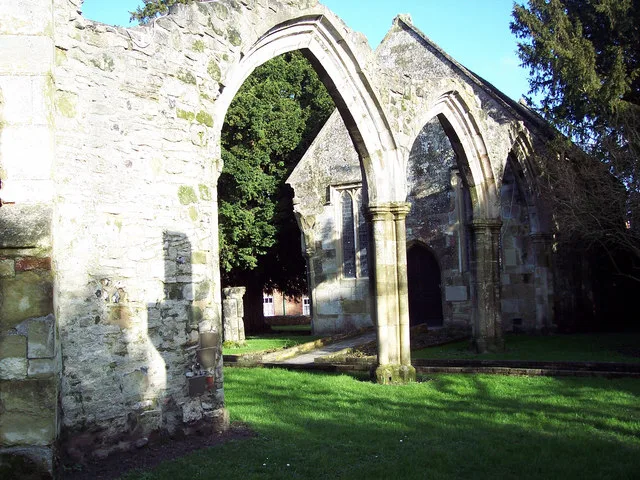
St Mary's Church, Wilton
Historic churches · 0.3 km

Wilton, Wiltshire
Museums · 0.3 km
_(geograph_7044692).jpg?width=1200)
The Coach House
Historic houses · 0.4 km

Wilton War Memorial
Memorials & monuments · 0.4 km
.jpg?width=1200)
Kingsway House
Historic houses · 0.4 km

Bridge Over River Wylye North Of Park School House
Historic bridges · 0.4 km
_-_geograph.org.uk_-_3436971.jpg?width=1200)
St John's Priory Chapel
Chapels · 0.4 km
_(geograph_7046380).jpg?width=1200)
The Manor House
Historic houses · 0.5 km
_(geograph_7046395).jpg?width=1200)
Mill House
Historic houses · 0.5 km
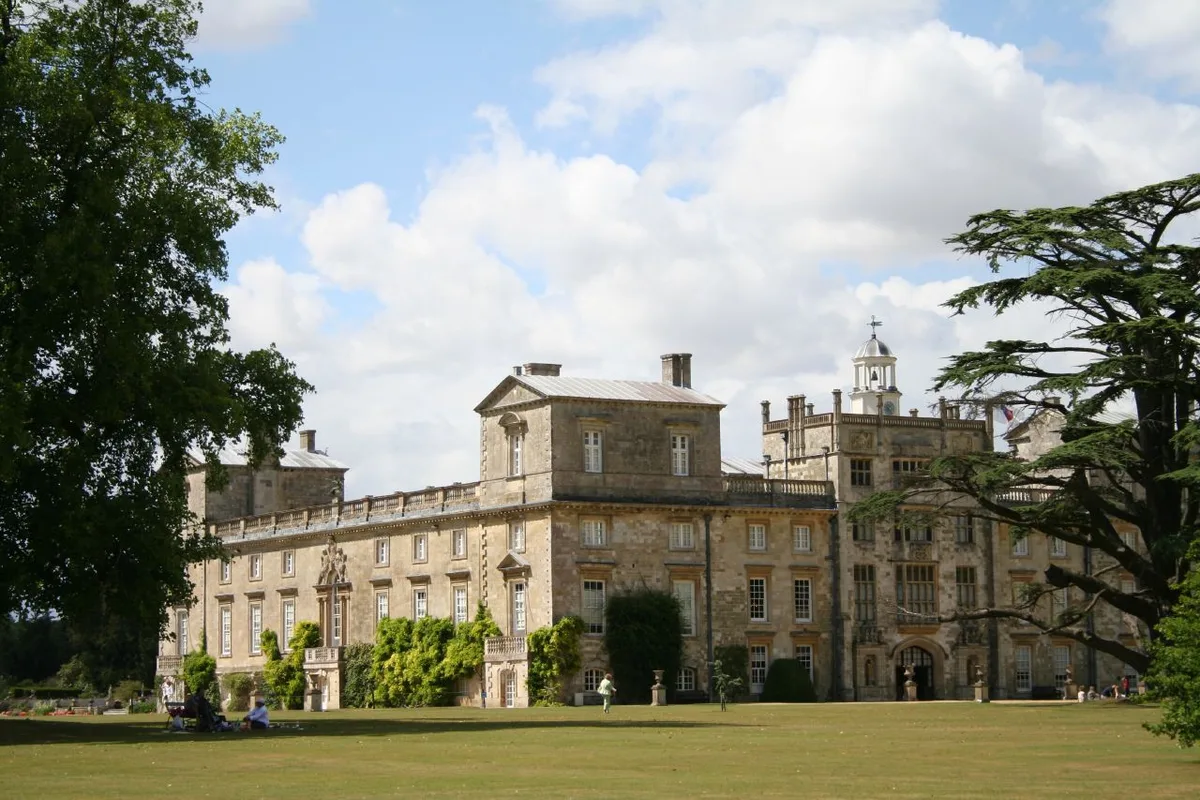
Wilton House
Stately homes · 0.5 km
Nearby
📷 5Historic bridges · South West England
Burden's Ball Bridge
Burden's Ball Bridge — Grade II listed building-listed bridge in england-south-east, United Kingdom.
📷 7Hotels · South West England
The Pembroke Arms
The Pembroke Arms — a hotel in england south east.
📷 5Historic churches · South West England
St Mary's Church, Wilton
St Mary's Church, Wilton — church in Wilton, Wiltshire, England, UK.
📷 5Museums · South West England
Wilton, Wiltshire
Wilton, Wiltshire — a museum in england-south-east, United Kingdom.
📷 5Historic houses · South West England
The Coach House
The Coach House — house in Wilton, Wiltshire, England, UK.
📷 5Memorials & monuments · South West England
Wilton War Memorial
Wilton War Memorial — Grade II listed building-listed memorial in england-south-east, United Kingdom.
Where to eat & stay near Cross Bridge
Places to stay
📷 7Hotels · South West England
The Pembroke Arms
The Pembroke Arms — a hotel in england south east.
 📷 7
📷 7B&Bs · South East England
Cricket Field House
Cricket Field House — a bed-and-breakfast in england south east.
 📷 5
📷 5B&Bs · South West England
Burcombe Manor Bed and Breakfast
Burcombe Manor Bed and Breakfast — a bed-and-breakfast in england south east.
 📷 5
📷 5Caravan parks · South West England
Coombe Caravan Park
Coombe Caravan Park — a caravan park in england south east.
 📷 5
📷 5Caravan parks · South East England
Camping & Caravan Club Salisbury
Camping & Caravan Club Salisbury — a caravan park in england south east.
 📷 5
📷 5Campsites · South East England
Salisbury Campsite at Bake Farm
Salisbury Campsite at Bake Farm — a campsite in england south east.
Places to eat & drink
 📷 5
📷 5Historic pubs · South West England
Three Crowns Public House
Three Crowns Public House in England South West, United Kingdom.
 📷 7
📷 7Restaurants · South East England
The Old Castle
The Old Castle — a restaurant in england south east. Cuisine: american. Brand: Harvester.
 📷 5
📷 5Historic pubs · South West England
George and Dragon
George and Dragon in England South West, United Kingdom.
 📷 7
📷 7Restaurants · South East England
Prezzo
Prezzo — a restaurant in england south east.
 📷 5
📷 5Historic pubs · South West England
The Haunch Of Venison
The Haunch Of Venison in England South West, United Kingdom.
 📷 5
📷 5Historic pubs · South West England
The Royal George
The Royal George in England South West, United Kingdom.
More bridges in this region
 📷 5
📷 5Historic bridges · South West England
Avoncliff Aqueduct
Avoncliff Aqueduct is a historic bridge in the United Kingdom.
📷 5Historic bridges · South West England
Avoncliff Aqueduct
Avoncliff Aqueduct is a historic bridge in the United Kingdom.
 📷 5
📷 5Historic bridges · South West England
Bradford Viaduct
Bradford Viaduct is a historic bridge in the United Kingdom.
 📷 5
📷 5Historic bridges · South West England
Chippenham Viaduct
Chippenham Viaduct is a historic bridge in the United Kingdom.
Frequently asked questions
- Where is Cross Bridge?
- Cross Bridge is in South-West England, United Kingdom (postcode SP2 0HP), in the parish of Wilton.
- What is Cross Bridge?
- Cross Bridge — Grade II listed building-listed bridge in england-south-east, United Kingdom.
- How do I get to Cross Bridge?
- The nearest railway station is Salisbury, about 4.0 km away. The nearest town is South Newton. Drivers can use postcode SP2 0HP.
- Is Cross Bridge a listed building?
- Cross Bridge is officially recognised as Grade II listed building listed.
- Is Cross Bridge a protected site?
- Yes — Cross Bridge is part of the River Avon System SSSI Site of Special Scientific Interest and the Cranborne Chase & West Wiltshire Downs National Landscape (AONB).
- Is Cross Bridge free to visit?
- Yes, Cross Bridge is free to enter.
- How do I get to Cross Bridge?
- The nearest railway station is Salisbury, about 4.0 km away. Drivers can navigate to postcode SP2 0HP.