
Public art & sculpture · Central Scotland
Comet
Also known as: Comed
In or near Cardross.
Comet — a public art in Central Scotland, United Kingdom.

Thomas Nugent — CC BY-SA 2.0 via Wikimedia Commons licence

Plan your visit
- Typical visit
- 1 h–2 h
- Nearest railway station
- Port Glasgow · 0.2 km
- Free entry
- Dog-friendly
Getting there & planning your visit
To visit Comet in the Scottish Highlands, you can take a train to Port Glasgow, which is 0.2 km away. Entry is free.
About
Comet is a public art located in Central Scotland, United Kingdom. Sourced from OpenStreetMap (ODbL licence); see local listings for visitor information, opening hours and admission details.
Photo gallery
Heritage listing
Comet Hale–Bopp after passing perihelion in April 1997 |thing=Small solar system body|where=Star systems|density=0.6 g/cm<sup>3</sup> (average)|qid=Q3559|commonscat=Comets|size=Typically less than 10 km wide (nucleus)<ref>{{Cite web |title=Ask an Astronomer |url=https://coolcosmos.ipac.caltech.edu/ask/182-What-is-the-size-of-a-comet-
Official information
Comets are celestial bodies with a nucleus that is typically less than 6 miles wide. As they approach the sun, their surface ices vaporize, forming a coma and a tail that can extend over 600,000 miles.
From the Wikipedia article
A comet is an icy, small Solar System body or interstellar object that warms and begins to release gases when passing close to the Sun, a process called outgassing. This produces an extended, gravitationally unbound atmosphere or coma surrounding the nucleus, and sometimes a tail of gas and dust gas blown out from the coma. These phenomena are due to the effects of solar radiation and the outstreaming solar wind plasma acting upon the nucleus of the comet. Comet nuclei range from a few hundred meters to tens of kilometers across and are composed of loose collections of ice, dust, and small rocky particles. The coma may be up to 15 times Earth's diameter, while the tail may stretch beyond one astronomical unit. If sufficiently close and bright, a comet may be seen from Earth without the aid of a telescope and can subtend an arc of up to 30° (60 Moons) across the sky. Comets have been observed and recorded since ancient times by many cultures and religions. Comets usually have highly eccentric elliptical orbits, and they have a wide range of orbital periods, ranging from several years to potentially several millions of years. Short-period comets originate in the Kuiper belt or its associated scattered disc, which lie beyond the orbit of Neptune. Long-period comets are thought to originate in the Oort cloud, a spherical cloud of icy bodies extending from outside the Kuiper belt to halfway to the nearest star. Long-period comets are set in motion towards the Sun by gravitational perturbations from passing stars and the galactic tide. Hyperbolic comets may pass once through the inner Solar System before being flung to interstellar space. The appearance of a comet is called an apparition. Comets differ from asteriods. Comets contain volatile material that sublimate as they approach the Sun to produce the characteristic tail, but asteriods are more like rocks and form no tail. Asteroids are thought to have a different origin from comets, having formed inside the orbit of Jupiter rather than in the outer Solar System. However, the discovery of main-belt comets and active centaur minor planets has blurred the distinction between asteroids and comets. In the early 21st century, the discovery of some minor bodies with long-period comet orbits, but characteristics of inner solar system asteroids, were called Manx comets. They are still classified as comets, such as C/2014 S3 (PANSTARRS). Twenty-seven Manx comets were found from 2013 to 2017. As of November 2021, there are 4,584 known comets. However, this represents a very small fraction of the total potential comet population, as the reservoir of comet-like bodies in the outer Solar System (in the Oort cloud) is about one trillion. Roughly one comet per year is visible to the naked eye, though many of those are faint and unspectacular. Particularly bright examples are called "great comets". Comets have been visited by uncrewed probes such as NASA's Deep Impact, which blasted a crater on Comet Tempel 1 to study its interior, and the European Space Agency's Rosetta, which became the first to land a robotic spacecraft on a comet.
Excerpt from Wikipedia under CC BY-SA 4.0. See the source article linked in Sources below.
Background
Visiting
The depiction of comets in popular culture is firmly rooted in the long Western tradition of seeing comets as harbingers of doom and as omens of world-altering change. Halley's Comet alone has caused a slew of sensationalist publications of all sorts at each of its reappearances. It was especially noted that the birth and death of some notable persons coincided with separate appearances of the comet, such as with writers Mark Twain (who correctly speculated that he'd "go out with the comet" in 1910) whereas the appearance of Comet Hale–Bopp in 1997 triggered the mass suicide of the Heaven's Gate cult. In science fiction, the impact of comets has been depicted as a threat overcome by…
Sourced from Wikipedia under CC BY-SA 4.0.
- Coordinates
- 55.9354, -4.6919
- District
- Inverclyde
- Postcode
- PA14 5BQ
- Parliamentary constituency
- Inverclyde and Renfrewshire West
- Nearest railway station
- Port Glasgow — 0.2 km
- Official site
- coolcosmos.ipac.caltech.edu
Sources
- osm: node/6482851110 (ODbL)
- wikipedia: Comet (CC BY-SA 4.0)
Other places nearby
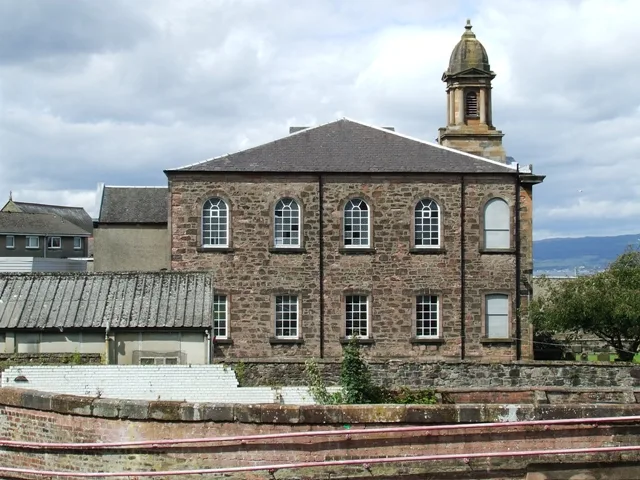
St Andrew’s Church (Port Glasgow)
Historic churches · 0.1 km

St Andrew’s Church (Port Glasgow)
Historic churches · 0.1 km
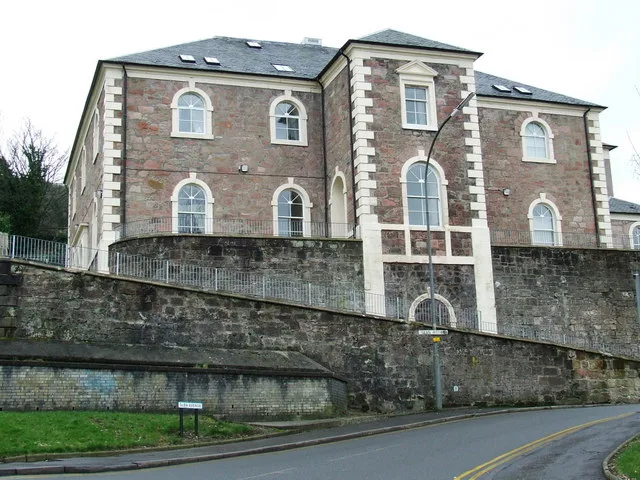
Newark Parish Church
Historic churches · 0.2 km
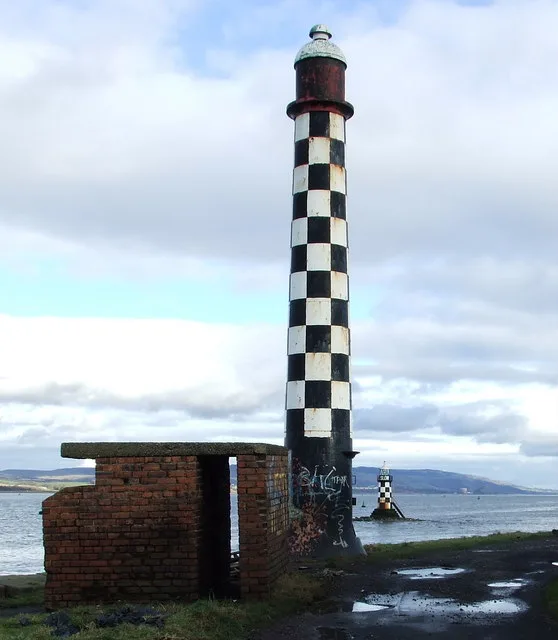
Steamboat Quay Light
Lighthouses · 0.2 km

Minewatching Post
Historic houses · 0.2 km

West Quay
Marinas · 0.3 km
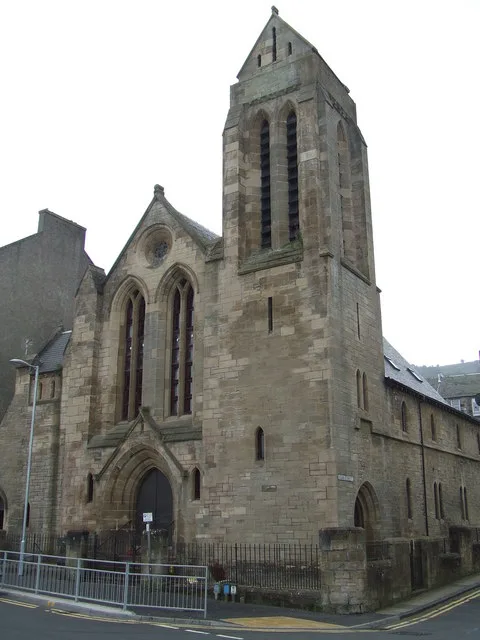
West Church (Port Glasgow)
Historic churches · 0.3 km

West Church (Port Glasgow)
Historic churches · 0.3 km

Port Glasgow War Memorial
Memorials & monuments · 0.3 km

Clyde Boating Tragedy Memorial
Memorials & monuments · 0.3 km
Endeavour
Public art & sculpture · 0.3 km

Memorial to Elizabeth Wood Inglis
Memorials & monuments · 0.3 km
Nearby
📷 3Historic churches · Central Scotland
St Andrew’s Church (Port Glasgow)
St Andrew’s Church (Port Glasgow) — church in Port Glasgow, United Kingdom.
📷 5Historic churches · Central Scotland
St Andrew’s Church (Port Glasgow)
St Andrew’s Church (Port Glasgow) — category B listed building-listed church in scotland-highlands, United Kingdom.
📷 3Historic churches · Central Scotland
Newark Parish Church
Newark Parish Church — church in Port Glasgow, UK.
📷 3Lighthouses · Central Scotland
Steamboat Quay Light
Steamboat Quay Light — lighthouse in Port Glasgow, Scotland.
📷 3Historic houses · Central Scotland
Minewatching Post
Minewatching Post — a historic house in Central Scotland, United Kingdom.
📷 5Where to eat & stay near Comet
Places to stay
 📷 5
📷 5 📷 5
📷 5Hotels · Central Scotland
Gleddoch House Hotel and Golf Club
Gleddoch House Hotel and Golf Club — a hotel in scotland highlands.
 📷 5
📷 5Caravan parks · Central Scotland
Rosneath Castle Park
Rosneath Castle Park — a caravan park in scotland highlands.
 📷 5
📷 5Caravan parks · Central Scotland
Lomond Woods Holiday Park
Lomond Woods Holiday Park — a caravan park in scotland highlands.
 📷 5
📷 5Hotels · Central Scotland
Cameron House on Loch Lomond
Cameron House on Loch Lomond — a hotel in scotland highlands.
 📷 5
📷 5Places to eat & drink
 📷 5
📷 5Historic pubs · Central Scotland
The James Watt
The James Watt in Scotland Central, United Kingdom.
 📷 5
📷 5Historic pubs · Central Scotland
Central Bar, 127 Main Street, Renton
Central Bar, 127 Main Street, Renton in Scotland Central, United Kingdom.
📷 7 📷 7
📷 7Historic pubs · Central Scotland
Ardencaple Hotel Including Former Stables, Rhu Road Lower, Rhu
Ardencaple Hotel Including Former Stables, Rhu Road Lower, Rhu in Scotland Central, United Kingdom.
 📷 5
📷 5Historic pubs · Central Scotland
Fox and Hounds Inn, South Street, Houston
Fox and Hounds Inn, South Street, Houston in Scotland Central, United Kingdom.
 📷 5
📷 5Historic pubs · Central Scotland
10 The Cross, Kilbarchan
10 The Cross, Kilbarchan in Scotland Central, United Kingdom.
More places in this region
 📷 3
📷 3Public art & sculpture · Central Scotland
Arboreal
Arboreal — Public artwork (poem) by Richard Livermore.
 📷 3
📷 3Public art & sculpture · Central Scotland
Aspiration
Aspiration — Public artwork (sculpture) by Keith McCarter.
 📷 3
📷 3Public art & sculpture · Central Scotland
Casting
Casting — Public artwork (poem) by Morgan Downie.
 📷 3
📷 3Public art & sculpture · Central Scotland
Deserted Village
Deserted Village — Public artwork (poem) by Anne Connolly.
Frequently asked questions
- Where is Comet?
- Comet is in central Scotland, United Kingdom (postcode PA14 5BQ).
- What is Comet?
- Comet — a public art in Central Scotland, United Kingdom.
- How do I get to Comet?
- The nearest railway station is Port Glasgow, about 0.2 km away. The nearest town is Cardross. Drivers can use postcode PA14 5BQ.
- Is Comet free to visit?
- Yes, Comet is free to enter.
- How do I get to Comet?
- The nearest railway station is Port Glasgow, about 0.2 km away. Drivers can navigate to postcode PA14 5BQ.