
Historic houses · South East England
Cliveden
In or near Hedsor.
Cliveden (pronounced ) is an English country house and estate in the care of the National Trust in Buckinghamshire, on the border with Berkshire. The Italianate mansion, also known as Cliveden House,

Steve Daniels — CC BY-SA 2.0 via Wikimedia Commons licence

Plan your visit
- Typical visit
- 1 h–2 h
- Nearest railway station
- Cookham · 2.4 km
- Family-friendly
- Limited wheelchair access
Getting there & planning your visit
To visit Cliveden, the nearest railway station is Cookham, located 2.4 km away. The postcode for sat-nav is SL6 0JF. Please note that wheelchair accessibility is limited.
About
Cliveden (pronounced ) is an English country house and estate in the care of the National Trust in Buckinghamshire, on the border with Berkshire. The Italianate mansion, also known as Cliveden House, crowns an outlying ridge of the Chiltern Hills close to the South Bucks villages of Taplow and Burnham. The main house sits 40 metres (130 ft) above the banks of the River Thames, and its grounds slope down to the river. There have been three houses on this site. The first was built in 1666 and burned down in 1795, while the second house was constructed around 1824 and was also destroyed by fire, in 1849. The present Grade I listed house was built in 1851 by the architect Charles Barry for the 2nd Duke of Sutherland. Cliveden has been the home to a Prince of Wales, two dukes, an earl, and finally the Viscounts Astor. As the home of Nancy Astor, wife of the 2nd Viscount Astor, Cliveden was the meeting place during the 1920s and 1930s of the Cliveden Set, a group of political intellectuals. Later, during the early 1960s, when it was the home of the 3rd Viscount Astor, it became the setting for key events of the notorious Profumo affair. After the Astor family stopped living there, by the 1970s, it was leased to Stanford University, which used it as an overseas campus. It is now leased to a company that runs it as a luxury hotel. The 375-acre (152 ha) gardens and woodlands are open to the public, together with parts of the house on certain days. Cliveden has been one of the…
Photo gallery
Summary from the official site
Cliveden House is a historic Grade I stately home set in 376 acres of National Trust grounds in Berkshire. Originally built in 1666, it has a rich history of intrigue and glamour, now serving as a luxurious five-star hotel and spa, offering various accommodations and dining options.
Read more on the official property page.
Protected designations
- Area of Outstanding Natural Beauty: Chilterns
Designations sourced from Natural England open data under OGL v3.
From the Wikipedia article
Cliveden (pronounced ) is an English country house and estate in the care of the National Trust in Buckinghamshire, on the border with Berkshire. The Italianate mansion, also known as Cliveden House, crowns an outlying ridge of the Chiltern Hills close to the South Bucks villages of Taplow and Burnham. The main house sits 40 metres (130 ft) above the banks of the River Thames, and its grounds slope down to the river. There have been three houses on this site. The first was built in 1666 and burned down in 1795, while the second house was constructed around 1824 and was also destroyed by fire, in 1849. The present Grade I listed house was built in 1851 by the architect Charles Barry for the 2nd Duke of Sutherland. Cliveden has been the home to a Prince of Wales, two dukes, an earl, and finally the Viscounts Astor. As the home of Nancy Astor, wife of the 2nd Viscount Astor, Cliveden was the meeting place during the 1920s and 1930s of the Cliveden Set, a group of political intellectuals. Later, during the early 1960s, when it was the home of the 3rd Viscount Astor, it became the setting for key events of the notorious Profumo affair. After the Astor family stopped living there, by the 1970s, it was leased to Stanford University, which used it as an overseas campus. It is now leased to a company that runs it as a luxury hotel. The 375-acre (152 ha) gardens and woodlands are open to the public, together with parts of the house on certain days. Cliveden has been one of the National Trust's most popular pay-for-entry visitor attractions, hosting 524,807 visitors in 2019.
Excerpt from Wikipedia under CC BY-SA 4.0. See the source article linked in Sources below.
Background
Architecture
The interior of the house today is very different from its original appearance in 1851–52. This is mainly due to the 1st Viscount Astor, who radically altered the interior layout and decoration c.1894–95. Whereas Barry's original interior for the Sutherlands had included a square entrance-hall, a morning room, and a separate stairwell, Lord Astor wanted a more impressive entrance to Cliveden, so he had all three rooms amalgamated to create the Great Hall. The staircase newel posts are ornamented with carved figures representing previous owners (e.g. Buckingham and Orkney) by W.S. Frith. Lord Astor installed a large 16th-century fireplace that was purchased from the Frederick Spitzer sale…
Description
The Italian-style Long Garden consists of topiary in the form of corkscrew-spirals, peacocks, and seasonal planting within box hedges; it was created by garden designer Norah Lindsay in c.1900. The Japanese-style Water Garden was designed in c.1893 and is believed to be the first such East Asian inspired garden in the country. It features a pagoda, on an island, bought from the Bagatelle estate in Paris. The planting there is mostly spring-flowering: cherry trees, bush wisterias, and giant gunneras. Both gardens were commissioned by the 1st Lord Astor. The planting in the herbaceous borders in the forecourt was designed in the 1970s by the National Trust advisor Graham Stuart Thomas. In…
Sourced from Wikipedia under CC BY-SA 4.0.
- Coordinates
- 51.5585, -0.6882
- District
- Buckinghamshire
- Parish
- Taplow
- Postcode
- SL6 0JF
- Parliamentary constituency
- Beaconsfield
- Phone
- +44 1628668561
- Established
- 1851
- Nearest railway station
- Cookham — 2.4 km
- Official site
- clivedenhouse.co.uk
Sources
- wikipedia: Cliveden (CC BY-SA 4.0)
Other places nearby
Cliveden House
Manor houses · 0.0 km
Cliveden House
Hotels · 0.0 km

Terrace Wall To Garden Front, Cliveden
Holy wells · 0.1 km
.jpg?width=1200)
War Memorial Garden
Cemeteries · 0.1 km
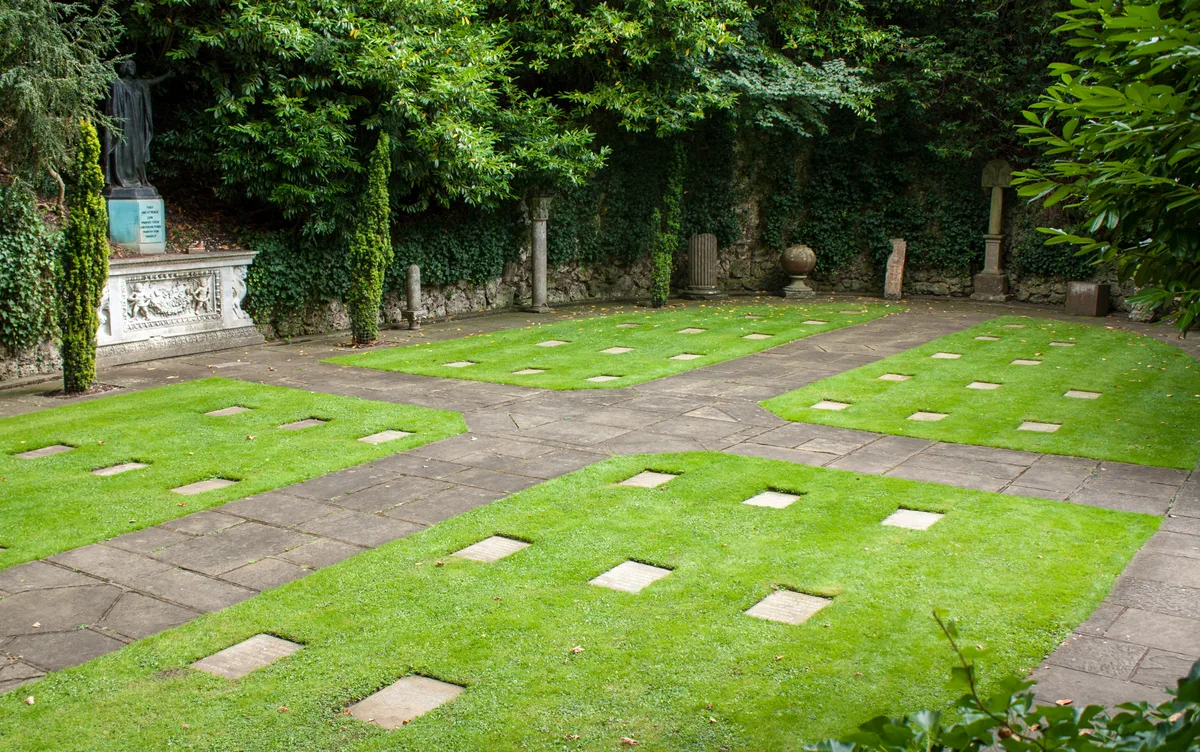
Cliveden War Cemetery
Gardens · 0.1 km
_(7958617328).jpg?width=1200)
Octagon Temple Chapel, Cliveden
Chapels · 0.2 km

The Rape of Proserpina
Public art & sculpture · 0.3 km

Shell Fountain, Cliveden
Public art & sculpture · 0.4 km

The Feathers Public House
Historic pubs · 0.5 km

Amphitheatre, Cliveden Estate
Open-air theatres · 0.5 km

Blenheim Pavilion, Cliveden
Historic houses · 0.5 km

Cookham Lock
Canal locks · 0.6 km
Nearby
📷 5Manor houses · South East England
Cliveden House
Cliveden House — a manor in South East England, United Kingdom.
📷 5Hotels · South East England
Cliveden House
Cliveden House — a hotel in england south east.
📷 5Holy wells · South East England
Terrace Wall To Garden Front, Cliveden
Terrace Wall To Garden Front, Cliveden — Grade I listed wall in South Bucks, United Kingdom.
📷 5Cemeteries · South East England
War Memorial Garden
War Memorial Garden is a cemetery in the United Kingdom.
📷 5Gardens · South East England
Cliveden War Cemetery
Cliveden War Cemetery — cemetery in Buckinghamshire, United Kingdom.
📷 5Chapels · South East England
Octagon Temple Chapel, Cliveden
Octagon Temple Chapel, Cliveden — chapel in the Octagon Temple, Cliveden, Buckinghamshire, England, United Kingdom.
Where to eat & stay near Cliveden
Places to stay
📷 5Hotels · South East England
Cliveden House
Cliveden House — a hotel in england south east.
 📷 5
📷 5Hotels · South East England
Bel and the Dragon
Bel and the Dragon — a hotel in england south east.
 📷 7
📷 7 📷 5
📷 5Hotels · South East England
Taplow House Hotel
Taplow House Hotel — a hotel in england south east.
 📷 5
📷 5Hotels · South East England
Burnham Beeches Hotel
Burnham Beeches Hotel — a hotel in england south east.
 📷 5
📷 5Caravan parks · South East England
Amerden Caravan Park
Amerden Caravan Park — a caravan park in england south east.
Places to eat & drink
📷 7Historic pubs · South East England
The Feathers Public House
The Feathers Public House in England South East, United Kingdom.
 📷 5
📷 5Restaurants · South East England
The Ferry
The Ferry — a restaurant in england south east.
 📷 5
📷 5 📷 7
📷 7Historic pubs · South East England
Green Dragon Public House
Green Dragon Public House in England South East, United Kingdom.
 📷 5
📷 5Historic pubs · South East England
Gardeners Arms Public House
Gardeners Arms Public House in England South East, United Kingdom.
 📷 5
📷 5Historic pubs · South East England
The Queen's Head
The Queen's Head in England South East, United Kingdom.
More historic houses in this region
 📷 5
📷 5Historic houses · South East England
12 and 14 High Street, Rochester
12 and 14 High Street, Rochester — building in Rochester, Kent, England, UK.
 📷 5
📷 5Historic houses · South East England
Berkeley House
Berkeley House — house in Rochester, Kent, England, UK.
.jpg?width=1200) 📷 5
📷 5Historic houses · South East England
Betchworth House
Betchworth House — house in Betchworth, Mole Valley, England, UK.
 📷 5
📷 5Historic houses · South East England
Bookham Grove
Bookham Grove — building in Mole Valley, Surrey, England, UK.
Frequently asked questions
- Where is Cliveden?
- Cliveden is in South-East England, United Kingdom (postcode SL6 0JF), in the parish of Taplow.
- What is Cliveden?
- Cliveden (pronounced ) is an English country house and estate in the care of the National Trust in Buckinghamshire, on the border with Berkshire. The Italianate mansion, also known as Cliveden House,
- How do I get to Cliveden?
- The nearest railway station is Cookham, about 2.4 km away. The nearest town is Hedsor. Drivers can use postcode SL6 0JF.
- When was Cliveden built?
- Built or established in 1851.
- Who owns Cliveden?
- Cliveden is owned by National Trust.
- Is Cliveden a protected site?
- Yes — Cliveden is part of the Chilterns National Landscape (AONB).
- How do I get to Cliveden?
- The nearest railway station is Cookham, about 2.4 km away. Drivers can navigate to postcode SL6 0JF.