
Public art & sculpture · Central Scotland
Bronze Waves
Also known as: Oes yr Efydd, An Chré-umhaois
In or near Banknock.
Bronze Waves — a public art in Central Scotland, United Kingdom.

Stevie Spiers — CC BY-SA 2.0 via Wikimedia Commons licence

Plan your visit
- Typical visit
- 1 h–2 h
- Nearest railway station
- Cumbernauld · 0.9 km
- Free entry
- Dog-friendly
Getting there & planning your visit
To visit Bronze Waves, the nearest railway station is Cumbernauld, which is 0.9 km away. Entry is free, and the location is accessible. The postcode for navigation is G67 1NG.
About
Bronze Waves is a public art located in Central Scotland, United Kingdom. Sourced from OpenStreetMap (ODbL licence); see local listings for visitor information, opening hours and admission details.
Photo gallery
See it from the streetimagery from 2025
Imagery © Mapillary contributors, CC BY-SA 4.0
Official information
Cumbernauld Museum is located within the town's main library and showcases the rich heritage of Cumbernauld and its surroundings. Visitors can explore a variety of exhibits, including maps, photographs, and artefacts that tell the story of the area's history from ancient times to the present.
From the Wikipedia article
The Bronze Age is an archaeological and anthropological term defining a phase in the development of material culture among ancient societies in Asia, the Near East and Europe. An ancient civilisation or culture is deemed to be part of the Bronze Age if it either produced bronze by smelting its own copper and alloying it with tin, arsenic, or other metals, or traded other items for bronze from producing areas elsewhere. The Bronze Age is the middle principal period of the three-age system, following the Stone Age and preceding the Iron Age. Conceived as a global era, the Bronze Age follows the Neolithic ("New Stone") period, with a transition period between the two known as the Chalcolithic ("copper-Stone") Age. These technical developments took place at different times in different places, and therefore each region's history is framed by a different chronological system, but the Bronze Age had begun in much of the Old World by 3,000 BC. Bronze Age cultures were the first to develop writing. According to archaeological evidence, cultures in Mesopotamia, which used cuneiform script, and Egypt, which used hieroglyphs, developed the earliest practical writing systems. In a particular region, whichever comes first of the arrival of the Iron Age, or the development of writing, is usually taken to mark the end of the Bronze Age, as history replaces prehistory; this is not always the case in the earliest areas to develop writing. In the archaeology of the Americas, a five-period system is conventionally used instead, which does not include a Bronze Age, though some cultures there did smelt copper and bronze. No evidence of metalworking has been found on the Australian continent prior to the establishment of European settlements in 1788. In many areas bronze continued to be rare and expensive, mainly because of difficulties in obtaining enough tin, which occurs in relatively few places, unlike the very common copper. It is likely that the earliest tin deposits were alluvial and perhaps exploited by the same methods used for panning gold in placer deposits. Some societies appear to have gone through much of the Bronze Age using bronze only for weapons or elite art, such as Chinese ritual bronzes, with ordinary farmers largely still using stone tools. However, this is hard to assess as the rarity of bronze meant it was keenly recycled.
Excerpt from Wikipedia under CC BY-SA 4.0. See the source article linked in Sources below.
- Coordinates
- 55.9488, -3.9874
- District
- North Lanarkshire
- Postcode
- G67 1NG
- Parliamentary constituency
- Cumbernauld and Kirkintilloch
- Phone
- 01236 638460
- Nearest railway station
- Cumbernauld — 0.9 km
- Opening
- Monday 9am-5pm; Tuesday 9am-7pm; Wednesday 9am-5pm; Thursday 9am-7pm; Friday 9am-5pm; Saturday 10am-5pm; Sunday closed
- Official site
- culturenl.co.uk
Sources
- osm: node/5076670001 (ODbL)
- wikipedia: Bronze Age (CC BY-SA 4.0)
Other places nearby

Cumbernauld Museum
Museums · 0.2 km

The Centre Cumbernauld
Gardens · 0.3 km

Cumbernauld Hill
Mountains & hills · 0.3 km

Son of the Angel
Public art & sculpture · 0.3 km
St Mungo's Church, St Mungo's Road, Cumbernauld
Historic churches · 0.4 km

Tin Can Array
Public art & sculpture · 0.4 km

Tin Can Pyramid
Public art & sculpture · 0.4 km
Trolley Wall
Public art & sculpture · 0.4 km

Carbrain Totem
Public art & sculpture · 0.5 km

Peace Doves
Public art & sculpture · 0.6 km
Kildrum Parish Church, Clouden Road, Cumbernauld
Historic churches · 0.7 km
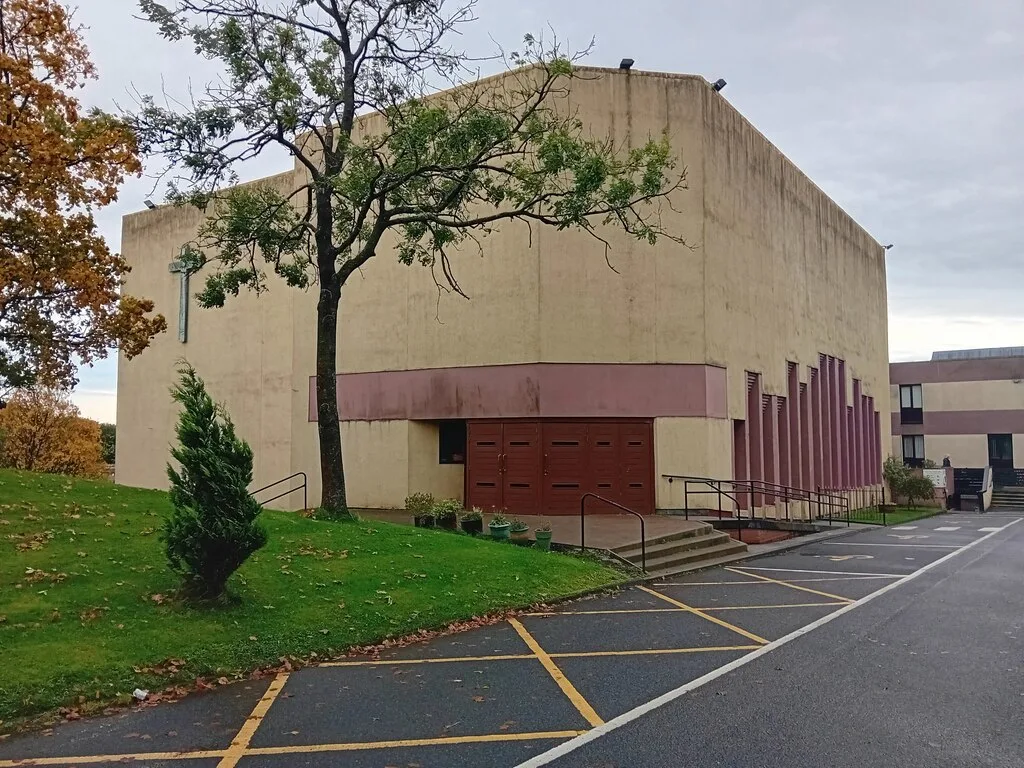
Sacred Heart Roman Catholic Church and Presbytery, Cumbernauld
Historic churches · 0.8 km
Nearby
📷 3Museums · Central Scotland
Cumbernauld Museum
Cumbernauld Museum — a museum in Central Scotland, United Kingdom.
📷 4Gardens · Central Scotland
The Centre Cumbernauld
The Centre Cumbernauld — a garden in scotland-central, United Kingdom.
📷 5Mountains & hills · Central Scotland
Cumbernauld Hill
Cumbernauld Hill — a hill or mountain in scotland central.
📷 3Public art & sculpture · Central Scotland
Son of the Angel
Son of the Angel — a public art in Central Scotland, United Kingdom.
📷 5Historic churches · Central Scotland
St Mungo's Church, St Mungo's Road, Cumbernauld
St Mungo's Church, St Mungo's Road, Cumbernauld — category B listed building-listed church in scotland-central, United Kingdom.
📷 3Public art & sculpture · Central Scotland
Tin Can Array
Tin Can Array — a public art in Central Scotland, United Kingdom.
Where to eat & stay near Bronze Waves
Places to stay
 📷 5
📷 5Hotels · Central Scotland
DoubleTree by Hilton Glasgow Westerwood Spa & Golf Resort
DoubleTree by Hilton Glasgow Westerwood Spa & Golf Resort — a hotel in scotland central. 4-star. Brand: DoubleTree by Hilton.
 📷 5
📷 5Campsites · Central Scotland
Wheel Caravan park
Wheel Caravan park — a campsite in scotland central.
 📷 5
📷 5Caravan parks · Central Scotland
Craigendmuir Holiday Park
Craigendmuir Holiday Park — a caravan park in scotland central.
 📷 6
📷 6 📷 5
📷 5Hotels · Central Scotland
Glenbervie House Hotel
Glenbervie House Hotel — a hotel in scotland central.
 📷 5
📷 5Hotels · Central Scotland
DoubleTree by Hilton Glasgow Strathclyde
DoubleTree by Hilton Glasgow Strathclyde — a hotel in scotland central. 4-star. Brand: DoubleTree by Hilton.
Places to eat & drink
 📷 5
📷 5Historic pubs · Central Scotland
The Masonic Arms, 62 Main Street, Cumbernauld Village
The Masonic Arms, 62 Main Street, Cumbernauld Village in Scotland Central, United Kingdom.
 📷 5
📷 5Historic pubs · Central Scotland
Dennyloanhead
Dennyloanhead in Scotland Islands, United Kingdom.
 📷 5
📷 5Historic pubs · Central Scotland
Portland Arms Public House, 1169 Shettleston Road, Glasgow
Portland Arms Public House, 1169 Shettleston Road, Glasgow in Scotland Central, United Kingdom.
 📷 5
📷 5Historic pubs · Central Scotland
The Rowan Tree Inn, 62 Old Mill Road, Uddingston
The Rowan Tree Inn, 62 Old Mill Road, Uddingston in Scotland Central, United Kingdom.
 📷 7
📷 7Historic pubs · Central Scotland
374-378 Gallowgate
374-378 Gallowgate in Scotland Central, United Kingdom.
 📷 6
📷 6Historic pubs · Central Scotland
The Gothenburg
The Gothenburg in Scotland Islands, United Kingdom.
More places in this region
 📷 3
📷 3Public art & sculpture · Central Scotland
Arboreal
Arboreal — Public artwork (poem) by Richard Livermore.
 📷 3
📷 3Public art & sculpture · Central Scotland
Aspiration
Aspiration — Public artwork (sculpture) by Keith McCarter.
 📷 3
📷 3Public art & sculpture · Central Scotland
Casting
Casting — Public artwork (poem) by Morgan Downie.
 📷 3
📷 3Public art & sculpture · Central Scotland
Deserted Village
Deserted Village — Public artwork (poem) by Anne Connolly.
Frequently asked questions
- Where is Bronze Waves?
- Bronze Waves is in central Scotland, United Kingdom (postcode G67 1NG).
- What is Bronze Waves?
- Bronze Waves — a public art in Central Scotland, United Kingdom.
- How do I get to Bronze Waves?
- The nearest railway station is Cumbernauld, about 0.9 km away. The nearest town is Banknock. Drivers can use postcode G67 1NG.
- Is Bronze Waves free to visit?
- Yes, Bronze Waves is free to enter.
- How do I get to Bronze Waves?
- The nearest railway station is Cumbernauld, about 0.9 km away. Drivers can navigate to postcode G67 1NG.