
Historic houses · East of England
Apethorpe Hall
In or near Woodnewton.
Apethorpe Hall — a Grade I-listed historic house in england-london, United Kingdom.

Michael Garlick — CC BY-SA 2.0 via Wikimedia Commons licence

Plan your visit
- Typical visit
- 1 h–2 h
- Nearest railway station
- Yarwell Junction (NVR) · 5.8 km
- Free entry
- Family-friendly
- Limited wheelchair access
Getting there & planning your visit
To visit Apethorpe Hall, the nearest railway station is Yarwell Junction (NVR), which is 5.8 km away. The postcode for sat-nav is PE8 5DJ. Accessibility is limited for wheelchair users.
About
Apethorpe Hall is a Grade I-listed building in england-london, United Kingdom. Grade I status is conferred by Historic England (or Cadw, Historic Environment Scotland or NIEA equivalents) on buildings of exceptional national interest. See the linked Wikipedia article for full historical and architectural details.
Photo gallery
Summary from the official site
Apethorpe Palace is a historic stately home in Northamptonshire, known for its Jacobean architecture and royal connections, having been a residence for Elizabeth I and later monarchs. Visitors can explore its well-preserved state rooms, including the King's Bedchamber and long gallery, during pre-booked tours.
Read more on the official property page.
From the Wikipedia article
Apethorpe Palace, formerly known as "Apethorpe Hall", is a Grade I listed country house, dating to the 15th century, close to Apethorpe, Northamptonshire. It was a "favourite royal residence" for James I. After restoration by English Heritage the house was sold in 2015 to Jean Christophe Iseux von Pfetten as his "private residence", under an arrangement where it is "open during July and August for pre-booked tours only", these managed by English Heritage. The house is acknowledged as one of the finest remaining examples of a Jacobean stately home and one of Britain's ten best palaces. It holds a particular importance due to its ownership by, and role in entertaining, Tudor and Stuart monarchs; Elizabeth I inherited the estate from her father Henry VIII and her successor, James I, personally contributed to its 1622 extension, housing the state rooms and featuring some of the most important surviving plasterwork and fireplaces of the period. There were at least thirteen extended royal visits – more than to any other house in the county – between 1566 and 1636, and it was at Apethorpe, in August 1614, that King James met his favourite and speculated lover, George Villiers, later to become Duke of Buckingham. A series of court masques written by Ben Jonson for James I were performed while the King was in residence at Apethorpe. The house was also lived in regularly by Charles I.
Excerpt from Wikipedia under CC BY-SA 4.0. See the source article linked in Sources below.
Background
History
In May 1231 Henry III granted the manor of Apethorpe to Ralph le Breton; however on 21 June 1232 the manor was taken back into the king's hands. In the 15th century the manor was owned by Sir Guy Wolston. In 1515 Apethorpe was purchased by Henry Keble, grandfather of Lord Mountjoy, who sold the manor to Henry VIII. Apethorpe was left to Princess Elizabeth in her father Henry VIII's will. In April 1551 Sir Walter Mildmay acquired it from Edward VI in exchange for property in Gloucestershire and Berkshire. Queen Elizabeth dined with Mildmay at Apethorpe on her progresses in 1562, 1566 and 1587. He added a stone chimney-piece engraved with his motto dated 1562, and after his death the house…
Architecture
The house has been significantly altered and extended throughout its history. The first major alteration, the Jacobean royal extension, is attributed to Thomas Thorpe, brother of John Thorpe (at times himself attributed). The second, Neo-Palladian modifications which were planned to be more widespread, are attributed to Roger Morris. The third & final, largely Neo-Jacobean embellishments and internal reworking, was by Sir Reginald Blomfield. As a result of these, it is vast, with a floor area of approximately 51000 sqft. This size, along with its three courtyards, led to Country Life saying it has "something of the character of a Cambridge college". Apethorpe was large enough to accommodate…
Sourced from Wikipedia under CC BY-SA 4.0.
- Coordinates
- 52.5474, -0.4925
- District
- North Northamptonshire
- Parish
- Apethorpe
- Postcode
- PE8 5DJ
- Parliamentary constituency
- Corby and East Northamptonshire
- Phone
- 0370 333 1181
- Nearest railway station
- Yarwell Junction (NVR) — 5.8 km
- Opening
- Open select dates for tours in July and August; closed other times.
- Official site
- www.english-heritage.org.uk
Sources
- wikidata: Q4779401 (CC0)
- wikipedia: Apethorpe Palace (CC BY-SA 4.0)
Other places nearby

Apethorpe War Memorial
Memorials & monuments · 0.3 km
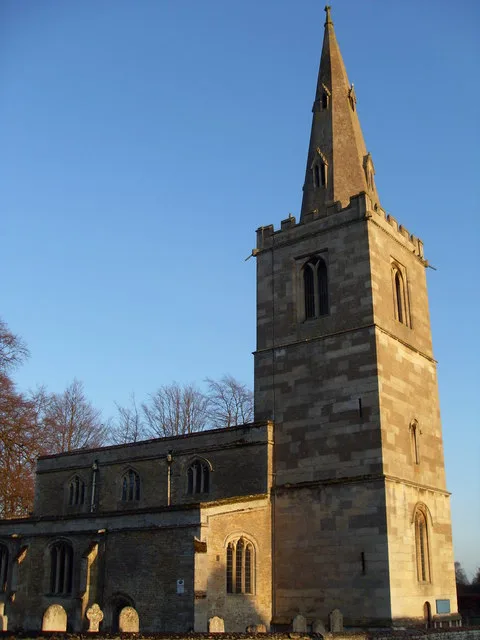
St Leonard's Church, Apethorpe
Historic churches · 0.3 km

Village Stocks
Memorials & monuments · 0.3 km

Bridge Over Willow Brook
Historic bridges · 0.6 km

Woodnewton
Towns & cities · 1.5 km

Kings Cliffe Cemetery
Cemeteries · 1.9 km

Churchyard Monument And Attached Surround Approximately 30 Metres South Of South Aisle Of Church Of All Saints
Memorials & monuments · 2.3 km

Gatearch Approximately 75 Metres West North West Of Church Of All Saints
Memorials & monuments · 2.4 km

Kings Cliffe
Villages · 2.4 km

Glen Miller Pillar
Memorials & monuments · 2.5 km

Old Brewery Studios
Galleries · 2.6 km

Kings Cliffe Airfield Memorial
Memorials & monuments · 2.7 km
Nearby
📷 5Memorials & monuments · East of England
Apethorpe War Memorial
Apethorpe War Memorial — Grade II listed building-listed memorial in england-london, United Kingdom.
📷 5Historic churches · East of England
St Leonard's Church, Apethorpe
St Leonard's Church, Apethorpe — church in Apethorpe, Northamptonshire, UK.
📷 5Memorials & monuments · East of England
Village Stocks
Village Stocks — a memorial in East of England, United Kingdom.
📷 5Historic bridges · East of England
Bridge Over Willow Brook
Bridge Over Willow Brook — Grade II listed building-listed bridge in england-london, United Kingdom.
📷 5Towns & cities · East of England
Woodnewton
Woodnewton — village and civil parish in Northamptonshire, United Kingdom.
📷 3Cemeteries · East of England
Kings Cliffe Cemetery
Kings Cliffe Cemetery is a cemetery in the United Kingdom.
Where to eat & stay near Apethorpe Hall
Places to stay
 📷 5
📷 5 📷 5
📷 5Hotels · East of England
The Haycock Hotel
The Haycock Hotel — a hotel in england london.
 📷 5
📷 5Campsites · East of England
Sacrewell Farm
Sacrewell Farm — a campsite in england london.
 📷 5
📷 5Hotels · East of England
Sibson Inn Hotel
Sibson Inn Hotel — a hotel in england london.
 📷 5
📷 5Campsites · East Midlands
Brightside Caravan Park
Brightside Caravan Park — a campsite in england west midlands.
 📷 5
📷 5Campsites · East Midlands
Cuckoo Farm Camp Site
Cuckoo Farm Camp Site — a campsite in england west midlands.
Places to eat & drink
 📷 5
📷 5Historic pubs · East of England
Shuckburgh Arms Public House
Shuckburgh Arms Public House in England East, United Kingdom.
 📷 5
📷 5Restaurants · East of England
The Falcon Inn
The Falcon Inn — a restaurant in england london.
 📷 5
📷 5Historic pubs · East of England
Victoria Inn Public House
Victoria Inn Public House in England East, United Kingdom.
📷 5Historic pubs · East of England
Waggon And Horses Public House
Waggon And Horses Public House in England East, United Kingdom.
 📷 5
📷 5Historic pubs · East of England
Rose And Crown Public House
Rose And Crown Public House in England East, United Kingdom.
 📷 5
📷 5More historic houses in this region
 📷 5
📷 5Historic houses · East of England
41 and 41a, Broad Street
41 and 41a, Broad Street — Grade II* listed house in Ely, East Cambridgeshire, England, UK.
 📷 5
📷 5Historic houses · East of England
Abbey Gate House
Abbey Gate House — house in St Albans, Hertfordshire, England, UK.
 📷 5
📷 5Historic houses · East of England
Abbey House
Abbey House — house in Cambridge, Cambridgeshire, England, UK.
.jpg?width=1200) 📷 5
📷 5Historic houses · East of England
Amores Including Outbuildings
Amores Including Outbuildings — architectural structure in Hertford, East Hertfordshire, England, UK.
Frequently asked questions
- Where is Apethorpe Hall?
- Apethorpe Hall is in East of England, United Kingdom (postcode PE8 5DJ), in the parish of Apethorpe.
- What is Apethorpe Hall?
- Apethorpe Hall — a Grade I-listed historic house in england-london, United Kingdom.
- How do I get to Apethorpe Hall?
- The nearest railway station is Yarwell Junction (NVR), about 5.8 km away. The nearest town is Woodnewton. Drivers can use postcode PE8 5DJ.
- Who owns Apethorpe Hall?
- Apethorpe Hall is owned by Baron von Pfetten.
- Is Apethorpe Hall a listed building?
- Apethorpe Hall is officially recognised as Grade I listed.
- Is Apethorpe Hall free to visit?
- Yes, Apethorpe Hall is free to enter.
- How do I get to Apethorpe Hall?
- The nearest railway station is Yarwell Junction (NVR), about 5.8 km away. Drivers can navigate to postcode PE8 5DJ.