
Stadiums · North West England
Anfield
In or near Liverpool.
Liverpool FC's iconic home — the Kop, You'll Never Walk Alone, since 1884.

PAUL ROBINSON — CC BY-SA 2.0 via Wikimedia Commons licence
.jpg)
Plan your visit
- Typical visit
- 1.5 h–3 h
- Nearest railway station
- Kirkdale · 1.7 km
Getting there & planning your visit
To visit Anfield, the nearest railway station is Kirkdale, located 1.7 km away. The postcode is L4 0TF. Entry information is not provided.
About
Anfield (1884) is Liverpool FC's home ground in the Anfield district of Liverpool. The famous Kop end and the 'You'll Never Walk Alone' anthem make it one of football's most atmospheric stadiums. 60,725 seats; the LFC museum and stadium tour run year-round.
Photo gallery
Summary from the official site
Anfield is the home stadium of Liverpool FC, known for its rich football history and passionate fanbase. Visitors can experience the atmosphere of a top-tier football venue and see the state-of-the-art GrassMaster pitch that enhances the playing experience for the team.
Read more on the official property page.
From the Wikipedia article
Anfield is a football stadium in the area of Anfield, Liverpool, England, which has been the home of Liverpool F.C. since its formation in 1892. The stadium has a seating capacity of 61,276, making it the fifth-largest football stadium in England. It was originally the home of Everton from 1884 to 1891 before they moved to Goodison Park after a dispute with the club president. The stadium has four stands: the Spion Kop, the Main Stand, the Sir Kenny Dalglish Stand, and the Anfield Road End. The record attendance of 61,905 was set at a match between Liverpool and Wolverhampton Wanderers in 1952. The ground converted to an all-seater stadium in 1994 as a result of the Taylor Report, which reduced its capacity. Two gates at the stadium are named after former Liverpool managers: Bill Shankly and Bob Paisley. Both managers have been honoured with statues outside the stadium: Shankly's unveiled in 1997 by the Kop Stand and Paisley's in 2020 by the Main Stand. The ground is 2 miles (3 km) from Liverpool Lime Street railway station. It was proposed in 2002 for the club to relocate to a new stadium in the adjacent Stanley Park, but after the acquisition of Liverpool by Fenway Sports Group in 2010, it was made clear this would not happen, with the decision being taken to expand Anfield instead. Construction for an extension to the main stand began on 8 December 2014. This extension, one of the largest all-seater single stands in European football, opened to the public on 9 September 2016, increasing the stadium capacity to 54,074. The Anfield Road Stand redevelopment completed in 2024, increased the stadium capacity to over 61,000.
Excerpt from Wikipedia under CC BY-SA 4.0. See the source article linked in Sources below.
Background
History
outside Anfield on the 125th anniversary of Liverpool F.C.]] The stadium is named after the surrounding area, Anfield. The word originated in the combination of Old and Middle English words, which mean "a field on a slope". Anfield, and its deviations, has been associated with the area since at least 1642. It has been suggested that the name is linked to the influx of Irish people into the spreading city in the 1850s, and was associated with Annefield, outside New Ross, County Wexford, Ireland. Opened in 1884, Anfield was originally owned by John Orrell, a minor landowner who was a friend of Everton member John Houlding. Everton, who previously played at Priory Road, were in need of a new…
Architecture
Anfield has 60,725 seats split between four stands: the Anfield Road end, the Sir Kenny Dalglish Stand, the Kop, and the Main Stand. The Anfield Road end and Sir Kenny Dalglish Stand are two-tiered, while the Kop is single-tiered and the Main Stand three-tiered. Entry to the stadium is gained by radio-frequency identification (RFID) smart cards rather than the traditional staffed turnstile. This system, used in all 80 turnstiles around Anfield, was introduced in 2005. Plans to replace Anfield with a new 60,000-capacity stadium in adjacent Stanley Park were initiated in 2002. The plans were revisited under the ownership of Tom Hicks and George Gillett. Following the acquisition of Liverpool…
Sourced from Wikipedia under CC BY-SA 4.0.
- Coordinates
- 53.4308, -2.9608
- District
- Liverpool
- Parish
- Liverpool, unparished area
- Postcode
- L4 0TF
- Parliamentary constituency
- Liverpool Riverside
- Phone
- +32-52-26-24-80
- Established
- 1884
- Nearest railway station
- Kirkdale — 1.7 km
- Official site
- www.prnewswire.co.uk
Sources
Featured in these 2 guides
Other places nearby

LFC Museum
Museums · 0.1 km
Paisley Gateway
Natural landmarks · 0.1 km

Shankly Gates
Natural landmarks · 0.1 km
Bill Shankly Statue
Memorials & monuments · 0.1 km

Hillsborough Memorial
Memorials & monuments · 0.1 km

John Houlding Statue
Public art & sculpture · 0.2 km
Bob Paisley & Emlyn Hughes Statue
Public art & sculpture · 0.2 km
The Champions Wall
Memorials & monuments · 0.2 km

Jürgen Klopp
Public art & sculpture · 0.3 km

Stanley Park Stadium
Stadiums · 0.4 km
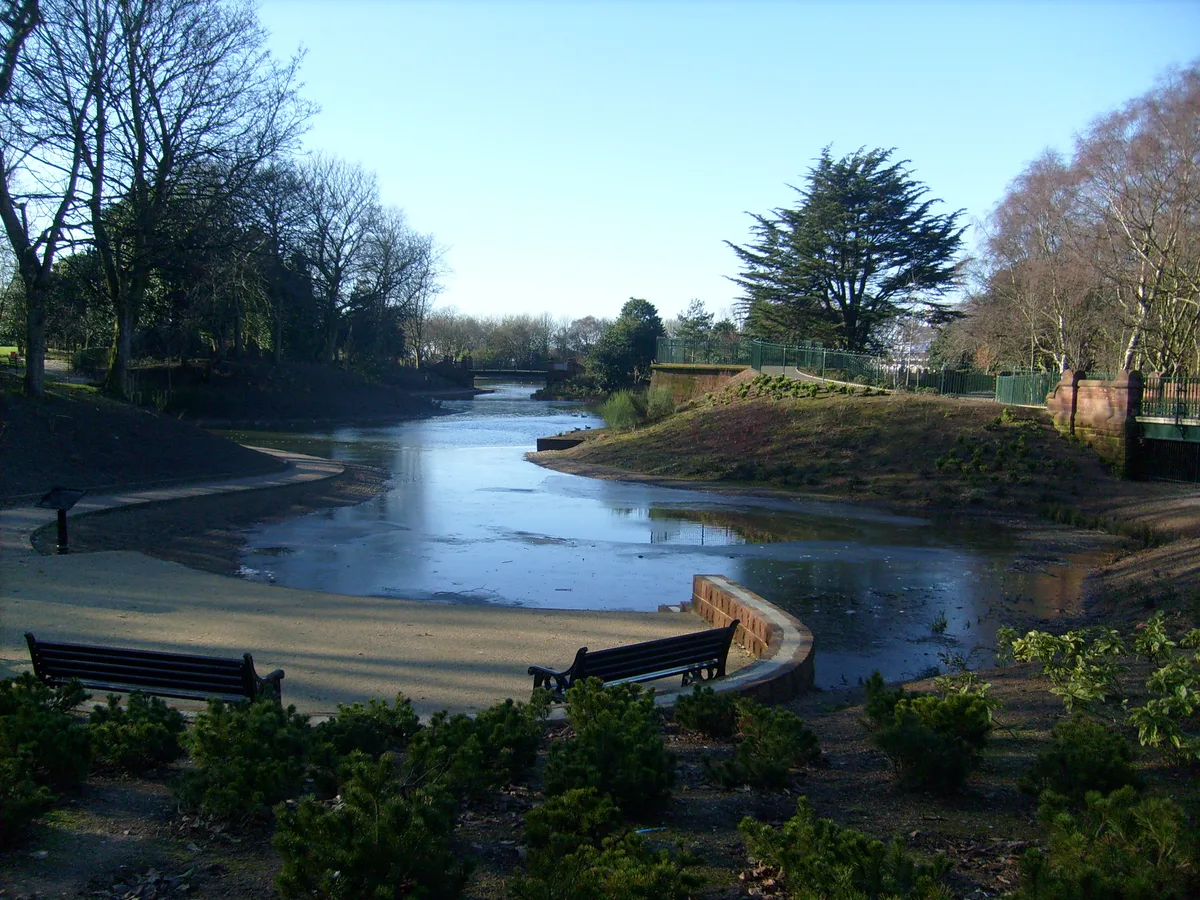
Stanley Park
Parks · 0.4 km

Mo Salah
Public art & sculpture · 0.4 km
Nearby
📷 3📷 3Natural landmarks · North West England
Paisley Gateway
Paisley Gateway — a place in North West England, United Kingdom.
📷 3Natural landmarks · North West England
Shankly Gates
Shankly Gates — a place in North West England, United Kingdom.
📷 3Memorials & monuments · North West England
Bill Shankly Statue
Bill Shankly Statue — a memorial in North West England, United Kingdom.
📷 3Memorials & monuments · North West England
Hillsborough Memorial
Hillsborough Memorial — a memorial in North West England, United Kingdom.
📷 3Public art & sculpture · North West England
John Houlding Statue
John Houlding Statue — a public art in North West England, United Kingdom.
Where to eat & stay near Anfield
Places to stay
 📷 5
📷 5Hostels · North West England
Everton Hostel
Everton Hostel — a hostel in wales north.
 📷 5
📷 5Hostels · North West England
Monument Building Pierhead Housing
Monument Building Pierhead Housing — a hostel in wales north.
 📷 5
📷 5 📷 5
📷 5Hotels · North West England
The Shankly Hotel
The Shankly Hotel — a hotel in wales north.
 📷 5
📷 5Hotels · North West England
DoubleTree by Hilton Hotel & Spa Liverpool
DoubleTree by Hilton Hotel & Spa Liverpool — a hotel in wales north. 4-star. Brand: DoubleTree.
 📷 5
📷 5Places to eat & drink
 📷 5
📷 5Historic pubs · North West England
Throstles Nest Hotel, Scotland Road
Throstles Nest Hotel, Scotland Road in Wales North, United Kingdom.
 📷 5
📷 5Historic pubs · North West England
Crown Hotel
Crown Hotel in Wales North, United Kingdom.
 ★ Iconic📷 4
Historic pubs · North West England
The Philharmonic Dining Rooms
Britain's only Grade I-listed pub interior, with the famous marble urinals.
 📷 6
📷 6Historic pubs · North West England
The Vines Public House
The Vines Public House in Wales North, United Kingdom.
 📷 5
📷 5Historic pubs · North West England
Rigby's Buildings
Rigby's Buildings in Wales North, United Kingdom.
 📷 5
📷 5Historic pubs · North West England
Flanagan's Apple
Flanagan's Apple in Wales North, United Kingdom.
Other places from this era
 ★ Iconic📷 10
Stadiums · London
All England Lawn Tennis & Croquet Club
The world's most famous tennis venue, hosting Wimbledon since 1877.
 📷 5
📷 5Stadiums · South East England
The Dripping Pan
The Dripping Pan is a stadium in the United Kingdom.
 📷 5
📷 5Stadiums · South West England
Victoria Park, Bournemouth
Victoria Park, Bournemouth — football ground in Bournemouth.
 📷 5
📷 5Stadiums · East Midlands
Hillsborough Stadium
Hillsborough Stadium — stadium in Sheffield, England.
More places in this region
 📷 3
📷 3Stadiums · North West England
Fallowfield Stadium
Fallowfield Stadium is a stadium in the United Kingdom.
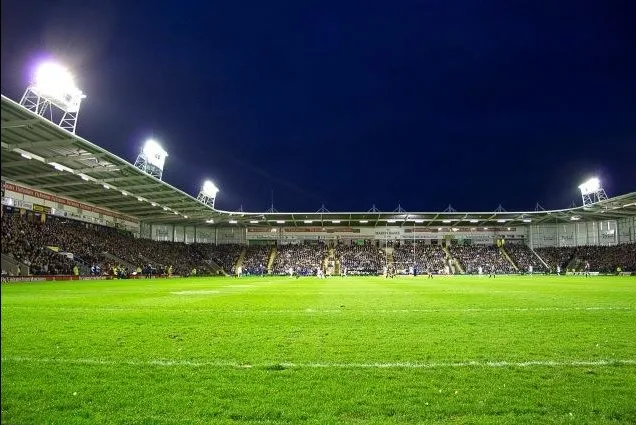 📷 5
📷 5Stadiums · North West England
Halliwell Jones Stadium
Halliwell Jones Stadium — rugby league stadium in Warrington, England.
 📷 5
📷 5Stadiums · North West England
Leigh Sports Village
Leigh Sports Village is a stadium in the United Kingdom.
 📷 3
📷 3Stadiums · North West England
Manchester Regional Arena
Manchester Regional Arena — multipurpose stadium in Manchester, England.
Frequently asked questions
- Where is Anfield?
- Anfield is in North-West England, United Kingdom (postcode L4 0TF), in the parish of Liverpool, unparished area.
- What is Anfield?
- Liverpool FC's iconic home — the Kop, You'll Never Walk Alone, since 1884.
- How do I get to Anfield?
- The nearest railway station is Kirkdale, about 1.7 km away. The nearest town is Liverpool. Drivers can use postcode L4 0TF.
- When was Anfield built?
- Built or established in 1884.
- Who owns Anfield?
- Anfield is owned by Liverpool F.C..
- How do I get to Anfield?
- The nearest railway station is Kirkdale, about 1.7 km away. Drivers can navigate to postcode L4 0TF.